Seared Ahi Tuna
Ingredients
- 2 Ahi Tuna Steak fresh
- 1/4 cuo Soy Sauce
- 2 tablespoon sesame seeds
- 1 tabelspoon black sesame seeds
- 1 Tablespoons onion flakes
- 2 teaspoons Ginger flakes
- 1 teaspoon garlic granules
- 1 teaspoon light brown sugar
- 2 teaspoons chilli flakes
- 1 teaspoon oregano
Instructions
-
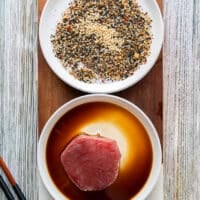
The first step is to soak the piece of ahi tuna into a plate of soy sauce. Make sure you cover the entire fish, on all angles and all sides. This will infuse the fish tremendously with umami and saltiness from the soy sauce.
-
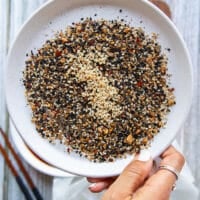
Next you're going to prepare the crust. In a separate plate, add in the dry coarse crust ingredients. You can use just sesame seeds, or add in some flavor as we did here.
-
We used onion flakes, sesame seeds (white and black), dried oregano , chilli flakes, coarse peppercorn, a touch of sugar and dried ginger flakes. Alternatively you can find these coarse spice blends at the stores, and they work well here too.
-
Now take the tuna fillet and coat it well into the plate of dried ingredients until a thick crust is formed. Make sure every side and angle of the fish is well coated.

-
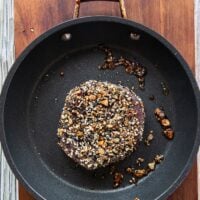
In a hot pan, with oil, sear the ahi tuna for just 1.5-2 minutes on each side at most. You want to have a nice crust on the outside while keeping the inside of the fish raw and soft.
-
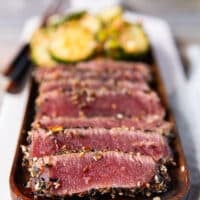
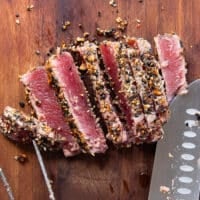
At this point, remove the fish from the skillet and use a really sharp knife to slice the fillet into 1/4 th inch thick slices.
-
And there you have it, perfectly seared and sliced ahi tuna!
Recipe Video
Recipe Notes
Pro Tips for Perfect Seared Ahi Tuna
- Buy fresh ahi tuna from your fish monger, and make sure to let them know you'll be cooking it halfway.
- Soaking the fish in soy sauce infuses it with so much flavor and richness, so don't skimp it!
- The curst is completely optional how many ingredients you add in or out. Likewise you can use a store bought blend if you'd like. We add a touch of sugar to cut out the spice and for good caramelization.
- Make sure you evenly coat the entire fish before searing.
- When searing Ahi tuna, make sure you have the pan preheated on high heat. High heat is key to a great sear.
- Avoid over cooking the tuna, give it 1.5 minutes to 2 minutes on each side only and then remove it from the skillet.
- ALWAYS slice the ahi tuna against the grain so it doesn’t crumble apart, this ia a secret to perfect slices.
- Have a sharp knife for slicing, it's key for perfect slices.
Popular Seared Ahi Tuna Variations
- Sesame Crusted Ahi Tuna. The tuna is coated in sesame seeds before searing for added crunch and nutty flavor.
- Asian Style Seared Tuna. Served with soy sauce, ginger, and sesame oil.
- Wasabi Crusted Tuna. Wasabi adds heat and complexity.
- Mediterranean Tuna. Served with olive oil, herbs, and lemon.
- Spicy Tuna. Includes chili oil or chili flakes for added heat.
What to Serve with Ahi Tuna
- Easy Cucumber Salad or Asian Cucumber Salad
- Cilantro Lime Rice, Sushi Rice or Coconut Rice.
- Turn it into an Ahi Tuna Salad or Tuna Wrap.
- Make it into a Poke Bowl , Sushi Burrito or Sushi Bowl.
- Toss it into Spicy Ramen Bowl.
- Drizzle it with condiments like Chili Oil Recipe, Spicy Mayo or Hot Honey Recipe.
- Veggies like Roasted Asparagus, Zucchini Fries, Air Fryer Mushrooms, Sweet Potato Salad or Pan Fried Potatoes.
Why Is My Tuna Overcooked?
Cooking the fish too long can turn the center grey and dry. To fix this, use higher heat and reduce cooking time.
Why Didn't My Tuna Form a Crust?
A proper crust requires high heat and dry fish. To fix this, pat the tuna dry and ensure the pan is very hot.
Why Is My Tuna Sticking to the Pan?
This often happens if the pan is not hot enough or if there isn’t enough oil. To fix this, preheat the pan fully before adding the tuna.
Why Does My Tuna Taste Bland?
Because tuna has a delicate flavor, proper seasoning is essential. To fix, make sure you season as recommended in the recipe, and you can add extra sauces on the side.
How to Make In Advance
This is a great recipe to prepare ahead of time. You can sear the fish and wrap it in the fridge for up to 2 days before slicing and serving. It's best not to marinate the fish for more than 30 minutes in soy sauce as it will begin to cure. In that case, it will still taste great, but loose the texture, similar to a Tuna Ceviche.
How to Get the Perfect Sear?
Have your pan super hot, and well oiled. Then sear the tuna for 1.5 minutes without flipping or touching. Flip and cook another 2 minutes and remove it from the pan.
Can Tuna fall apart when searing?
If your pan is not too hot, or if you don't have enough oil, these may cause the fish to crumble. Also the thickness of your tuna fillets along with how your flip it around the pan can make it fall apart. Make sure your fish is about 3/4 inch thick and only flip it once during searing.
Will Seared ahi Tuna be Raw?
Yes, it will be raw on the inside to ensure it is soft and juicy.
Is it Safe to Eat Raw Tuna?
For most people, yes. However always ask your healthcare practitioner if you are on certain medications or have certain conditions. If you're pregnant, it's not recommended to eat raw fish. You can read an article form Healthline on this topic.
How to Tell when Ahi Tuna is cooked and ready?
If you stick to cooking times, the fish will be perfectly cooked in just the 3-4 minutes. It's important not to overcook the fish or else it will dry out. If this happens, you can still enjoy the well done fish, but it will have a different taste and texture.
Try it with a dressing to juice it up like this Tuna Salad Recipe with Olive Oil Dressing--SO GOOD! Or a simple Greek Salad Dressing, or even Garlic Parmesan Sauce.
Storage and Reheating
Seared ahi tuna is best eaten immediately. If necessary, leftovers can be stored in the refrigerator for up to 24 hours in an airtight container. Reheating is not recommended because it will overcook the fish. Instead, leftover tuna can be served cold in salads or bowls.
Is Seared Ahi Tuna Healthy?
Yes. Seared ahi tuna is considered a nutritious seafood dish. It is high in protein, omega-3 fatty acids, vitamin B12, selenium while low saturated fat.
Because it is cooked quickly and often served with fresh ingredients, it can be part of a balanced diet.
Is seared ahi tuna raw in the middle?
Yes. Most recipes intentionally leave the center rare to preserve tenderness and flavor.
Can you eat ahi tuna rare?
When it is sushi grade and properly handled, it is commonly eaten rare or raw.
What pan is best for searing tuna?
A heavy skillet or cast-iron pan works best because it retains high heat.
Can you grill ahi tuna instead of pan searing?
Yes. Grilling works well as long as the heat is very high and the cooking time is short.
Is Seared Ahi Tuna Safe to Eat Rare?
High quality ahi tuna is commonly served rare or raw in dishes such as sushi, sashimi, and poke. For seared ahi tuna, the fish is briefly cooked on the outside while the center remains rare. For safety:
• use sushi grade tuna from a reputable fish market
• keep the fish properly refrigerated
• consume it soon after preparation
Fish labeled sushi grade has typically been frozen according to food safety guidelines to reduce parasite risk.
What Does Ahi Tuna Taste Like?
Ahi tuna has a clean, mild flavor that is less fishy than many other seafood varieties. Its texture is often described as:
• firm but tender
• smooth and buttery when rare
• slightly meaty compared to white fish
Because the flavor is delicate, ahi tuna pairs well with bold ingredients such as soy sauce, sesame, citrus, ginger, and wasabi.
How Long Should You Sear Ahi Tuna?
Seared ahi tuna cooks very quickly because the goal is to create a crust while keeping the interior rare. Typical cooking times are:
• 30–60 seconds per side for a rare center
• slightly longer if a medium center is preferred
The pan should be extremely hot before the tuna is added so the crust forms quickly without overcooking the fish.
Best Sauces for Seared Ahi Tuna
Ahi tuna pairs well with sauces that highlight its natural flavor. Popular options include:
• soy sauce or tamari
• ponzu sauce similar to the Tuna tataki
• sesame ginger dressing
• wasabi mayo or Spicy Mayo
• spicy chili oil
These sauces add umami, acidity, and gentle heat, complementing the richness of the tuna.
How to Tell When Seared Tuna Is Done
Perfectly cooked seared tuna should have:
• a browned crust on the outside
• a cool or slightly warm rare center
• vibrant pink color inside
If the entire steak turns gray or firm throughout, it has been overcooked.