

Potato wedges are one of our most beloved potato side dishes! They’re a real crowd pleaser as they deliver crispy golden edges, fluffy centers, bold seasoning, and endless versatility. We’ve been making and improving on our potato wedges recipe whether baked in the oven, cooked in an air fryer, or deep fried until deeply golden. Here’s our expert guide to perfecting them!
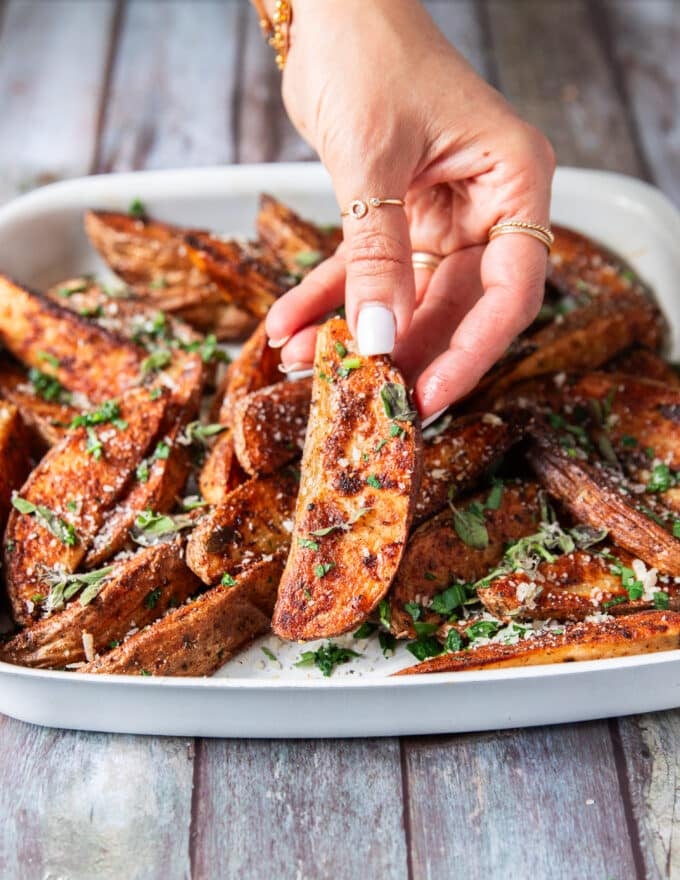
We’ve always argued how texture in food has a huge impact, and this is the best example. If you think of potatoes, making potato wedges is NOT like making French Fries and not like making Potato Chips. Even though they’re the same veggie, cut and fried and or baked.
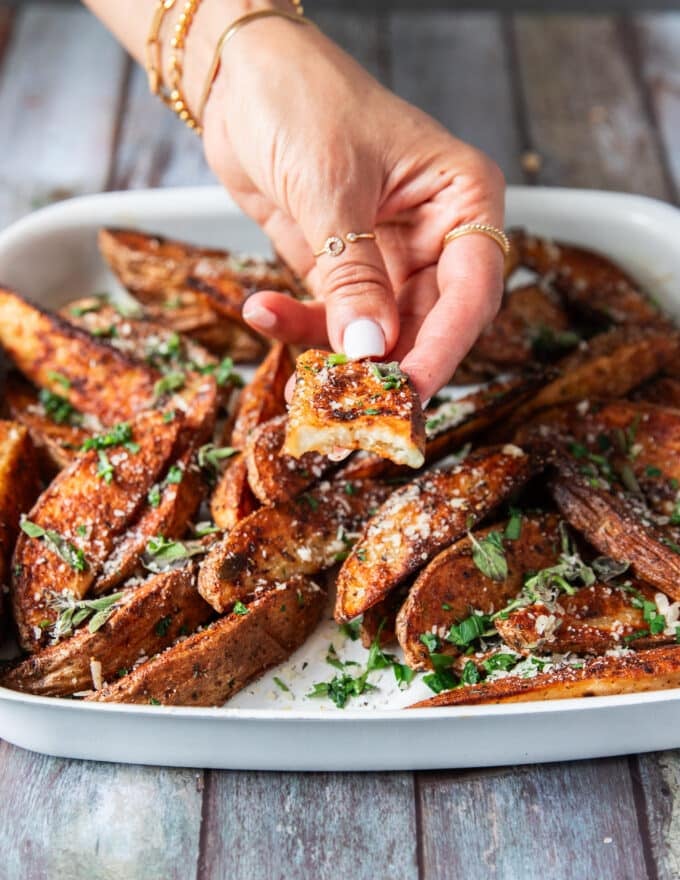
Potato wedges have a satisfying thickness that creates the perfect contrast between a crunchy exterior and a fluffy soft, creamy interior. Their larger size allows them to hold onto seasonings, sauces, and toppings. Try making them into our ALL TIME best Loaded Fries!
Today’s guide is all you need to make perfect potato wedges, including how to get them crispy, the best potatoes to use, seasoning ideas, cooking methods, troubleshooting, storage, reheating, and much more!
What Are Potato Wedges?
Potato wedges are thick slices of potatoes cut lengthwise into wedge shaped pieces and cooked until golden and crisp on the outside while remaining soft and fluffy inside.
They are essentially a thicker, rustic version of French fries. Their larger size gives them a heartier texture and allows for more seasoning and dipping sauce with every bite.
Potato wedges can be prepared using several methods:
- Oven baked potato wedges
- Air fryer potato wedges
- Deep fried potato wedges
- Grilled potato wedges
They can be seasoned simply with salt and pepper or flavored with bold spices and seasoning to fit your main dish. Think Cajun, Mediterranean and more!
The secret to truly crispy potato wedges is not just the cooking method. It starts with choosing the right potatoes, removing excess starch, creating surface texture, seasoning properly, and using the right balance of heat and cooking time.
Why You’ll Love This Potato Wedges Recipe
- TEXTURE is everything! It has a super crispy outside with a fluffy soft potato center
- If you bake or air fry, these are much easier to make than homemade fries
- You need really simple pantry seasonings, potatoes and oil. That’s all ingredients!
- It’s thick and perfect for dipping sauces
- You can make this recipe in the oven or air fryer
- Potatoes are naturally gluten free
- This recipe is affordable and a really budget friendly side dish
- Super versatile recipe and you can customize it with different seasonings
- Potato wedges pair with almost any main dish
- This recipe can be prepared ahead of time and reheated for serving, so it’s a great option for gatherings.
Ingredients You’ll Need
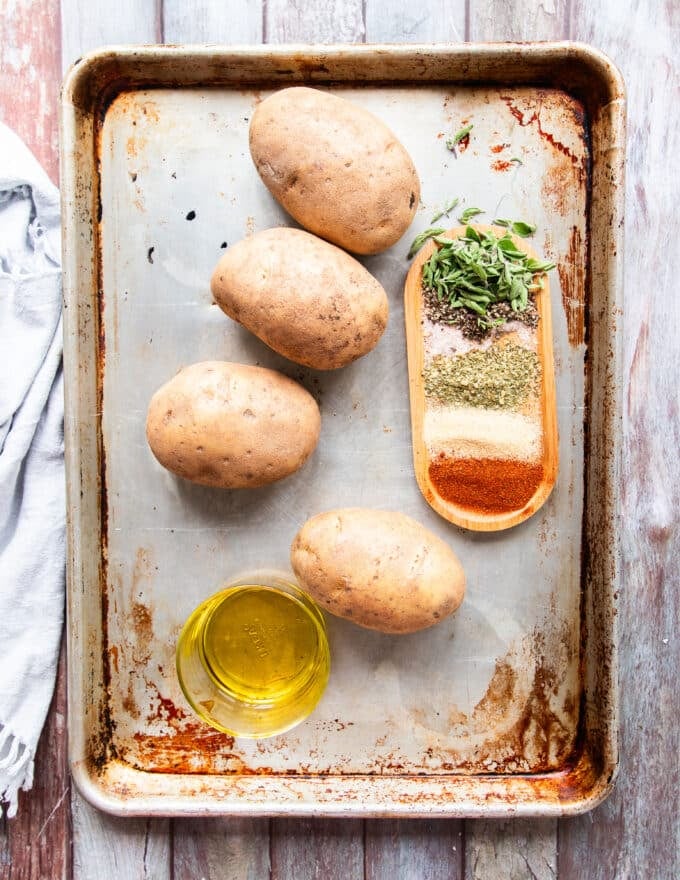
Potatoes
The potato variety is the foundation of great wedges. The ideal potato should create:
- Crispy exterior
- Fluffy interior
- Good structure during cooking
The best choices are starchy potatoes because they develop a light, fluffy center.
Oil
Olive oil adds flavor, while neutral oil allows the seasoning to stand out. Oil also helps create:
- Crisp texture
- Golden color
- Better seasoning adhesion
- Even roasting
Good options include:
- Olive oil
- Avocado oil
- Vegetable oil
- Canola oil
Potato Wedges Seasoning
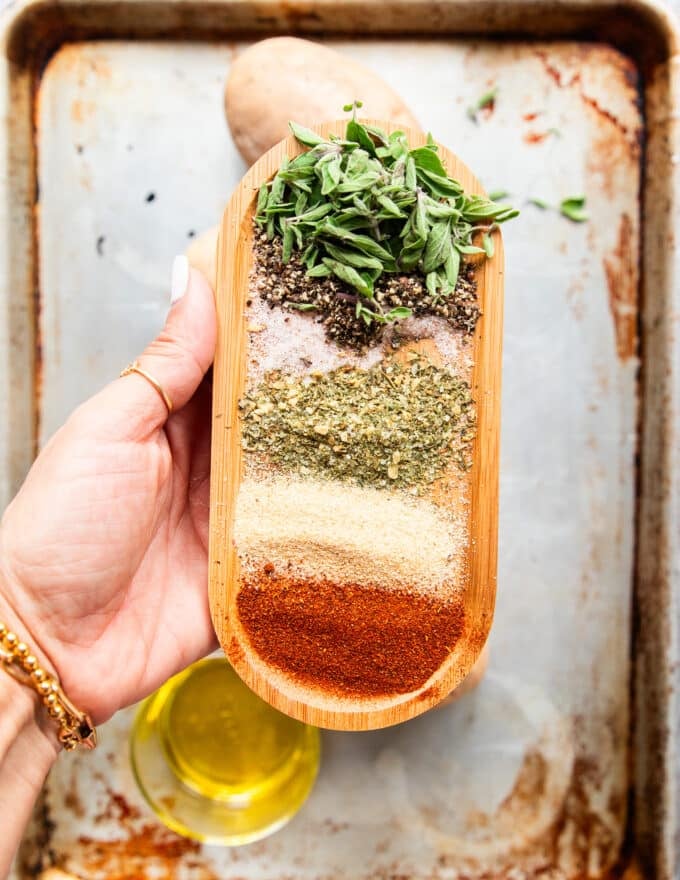
This is where you can be as creative as you please! The seasoning mix can be made using any blend os spices you have or prefer. ready made mixes are also great! Here’s a list of what we used:
- Salt is essential because potatoes absorb seasoning easily.
- Black Pepper, freshly ground black pepper adds warmth and depth.
- Paprika is one of the most common wedge seasonings because it adds color, sweetness, and smokiness if using smoked paprika.
- Garlic Powder creates savory depth and pairs naturally with potatoes.
- Onion powder for a rich aroma of onions.
- Herbs like rosemary, oregano, parsley, thyme are great!
Parmesan Cheese
Parmesan is optional and we use it to finish off the wedges. It adds a nutty flavor, saltiness and a pleasant umami to the dish.
The Best Potatoes for Potato Wedges
Russet Potatoes: The classic choice because they offer:
- High starch content
- Fluffy interior
- Crisp exterior
- Restaurant style texture
Yukon Gold Potatoes: A great alternative but less crisp. They offer:
- Creamier texture
- Naturally buttery flavor
- Golden color
Red Potatoes: Holds the shape, but also less crisp. It’s great for:
- Firmer wedges
- Creamier bite
- Less fluffy texture
How to Choose Potatoes
- Look for: Firm potatoes with smooth skin, no soft spots, minimal to no sprouting without green discoloration
- Avoid potatoes that are wrinkled, soft, have green spots or a bitter smell.
How to Make Potato Wedges
Choose and Wash the Potatoes
- Wash potatoes thoroughly and scrub away any dirt. You can peel the potatoes, however leaving the skin on adds flavor, texture, and nutrients.
Cut Into Even Wedges
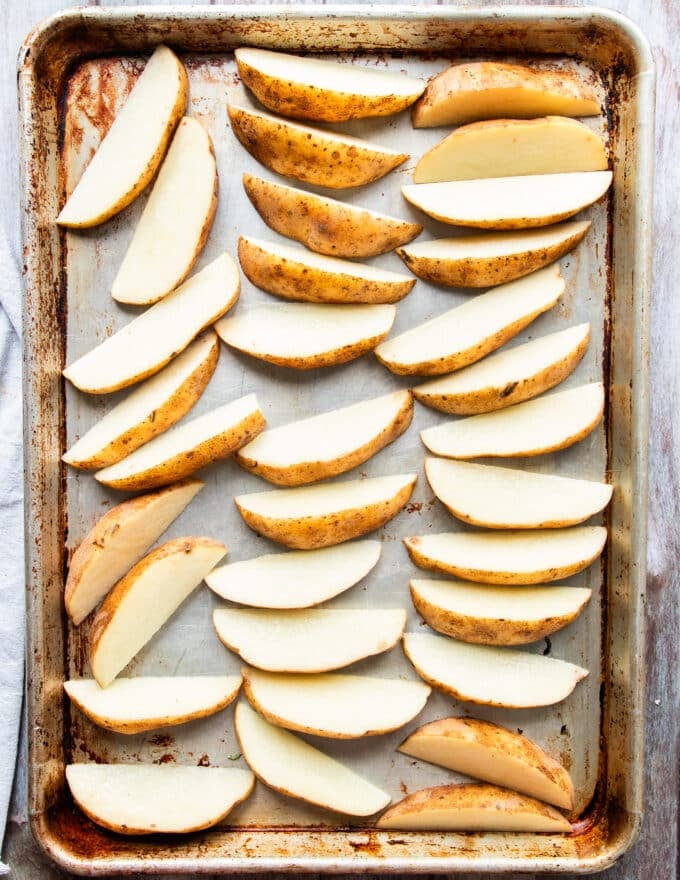
- Slice potatoes lengthwise into evenly sized wedges. Make sure you have them all at the same size and thickness to ensure they cook at the same rate. A medium potato typically creates 8 wedges.
Season the Wedges

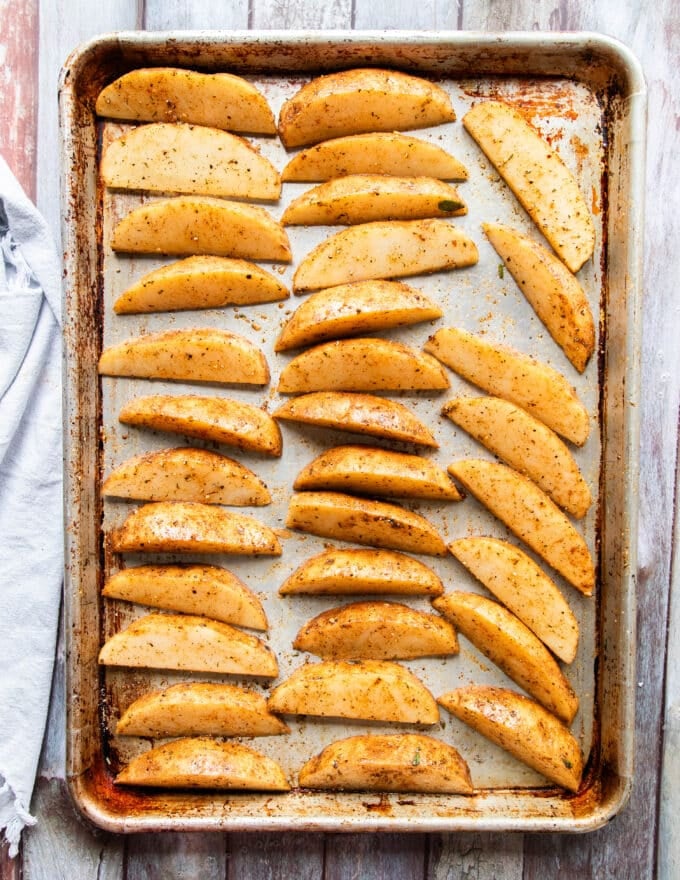
- Toss the potatoes wedges with the seasoning blend and olive oil. Make sure every surface is coated.
- Arrange the potato wedges in a single layer, this is crucial for the crisp. Place wedges cut side down with space between each piece.
Bake And Flip Halfway Until Golden
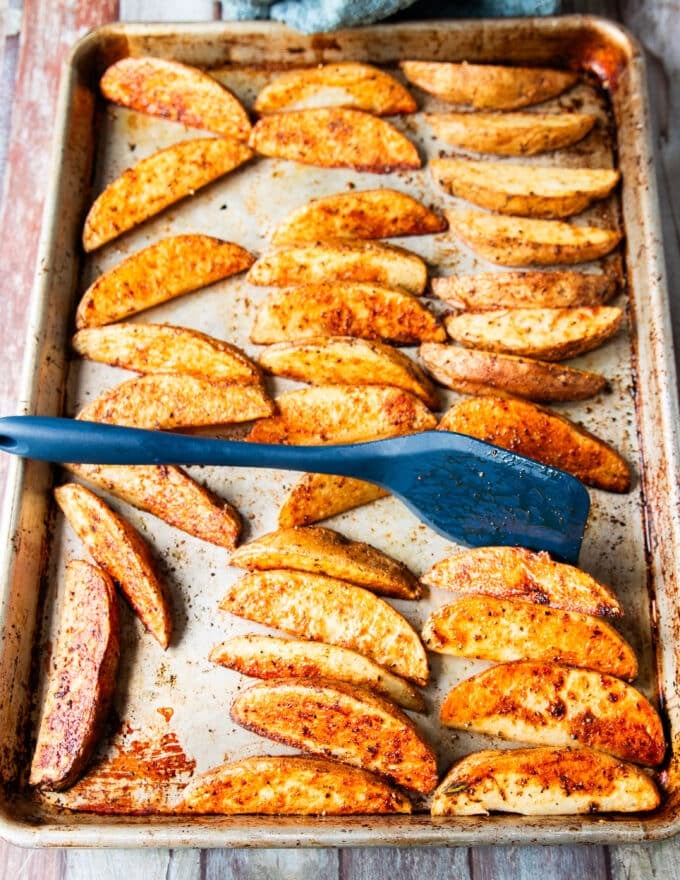
- The trick to the ultimate CRISPY potato wedges is to cook until the bottom side of the wedges are crisp and golden. Then you will take out the baking sheet and flip the wedges to crisp the other side.
- So flip each potato wedge using a spatula and make sure they’re flipped and arranged once again in a single layer, then return the tray to the oven.
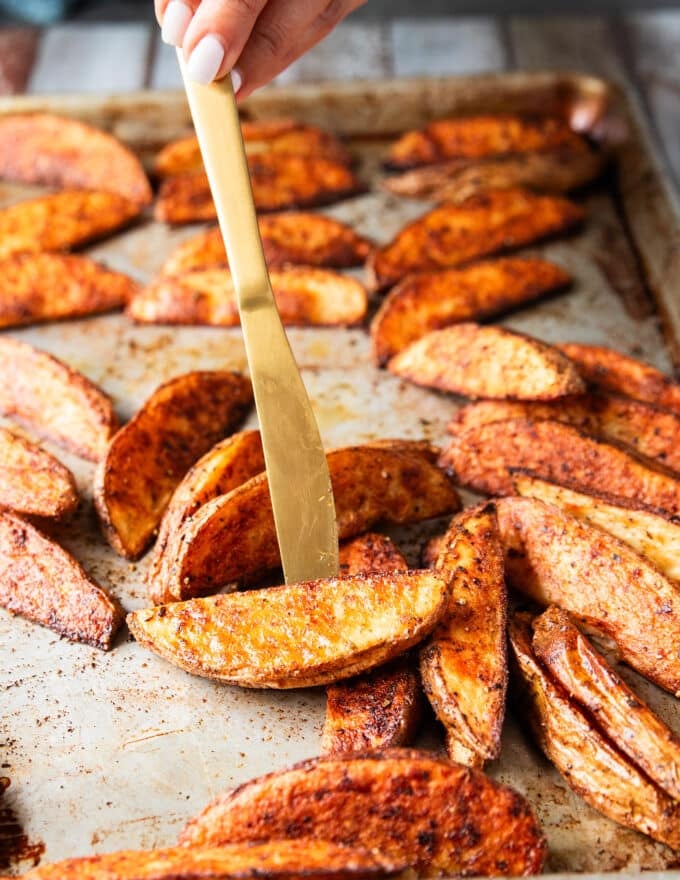
- Bake for another 10-15 minutes until the other side is just as crisp and golden brown.
- The centers will be tender and fluffy.
Finish and Serve
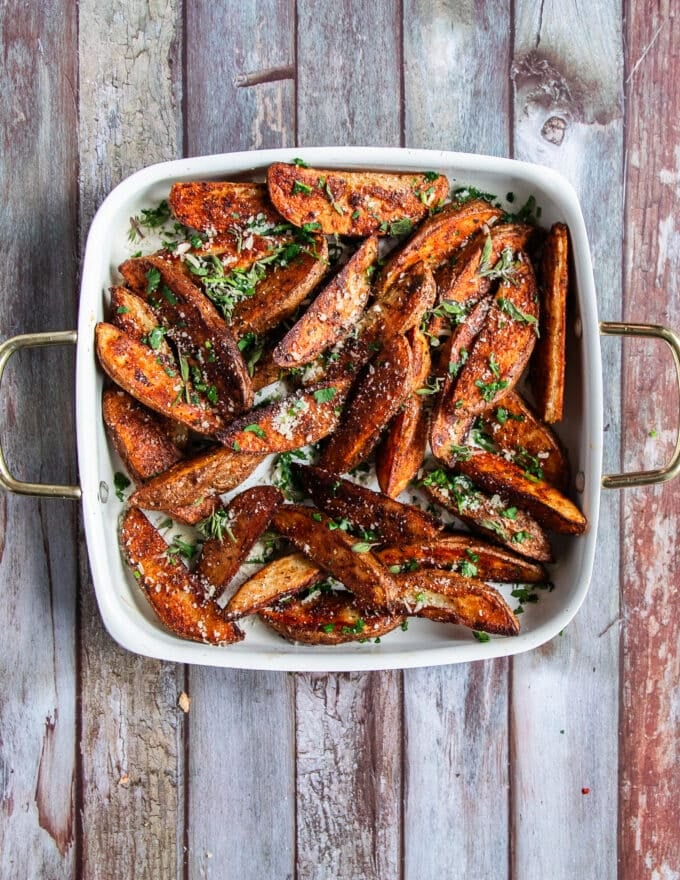
- Add finishing touches like fresh herbs and parmesan cheese, some more cracked black pepper and chili flakes if you want.
- You can serve them as is along ay main dish or serve them alongside a dipping sauce and ENJOY!
How Long to Bake Potato Wedges
Cooking time depends on:
- Potato size and how thick your wedges are cut.
- Oven temperature at which you’re roasting.
- Whether potatoes were soaked or parboiled. Our Crispy Potatoes and Smashed Potatoes are parboiled and then roasted for the ultimate CRISP. However today we’re showcasing a straight forward roasting technique.
General guide:
- At 400°F: Roast for 40–50 minutes.
- At 425°F: Roast for 35–45 minutes.
- At 450°F: Roast for 30–40 minutes.
Air Fryer Potato Wedges
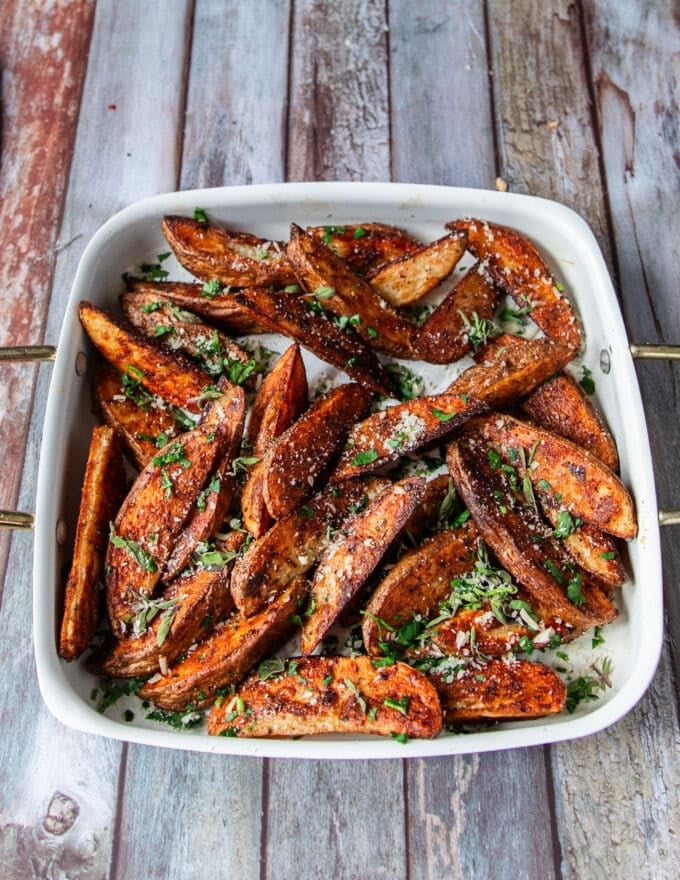
- To make this recipe in the air fryer, you will need an oversized air fryer basket, or a toaster oven style air fryer.
- Since you need the wedges to be in a single layer, make sure you roast them in batches or use a large sir fryer.
- Air fry the potatoes at 400 degrees F for 20 minutes, flip and air fry for another 10 minutes depending on the thickness of your wedges.
Why Cutting Potatoes Into Even Wedges Matters
Potatoes cook from the outside inward. If some wedges are thick while others are thin, the smaller pieces will become dry before the larger ones are fully tender.
Uniform wedges ensure even cooking, consistent texture, browning on the whole surface and perfect soft texture.
Why Parboiling Creates Extra Crispy Potato Wedges
Parboiling partially cooks the potatoes and creates tiny cracks and rough edges on the surface. Those rough areas absorb oil and seasoning, creating more surface area for browning and crisping. This is a professional technique which we detailed in this Crispy Potatoes guide.
Why You Should Flip Potato Wedges Halfway Through
The side touching the pan receives direct heat and browns faster. Flipping ensures the browning is even on all sides, and the crisp is uniform.
Expert Tips for Perfect Potato Wedges
- Use Russet potatoes for the crispiest results. Russets have the ideal starch content for creating a fluffy interior and crisp exterior. Yukon Gold potatoes are delicious but naturally produce a creamier, less crispy wedge.
- Add a little cornstarch for extra crunch. A light coating of cornstarch after drying helps create an ultra crispy exterior, especially for oven baked wedges.
- Use enough oil, but don’t drown them. Potatoes need oil to crisp, but too much oil makes them heavy and greasy. A light, even coating is all you need.
- Place wedges cut side down first. The flat surface has the most contact with the hot pan, creating a beautifully golden crust before flipping.
- Use a metal baking sheet whenever possible. Metal transfers heat efficiently and encourages better browning compared with glass or ceramic dishes.
- Don’t overcrowd the pan. Give each wedge room. If potatoes are touching too closely, they release steam and become soft instead of crispy.
- Season in layers. Season the potatoes before cooking, then add finishing flavors afterward. A sprinkle of flaky salt, fresh herbs, or Parmesan after roasting creates more depth.
- Let the oven fully preheat. Starting potatoes in a cold oven changes the cooking process and often results in softer wedges.
- Cut wedges with the skin left on. The skin adds texture, helps hold the wedge together, and contributes extra flavor.
- Serve immediately after cooking. Potato wedges lose crispness as they sit because steam softens the crust. Serve them hot for the best restaurant style texture.
Potato Wedges Variations
- Garlic Parmesan Potato Wedges: A classic combination made with garlic, Parmesan cheese, and fresh herbs.
- Spicy Potato Wedges: Add spice using chili flakes, or finish with a drizzle of Chili Oil Recipe, Homemade Hot Sauce, Roasted Poblano Peppers.
- Cajun Potato Wedges: Season with Cajun seasoning for a bold, smoky, slightly spicy version that pairs beautifully with seafood and barbecue.
- Loaded Potato Wedges: Follow our Loaded Fries guide using these spiced and seasoned potato wedges for a burst of flavor!
- Mediterranean Potato Wedges: Finish the wedges with lemon zest, feta crumbles, some minced olives and fresh orgenao.
- Ranch Potato Wedges: Coat wedges with ranch seasoning before roasting and serve with ranch dipping sauce.
- BBQ Potato Wedges: Add smoked paprika, garlic powder, and barbecue seasoning for a smoky side dish perfect with grilled meats.
- Sweet Potato Wedges: Use sweet potatoes instead of regular potatoes for a naturally sweeter version with a softer texture.
- Parmesan Truffle Potato Wedges: Follow our Truffle Fries recipe using those crispy seasoned wedges instead of fries and serve with some Truffle Aioli.
Troubleshooting Potato Wedges
Why are my potato wedges not crispy?
The most common reasons are:
- Potatoes were not dried properly
- Baking sheet was overcrowded
- Oven temperature was too low
- Too much moisture remained after soaking
Solution: Dry thoroughly, use high heat, and leave space between wedges.
What if my wedges are burnt on the outside but raw inside?
The wedges may be cut too thick or the oven temperature may be too high.
Solution: Cut evenly sized wedges and cook at a slightly lower temperature for longer.
Why do my potato wedges stick to the pan?
This happens when:
- The pan isn’t properly heated
- There isn’t enough oil
- The wedges are flipped too early
Allow the crust to form before moving them.
Why are my wedges dry inside?
They were likely overcooked or cut too thin. Use larger wedges and remove them once the center is tender.
What if my wedges are falling apart?
Overcooking or using very soft potatoes can cause them to break. Choose firm potatoes and avoid excessive handling.
Storage, Freezing & Reheating
- Allow the potato wedges to cool completely before storing.
- Place them in an airtight container lined with a paper towel to absorb excess moisture.
- Store in the refrigerator for 3–5 days. Keep in mind that cooked potato wedges naturally lose some crispiness after refrigeration, but they can be restored with proper reheating.
- To freeze: Arrange them in a single layer on a baking sheet and freeze until solid. Transfer them to a freezer safe bag or container. They can be frozen for up to 3 months. Freezing them individually prevents them from sticking together and allows you to reheat only the amount you need.
- To reheat: Preheat the oven to 400°F, spread potato wedges on a baking sheet in a single layer. Heat for about 10–15 minutes refrigerated or 20–25 minutes frozen. The oven restores the crisp texture much better than the microwave.
- Air Fryer Reheating: The air fryer is one of the best ways to revive leftover potato wedges. Air fry at 375 °F for 5–10 minutes shaking halfway through. The hot circulating air removes moisture and brings back the crispy edges.
- Avoid the microwave as it turns them soggy.
Make Ahead Potato Wedges
- Cut potatoes several hours ahead
- Store them submerged in cold water in the refrigerator, then drain and dry before cooking.
- For entertaining, parboil or partially roast the wedges ahead of time. Cool and refrigerate, and start roasting just before serving. This creates a crisp exterior while reducing last-minute cooking time. You
How do you make crispy potato wedges?
To make crispy potato wedges, coat them lightly with oil and seasoning, and bake them at a high temperature without overcrowding the pan. Flip the potatoes halfway to ensure both sides are crisp and browned evenly.
What are the best potatoes for potato wedges?
Russet potatoes are generally considered the best choice because their high starch content creates fluffy centers and crispy exteriors. Yukon Gold potatoes are also excellent for a creamier texture.
Should you soak potatoes before making wedges?
Yes, you can because soaking potatoes helps remove excess surface starch, which improves crispiness and prevents the wedges from becoming soft or gummy. However you don’t have to.
What temperature is best for baking potato wedges?
A temperature between 425°F and 450°F is ideal because it creates crispy edges while keeping the inside fluffy.
How do you cut potatoes into wedges?
Cut the potato in half lengthwise, then cut each half into 3–4 wedges depending on the size of the potato. Try to keep all wedges similar in thickness so they cook evenly.
Can you make potato wedges in an air fryer?
Yes. Air fryer potato wedges become very crispy because hot air circulates around each piece. They usually cook in about 25-30 minutes at 400°F.
Why are my potato wedges not crispy in the oven?
The most common causes are excess moisture, overcrowding the pan, low oven temperature, or using too much oil.
Do you peel potatoes before making wedges?
No you don’t have to, unless you prefer. Keeping the skin on adds flavor, texture, and nutrients. Just scrub the potatoes well before cutting.
Are potato wedges healthier than fries?
It depends on preparation. Baked potato wedges can be healthier because they often require less oil and keep more of the potato’s natural nutrients, especially when the skin is left on.
How do you keep potato wedges crispy?
Serve immediately, avoid covering them while hot, and reheat leftovers using dry heat methods like an oven or air fryer.
How do you make potato wedges taste like restaurant wedges?
Use russet potatoes, season generously, cook at high heat, and finish with fresh herbs with Parmesan.
Can you make potato wedges without oil?
Yes, but they will not become as crispy. A small amount of oil helps with browning, texture, and seasoning adhesion.
Why do potato wedges have more flavor than fries?
Their larger surface area and thicker shape allow them to hold more seasoning while creating a stronger contrast between crispy edges and a soft potato center.
Viral Potato Recipes You Need to Try
Smashed Potatoes
Homemade Potato Chips
Truffle Fries
Crispy Potatoes
Best Mashed Potatoes Recipe
Stuffed Sweet Potatoes
Loaded Baked Potato Soup
Nacho Fries
Scalloped Potatoes
Hasselback Sweet Potatoes
Potato Pancakes
Air Fryer Baked Potato
Pan Fried Potatoes
Loaded Fries

Potato Wedges
Ingredients
- 3-4 Russet Potatoes Large potatoes, cut into wedges
- 1 teaspoon salt and black pepper
- 1/2 teaspoon onion powder
- 1/2 teaspoon garlic powder
- 1 teaspoon paprika
- 1/2 teaspoon Oregano
- 3 Tablespoons Olive oil
FInish
- 1/2 cup Parmesan cheese grated
- 2 Tablespoons Herbs fresh parsley, oregano or thyme or a blend
- 1/2 teaspoon chili flakes optional
Instructions
-
Preheat the oven to 425 degrees F
-
Wash potatoes thoroughly and scrub away any dirt. You can peel the potatoes, however leaving the skin on adds flavor, texture, and nutrients.
-
Slice potatoes lengthwise into evenly sized wedges. Make sure you have them all at the same size and thickness to ensure they cook at the same rate. A medium potato typically creates 8 wedges.

-
Toss the potatoes wedges with the seasoning blend and olive oil. Make sure every surface is coated.
-
Arrange the potato wedges in a single layer, this is crucial for the crisp. Place wedges cut side down with space between each piece.
-
Bake the potatoes for about 20 minutes.
-
Take out the baking sheet and flip the wedges to crisp the other side.
-
Bake for another 20 minutes until the other side is just as crisp and golden brown.
-
The centers will be tender and fluffy.
-
Finish off with fresh herbs and parmesan cheese, some more cracked black pepper and chili flakes if you want.
-
You can serve them as is along ay main dish or serve them alongside a dipping sauce and ENJOY!





Recipe Video
Recipe Notes
Expert Tips for Perfect Potato Wedges
- Use Russet potatoes for the crispiest results. Russets have the ideal starch content for creating a fluffy interior and crisp exterior. Yukon Gold potatoes are delicious but naturally produce a creamier, less crispy wedge.
- Add a little cornstarch for extra crunch. A light coating of cornstarch after drying helps create an ultra crispy exterior, especially for oven baked wedges.
- Use enough oil, but don't drown them. Potatoes need oil to crisp, but too much oil makes them heavy and greasy. A light, even coating is all you need.
- Place wedges cut side down first. The flat surface has the most contact with the hot pan, creating a beautifully golden crust before flipping.
- Use a metal baking sheet whenever possible. Metal transfers heat efficiently and encourages better browning compared with glass or ceramic dishes.
- Don't overcrowd the pan. Give each wedge room. If potatoes are touching too closely, they release steam and become soft instead of crispy.
- Season in layers. Season the potatoes before cooking, then add finishing flavors afterward. A sprinkle of flaky salt, fresh herbs, or Parmesan after roasting creates more depth.
- Let the oven fully preheat. Starting potatoes in a cold oven changes the cooking process and often results in softer wedges.
- Cut wedges with the skin left on. The skin adds texture, helps hold the wedge together, and contributes extra flavor.
- Serve immediately after cooking. Potato wedges lose crispness as they sit because steam softens the crust. Serve them hot for the best restaurant style texture.
Potato Wedges Variations
- Garlic Parmesan Potato Wedges: A classic combination made with garlic, Parmesan cheese, and fresh herbs.
- Spicy Potato Wedges: Add spice using chili flakes, or finish with a drizzle of Chili Oil Recipe, Homemade Hot Sauce, Roasted Poblano Peppers.
- Cajun Potato Wedges: Season with Cajun seasoning for a bold, smoky, slightly spicy version that pairs beautifully with seafood and barbecue.
- Loaded Potato Wedges: Follow our Loaded Fries guide using these spiced and seasoned potato wedges for a burst of flavor!
- Mediterranean Potato Wedges: Finish the wedges with lemon zest, feta crumbles, some minced olives and fresh orgenao.
- Ranch Potato Wedges: Coat wedges with ranch seasoning before roasting and serve with ranch dipping sauce.
- BBQ Potato Wedges: Add smoked paprika, garlic powder, and barbecue seasoning for a smoky side dish perfect with grilled meats.
- Sweet Potato Wedges: Use sweet potatoes instead of regular potatoes for a naturally sweeter version with a softer texture.
- Parmesan Truffle Potato Wedges: Follow our Truffle Fries recipe using those crispy seasoned wedges instead of fries and serve with some Truffle Aioli.
Troubleshooting Potato Wedges
Why are my potato wedges not crispy?
The most common reasons are:
- Potatoes were not dried properly
- Baking sheet was overcrowded
- Oven temperature was too low
- Too much moisture remained after soaking
Solution: Dry thoroughly, use high heat, and leave space between wedges.
What if my wedges are burnt on the outside but raw inside?
The wedges may be cut too thick or the oven temperature may be too high.
Solution: Cut evenly sized wedges and cook at a slightly lower temperature for longer.
Why do my potato wedges stick to the pan?
This happens when:
- The pan isn't properly heated
- There isn't enough oil
- The wedges are flipped too early
Allow the crust to form before moving them.
Why are my wedges dry inside?
They were likely overcooked or cut too thin. Use larger wedges and remove them once the center is tender.
What if my wedges are falling apart?
Overcooking or using very soft potatoes can cause them to break. Choose firm potatoes and avoid excessive handling.
Storage, Freezing & Reheating
- Allow the potato wedges to cool completely before storing.
- Place them in an airtight container lined with a paper towel to absorb excess moisture.
- Store in the refrigerator for 3–5 days. Keep in mind that cooked potato wedges naturally lose some crispiness after refrigeration, but they can be restored with proper reheating.
- To freeze: Arrange them in a single layer on a baking sheet and freeze until solid. Transfer them to a freezer safe bag or container. They can be frozen for up to 3 months. Freezing them individually prevents them from sticking together and allows you to reheat only the amount you need.
- To reheat: Preheat the oven to 400°F, spread potato wedges on a baking sheet in a single layer. Heat for about 10–15 minutes refrigerated or 20–25 minutes frozen. The oven restores the crisp texture much better than the microwave.
- Air Fryer Reheating: The air fryer is one of the best ways to revive leftover potato wedges. Air fry at 375 °F for 5–10 minutes shaking halfway through. The hot circulating air removes moisture and brings back the crispy edges.
- Avoid the microwave as it turns them soggy.
Make Ahead Potato Wedges
- Cut potatoes several hours ahead
- Store them submerged in cold water in the refrigerator, then drain and dry before cooking.
- For entertaining, parboil or partially roast the wedges ahead of time. Cool and refrigerate, and start roasting just before serving. This creates a crisp exterior while reducing last-minute cooking time.
How do you make crispy potato wedges?
To make crispy potato wedges, coat them lightly with oil and seasoning, and bake them at a high temperature without overcrowding the pan. Flip the potatoes halfway to ensure both sides are crisp and browned evenly.
What are the best potatoes for potato wedges?
Russet potatoes are generally considered the best choice because their high starch content creates fluffy centers and crispy exteriors. Yukon Gold potatoes are also excellent for a creamier texture.
Should you soak potatoes before making wedges?
Yes, you can because soaking potatoes helps remove excess surface starch, which improves crispiness and prevents the wedges from becoming soft or gummy. However you don't have to.
What temperature is best for baking potato wedges?
A temperature between 425°F and 450°F is ideal because it creates crispy edges while keeping the inside fluffy.
How do you cut potatoes into wedges?
Cut the potato in half lengthwise, then cut each half into 3–4 wedges depending on the size of the potato. Try to keep all wedges similar in thickness so they cook evenly.
Can you make potato wedges in an air fryer?
Yes. Air fryer potato wedges become very crispy because hot air circulates around each piece. They usually cook in about 25-30 minutes at 400°F.
Why are my potato wedges not crispy in the oven?
The most common causes are excess moisture, overcrowding the pan, low oven temperature, or using too much oil.
Do you peel potatoes before making wedges?
No you don't have to, unless you prefer. Keeping the skin on adds flavor, texture, and nutrients. Just scrub the potatoes well before cutting.
Are potato wedges healthier than fries?
It depends on preparation. Baked potato wedges can be healthier because they often require less oil and keep more of the potato's natural nutrients, especially when the skin is left on.
How do you keep potato wedges crispy?
Serve immediately, avoid covering them while hot, and reheat leftovers using dry heat methods like an oven or air fryer.
How do you make potato wedges taste like restaurant wedges?
Use russet potatoes, season generously, cook at high heat, and finish with fresh herbs with Parmesan.
Can you make potato wedges without oil?
Yes, but they will not become as crispy. A small amount of oil helps with browning, texture, and seasoning adhesion.
Why do potato wedges have more flavor than fries?
Their larger surface area and thicker shape allow them to hold more seasoning while creating a stronger contrast between crispy edges and a soft potato center.





It’s been a while since we last had potato wedges, so this feels like the perfect recipe to try this weekend. I usually just season ours with the basics, but I love the idea of giving them a Cajun twist for a little extra kick. Thanks for sharing the recipe. I can’t wait to give it a try!
It looks do delicious and yummy i can’t wait to try your recipe we all love potato wedges at our home.
Potato wedges are such a elite side dish. Thank you for sharing your recipe – I found it to be easy to follow.
Thanks a ton for the delicious recipe. The wedges turned out delicious….Crunchy on the outside and soft inside….Sooo good….
I love the contrast between the crispy outside and fluffy center. The seasoning combination sounds incredibly flavorful.
Potatoes really are my comfort food so I love to make wedges and definitely do keep the skin on for that extra flavour. So good!
Oh, yum! I love potato wedges. These were so soft on the inside and nice and crispy on the outside.