
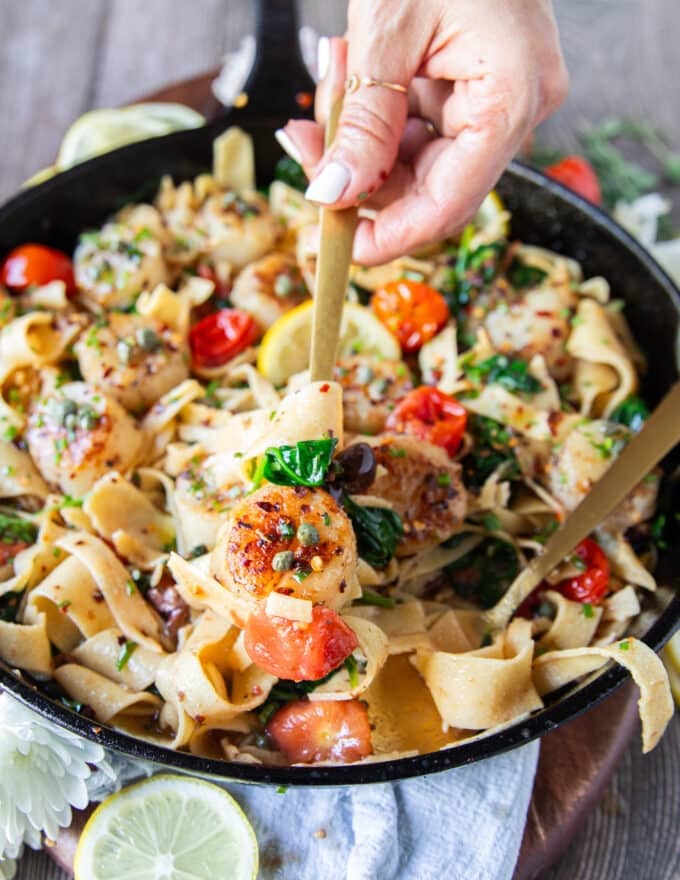
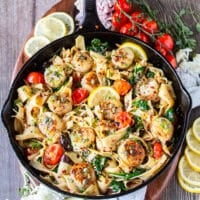
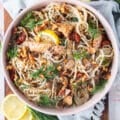
If you’re looking for a pasta dinner that feels elegant but is surprisingly easy to make, scallop pasta deserves a place at the top of your list. Sweet, buttery sea scallops are quickly seared until golden on the outside and tender inside, then tossed with perfectly cooked pasta in a light sauce. It’s all made in the same pan and it’s the best date night dinner or weeknight meal wonder!
If you’ve never cooked scallops before, let us guide you to the ultimate Scallops guide. There you’ll learn what are scallops, and how to cook scallops two different ways. Seared or baked, and you’ll get to know more about how to perfect this delicate seafood.
After that you can try out our quick Broiled Scallops or Air Fryer Scallops. These are shortcuts and perfect for everyday dinners, so make sure you don’t miss out on our scallop recipes!
Today’s recipe feels like a 5 star restaurant dish which we have simplified at home, similar to our other seafood pasta recipes. Clam Pasta , Lobster Pasta, Cajun Pasta, Shrimp Pasta, Sardine Pasta or Creamy Chili Crab Pasta and Mussels Marinara. They’re each SO TASTY and unique, a must try, especially for seafood lovers!
This guide today was created after we wanted to incorporate those beautiful Scallops into a juicy pasta recipe that feels light and rich at the same time. So after a few testing rounds, we reached the absolute BEST version of a scallop pasta there is!
We will cover everything you need to know, from choosing the best scallops and preventing them from becoming rubbery to pairing them with the right pasta shapes and sauces.
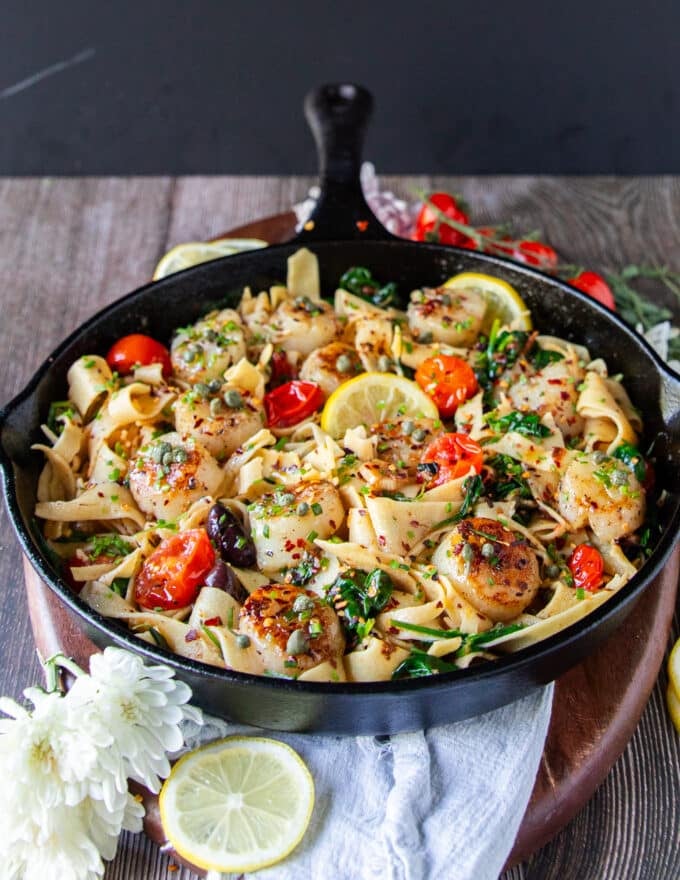
What Is Scallop Pasta?
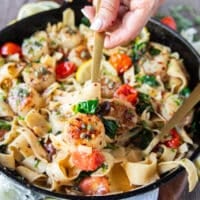
Scallop pasta is an Italian inspired seafood dish featuring pan seared sea scallops served with pasta and a one pan flavorful sauce. The best part is you can make the sauce in so many different flavor profiles. The beauty of scallop pasta is that it lets the scallops shine.
Spaghetti aglio e olio/ Olive oil Pasta is the simple olive oil and garlic pasta with lemon zest, and you can use that with the scallops. Lobster Pasta involves spinach and sun dried tomatoes and it’s super creamy and succulent! Shrimp Pasta and Clam Pasta are versatile with garlic, capers and lemons.
Since scallops have a naturally sweet, delicate flavor and tender texture that require very little cooking time. After testing, we paired them with some fresh spinach, olives, capers, tomatoes and this scallop pasta recipe is SO GOOD!
Long pasta like linguine, fettuccine, spaghetti, and tagliatelle are traditional choices because they hold light sauces beautifully, although short pasta works well in creamier versions.
Why You’ll Love This Scallop Pasta Recipe
- It’s a real restaurant quality dinner at home
- You need about 30 minutes and it’s ready!
- This recipe is perfect for weeknight dinners and elegant enough for entertaining
- It needs simple ingredients
- Overall this recipe is so light yet comforting and rich in flavors.
- Scallops are really healthy and nutrient dense, so you’ll get a good serving of protein.
- You can easily customize this recipe and make it with several sauces, pasta shapes and more!
Ingredients You’ll Need
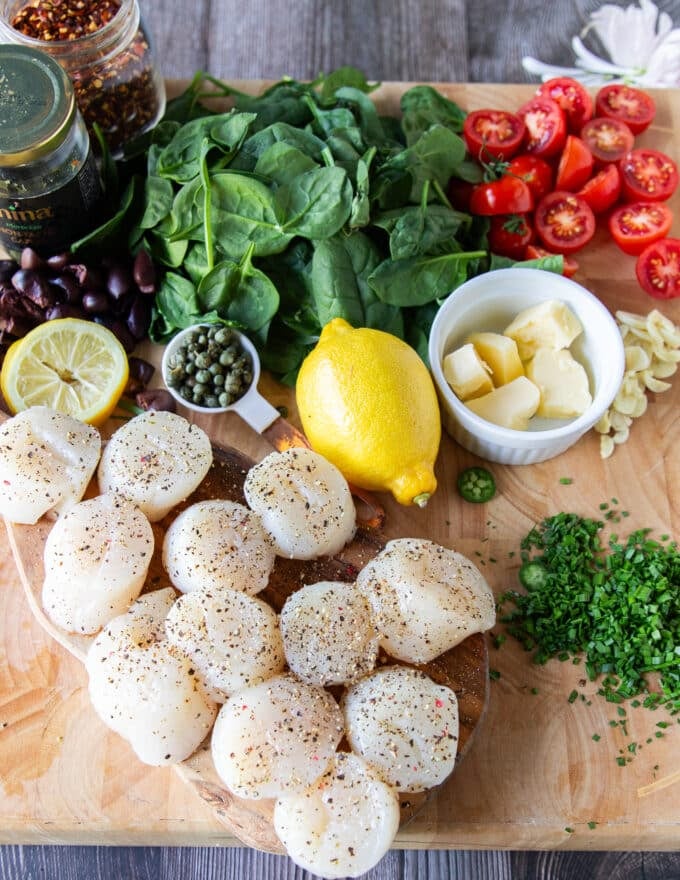
Sea Scallops
- Large sea scallops are the best choice because they develop a beautiful golden crust while remaining tender inside.
- Avoid bay scallops for this recipe as they’re much smaller and better suited for soups or seafood stews.
Pasta
Excellent choices include Linguine, Fettuccine, Spaghetti, Tagliatelle , Angel hair, Bucatini or Pappardelle. Long noodles allow the sauce to coat every bite while complementing the delicate scallops.
Butter and Olive Oil
Butter creates richness and helps develop the sauce without overpowering the seafood. While the olive oil raises the smoke point when searing scallops and prevents the butter from burning.
Garlic, Capers and Lemon
Fresh garlic provides aromatic depth without masking the sweetness of the scallops. Capers add a salty briny touch to the sauce and a gentle bite to the dish. Fresh lemon juice and lemon zest brighten the entire dish and balance the richness of the butter.
Tomatoes and Spinach
Tomatoes add some juices and flavor to the sauce as they cook, and spinach adds a bright fresh taste with color.
Fresh Herbs
Fresh parsley is traditional, while basil, chives, oregano and dill also work beautifully.
Seasoning and Cheese (optional)
A small amount of parmesan cheese adds savory depth, although some traditional Italian seafood recipes omit cheese entirely. Seasonings are essential like salt and black pepper, and we love a sprinkle of chili flakes too!
Ingredient Buying Guide
Wet vs. Dry Scallops:
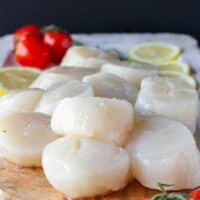
Whenever possible, buy dry packed sea scallops. Dry scallops sear beautifully with a golden crust. They also taste sweeter and release less water. Wet scallops are treated with a phosphate solution that causes them to retain extra moisture, making them more likely to steam instead of sear.
How to Choose Fresh Scallops
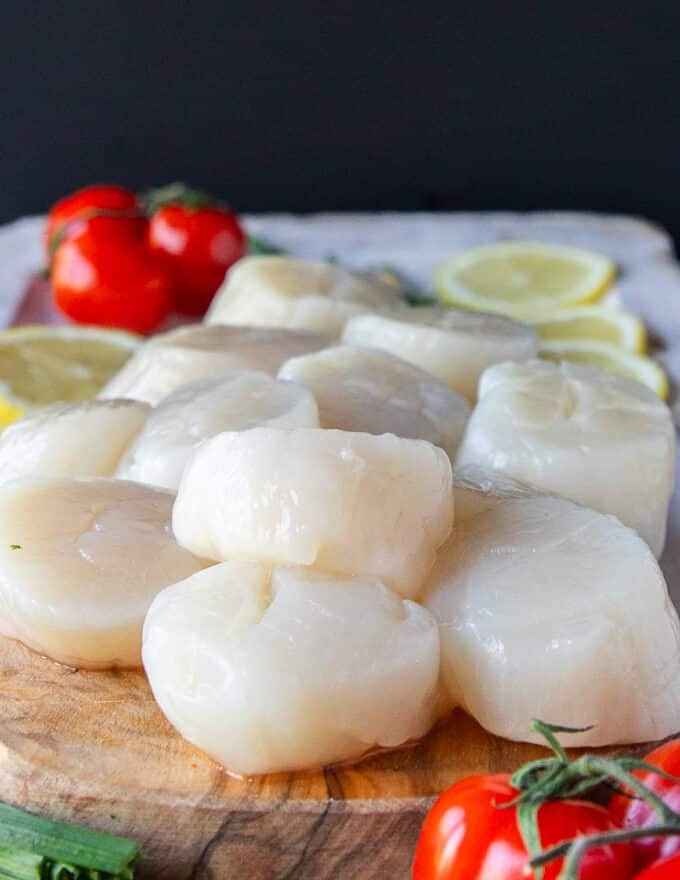
- Look for scallops that are Creamy white or light ivory, slightly translucent, firm, moist but not slimy and mild smelling.
- Avoid scallops that have: A strong fishy odor, milky liquid pooling in the package, a soft or mushy texture.
Fresh vs. Frozen
High quality frozen scallops are often an excellent choice because they’re typically frozen shortly after harvest. Thaw them overnight in the refrigerator and pat them completely dry before cooking
How to Make Scallop Pasta Step By Step
Cook the Pasta
- Bring a large pot of water to a boil and season generously with salt until it tastes like the sea. This is your opportunity to season the pasta itself.
- Cook the pasta until just al dente, then reserve a cup of the pasta water before draining.
Prepare the Scallops
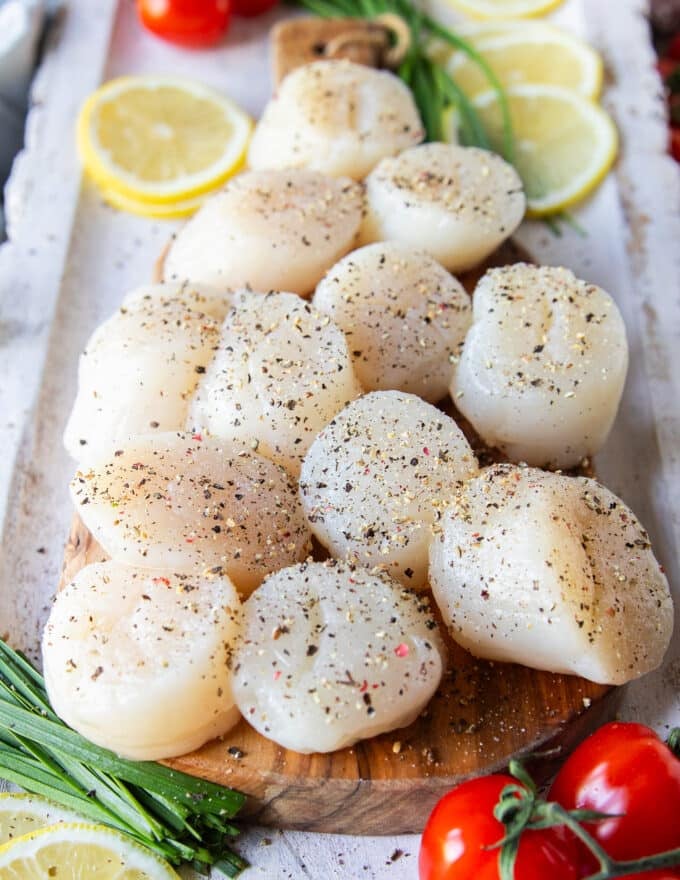
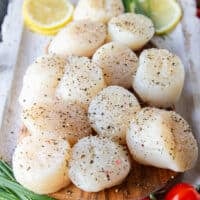
- Remove the small side muscle if it’s still attached ad pat every scallop thoroughly dry with paper towels.
- Season lightly with salt and freshly ground black pepper just before cooking.
Sear the Scallops
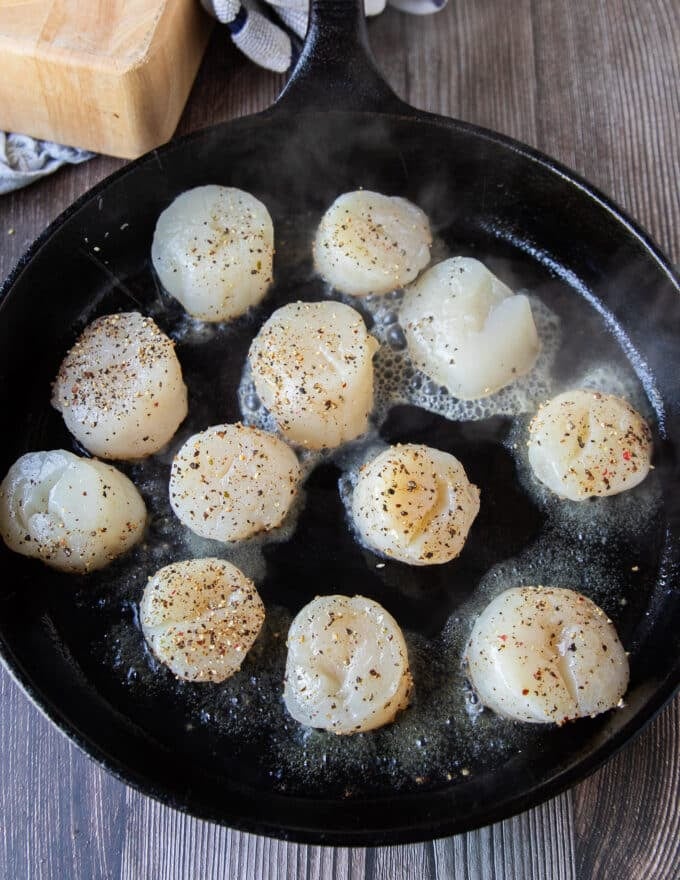
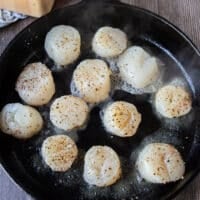
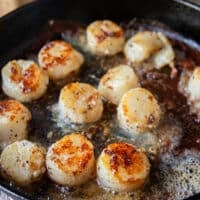
- Use a large stainless steel or cast iron skillet over medium-high heat. Add olive oil and a small amount of butter. The pan should be hot enough that the scallops sizzle immediately when added.
- Arrange the scallops in a single layer, leaving space between each one.

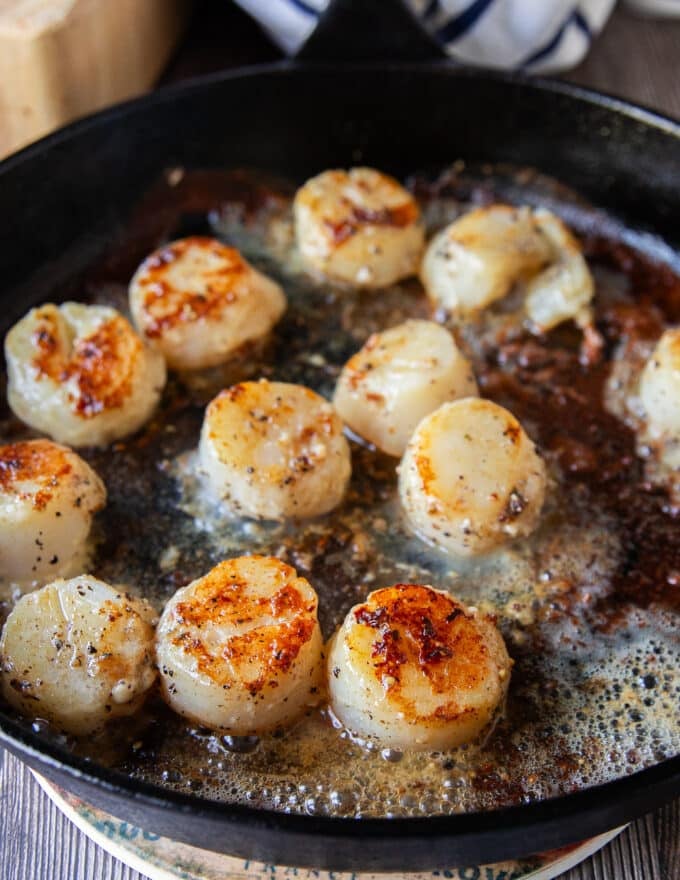
- Don’t move them while the first side develops a deep golden brown crust.
- Flip and cook just until the centers are opaque but still tender.
- Transfer to a plate immediately.
Make the Sauce
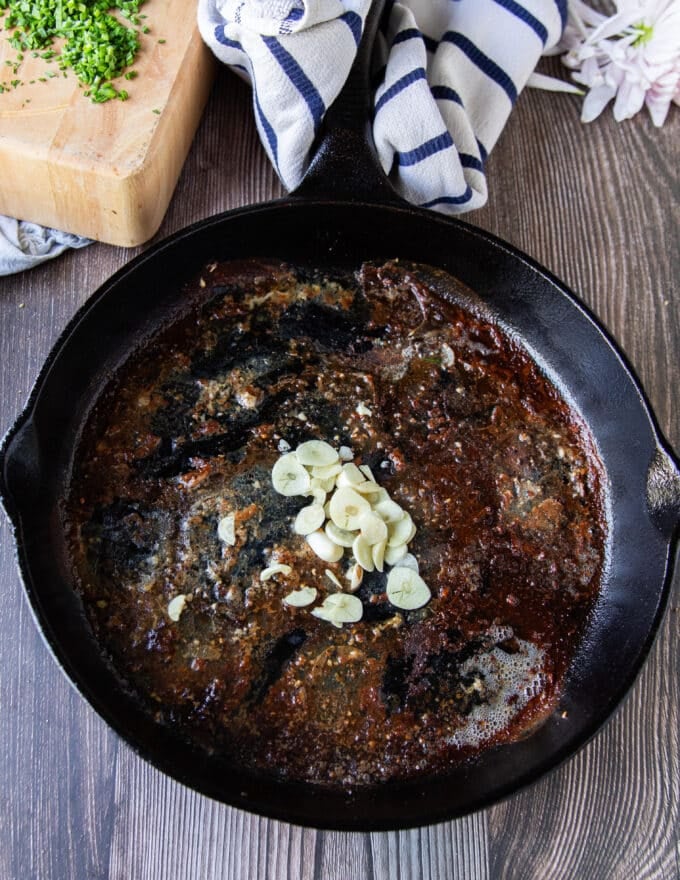
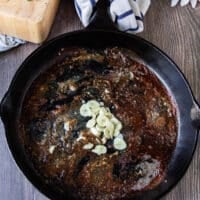
- Reduce the heat slightly and add more butter. In the same pan, add in the garlic slices and cook for just a minute until fragrant.
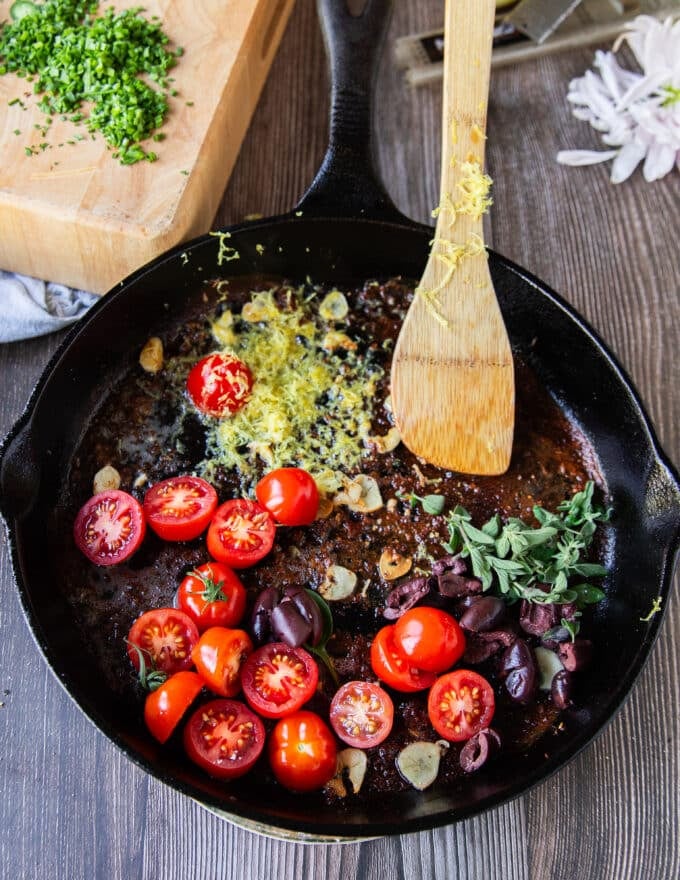
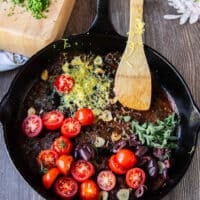
- Add in the tomatoes, herbs, olives and lemon zest to the pan and toss until the tomatoes start releasing their juices.
- Deglaze the pan scraping up the browned bits from the bottom of the pan using the tomato juices, adding in some pasta water or even wine.
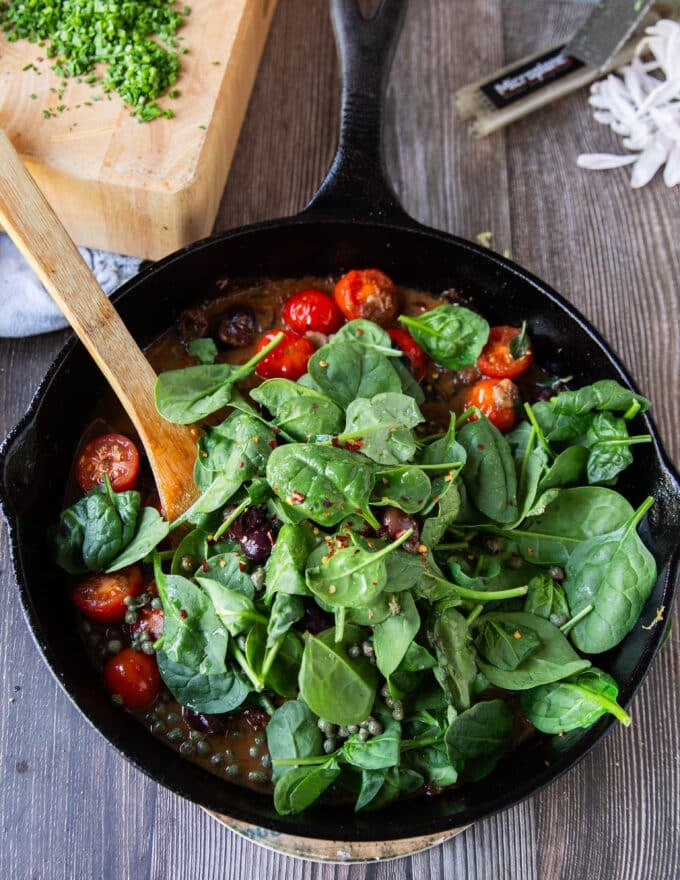
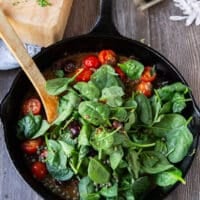
- Add in the spinach, capers and seasoning.
Toss the Pasta in the Sauce
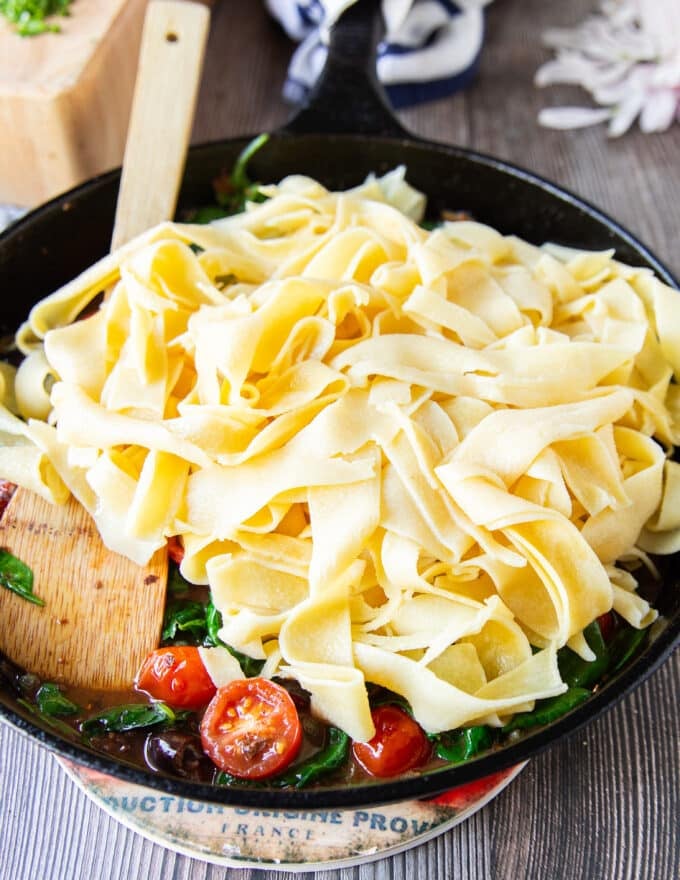
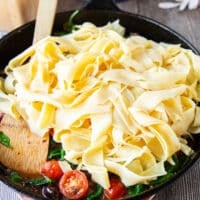
- Toss well and then add in the cooked pasta, adding in some pasta water to adjust the consistency of the sauce to your taste.
- Stir in some more lemon zest, fresh parsley, and a squeeze of lemon juice.
Return the Scallops
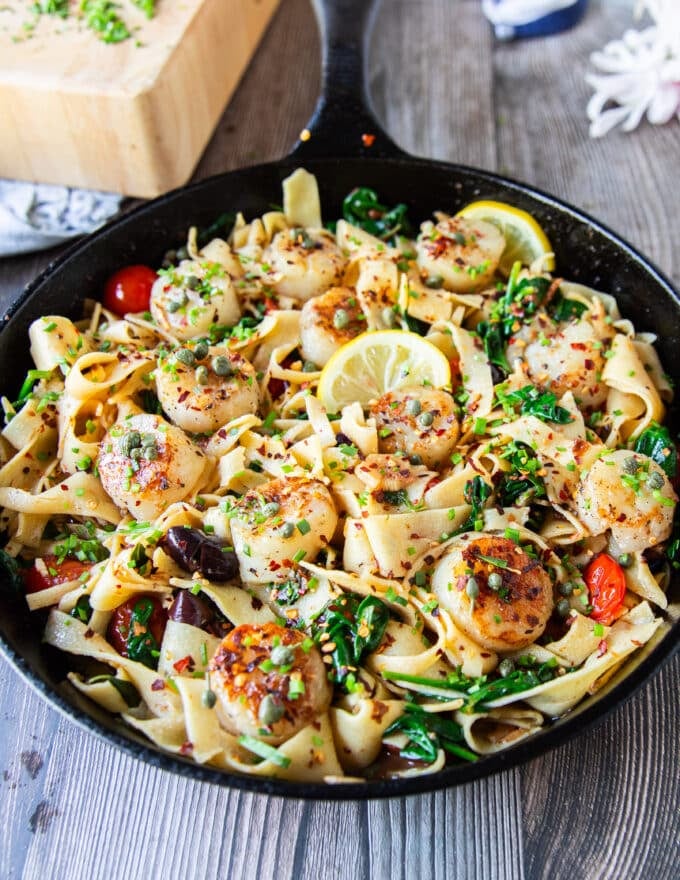
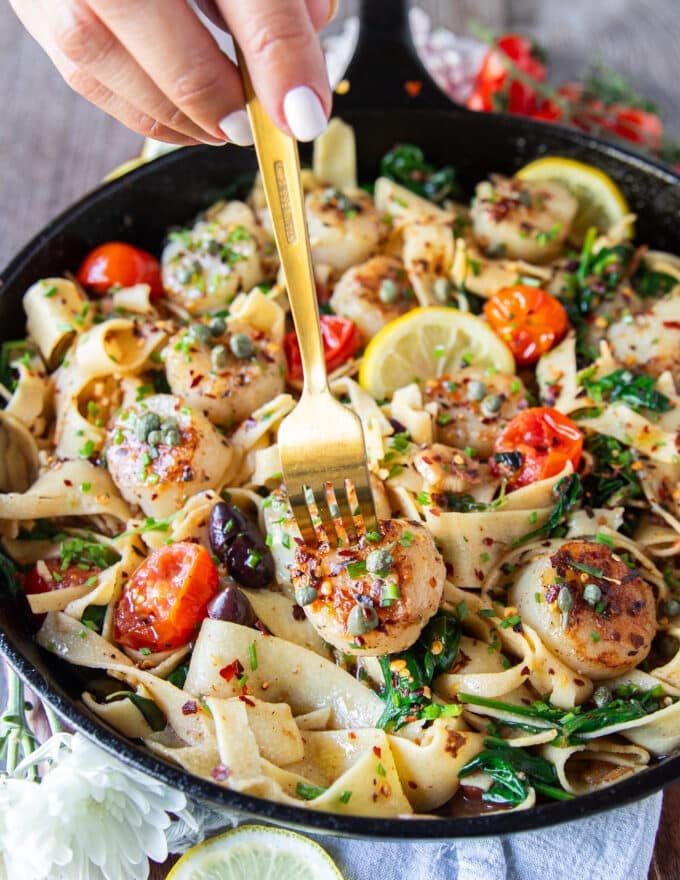
- Nestle the scallops into the pasta just long enough to warm through. Avoid simmering them in the sauce, as they’ll continue cooking from the residual heat.
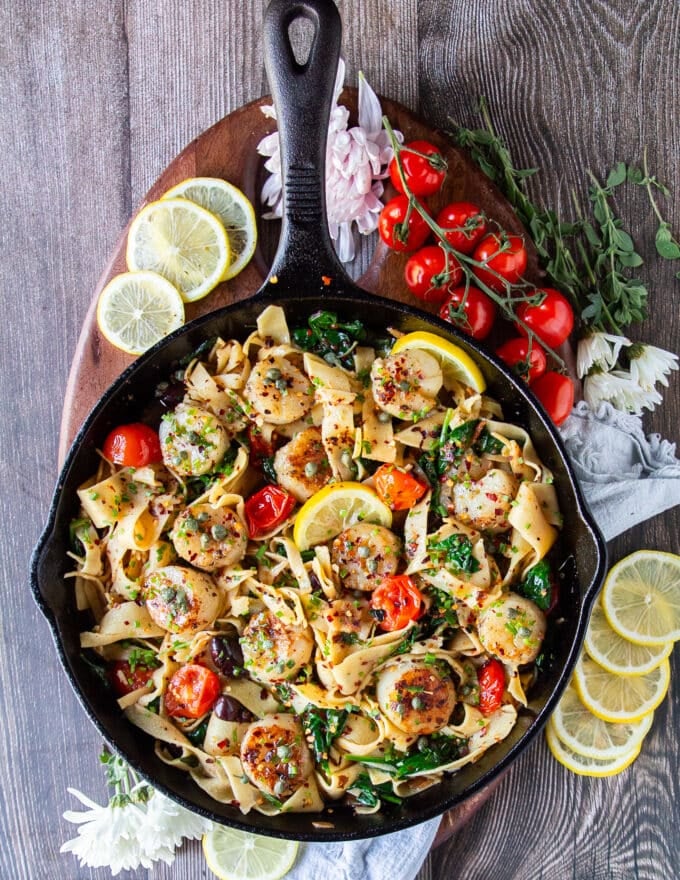
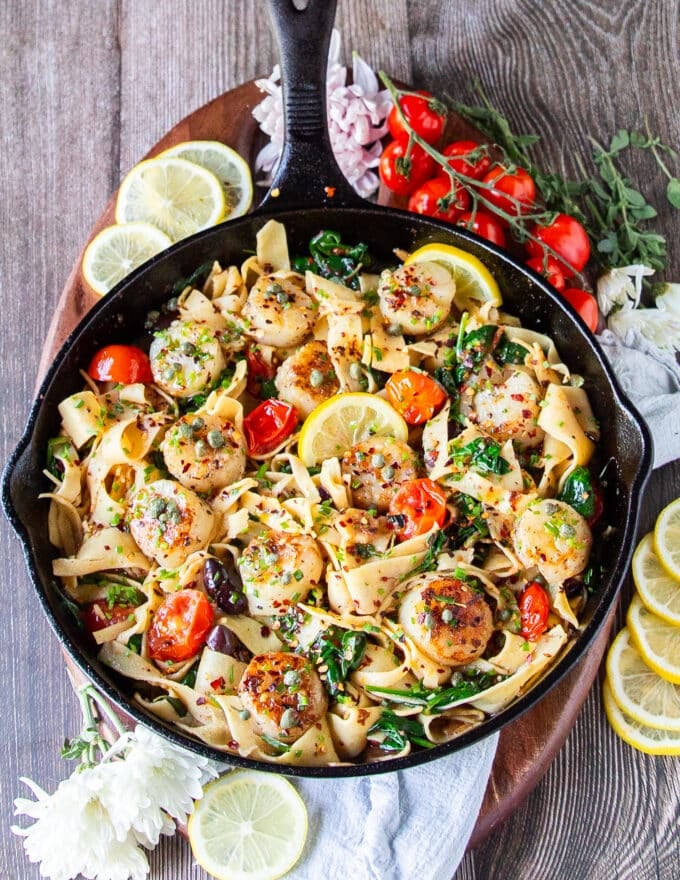
- Serve immediately with additional parsley, cracked black pepper, lemon wedges, and, if desired, a light sprinkle of freshly grated Parmesan.
Expert Tips And Tricks to Perfect Scallop Pasta
- Buy dry packed scallops whenever possible: They’re the secret to achieving the deep golden crust you see in restaurants. Wet packed scallops release excess liquid and rarely brown as well.
- Dry the scallops better than you think you need to: After patting them dry, let them sit uncovered in the refrigerator for 15–30 minutes if time allows. The drier the surface, the better the sear.
- Don’t season the scallops too early: Salt draws out moisture. Season them just before they hit the pan to keep the surface as dry as possible.
- Heat the pan before adding the scallops: If the oil isn’t shimmering, wait another minute. Starting with a hot pan helps create an immediate crust instead of allowing the scallops to release water.
- Cook in batches if necessary: A crowded skillet is one of the quickest ways to ruin the sear. If needed, cook the scallops in two batches rather than trying to fit them all into the pan at once.
- Let the browned bits build flavor: Those caramelized bits left in the pan after searing are packed with flavor. Deglazing them with white wine creates the foundation of a rich, flavorful sauce.
- Undercook slightly rather than overcook: Scallops continue to cook from residual heat after leaving the pan. Removing them just before they’re fully done helps keep them tender.
- Use fresh lemon instead of bottled juice: Fresh lemon juice and zest add brightness without the harsh acidity that bottled juice can sometimes have.
- Save more pasta water than you think you’ll need: It’s much easier to thin a sauce than to fix one that’s become too thick. Reserve at least a cup before draining the pasta.
- Finish with fresh herbs, not dried: Fresh parsley or basil added just before serving brings color and freshness that dried herbs can’t replicate.
Scallop Pasta Recipe Variations
- Garlic Butter Scallop Pasta: This is the classic version and one of the most popular. Butter, garlic, parsley, and a squeeze of fresh lemon create a light sauce that enhances the scallops’ natural sweetness without overpowering them.
- Creamy Scallop Pasta: For a richer dish, stir heavy cream into the sauce after the wine has reduced. Finish with freshly grated Parmesan and black pepper for a silky pasta that’s perfect for special occasions.
- Lemon Scallop Pasta: Increase the lemon zest and juice, then finish with parsley and a drizzle of extra virgin olive oil. This lighter version is ideal for spring and summer dinners.
- White Wine Scallop Pasta: A dry white wine creates a sophisticated, restaurant-quality sauce with delicate acidity. Sauvignon Blanc, Pinot Grigio, or Vermentino all work beautifully.
- Mediterranean Scallop Pasta: Add cherry tomatoes, baby spinach, Kalamata olives, capers, fresh basil, and crumbled feta for a meal full of bright, fresh flavors.
- Tomato Basil Scallop Pasta: Use a light cherry tomato sauce with garlic, basil, and olive oil. The sweetness of roasted tomatoes complements the delicate scallops without overwhelming them.
- Spicy Scallop Pasta: Add crushed red pepper flakes, Calabrian chili paste, or a spoonful of harissa for gentle heat that balances the scallops’ sweetness.
- Brown Butter Scallop Pasta: Brown the butter until it develops a nutty aroma, then finish with sage and lemon. This variation is especially delicious during fall and winter.
- Seafood Pasta: Turn this into a seafood feast by adding shrimp, mussels, clams, or lobster while keeping the scallops as the highlight.
Troubleshooting
- Why are my scallops rubbery?: Overcooking is the number one cause. Scallops only need a few minutes per side. Once they become opaque and lightly firm, they’re done.
- What if my scallops didn’t brown? The scallops were likely too wet, the pan wasn’t hot enough, or the skillet was overcrowded. Always pat scallops completely dry and cook them in a hot pan with enough space between each one.
- Why are my scallops sticking to the pan? Scallops naturally release once a proper crust forms. If they stick, they’re probably not ready to flip yet. Give them another 30 to 60 seconds before trying again.
- What if my pasta sauce is watery? Either too much pasta water was added or the wine wasn’t reduced enough before finishing the sauce. Allow the sauce to simmer briefly until it lightly coats the pasta.
- Why did my sauce separate? The heat was likely too high after adding the butter or if you’ve mixed lemon juice and on high heat. Reduce the heat before whisking in butter so it emulsifies smoothly instead of breaking.
- What if my pasta tastes bland? Seafood dishes rely on balanced seasoning. So salt the pasta water generously and season the scallops just before cooking. Add plenty of fresh lemon juice and herbs.
- Why are my scallops watery? Wet packed scallops often release excess liquid. Buying dry packed scallops and drying them thoroughly before cooking helps eliminate this problem.
- What if my garlic tastes bitter? Garlic cooks quickly so keep an eye on it!
- Why did my pasta become dry? The sauce likely reduced too much. A splash of reserved pasta water stirred in just before serving restores a silky consistency.
Can I use frozen scallops?
Absolutely yes. High quality frozen scallops are an excellent option. Make sure to thaw them overnight in the refrigerator and pat them completely dry before cooking for the best sear.
Storage & Reheating
- Storage: Store leftover scallop pasta in an airtight container in the refrigerator for up to 2 days. Because scallops are delicate, they’re best enjoyed fresh, but leftovers can still be delicious if reheated gently.
- Reheating: Reheat slowly in a skillet over low heat with a splash of water, seafood stock, or cream to loosen the sauce. Avoid high heat or prolonged reheating, as the scallops can quickly become tough and rubbery.
- Microwaving works in a pinch but is more likely to overcook the scallops.
Can You Freeze Scallop Pasta?
Freezing is not recommended. While the pasta can freeze reasonably well, cooked scallops often become chewy after thawing and reheating. For the best quality, enjoy this dish fresh or within a couple of days.
Why Pasta Water Creates a Better Sauce
Reserved pasta water contains starch that helps bind butter, olive oil, and wine into a glossy, restaurant style sauce. Instead of separating, the sauce becomes silky and clings to every strand of pasta.
Why Dry Scallops Sear Better
Moisture is the biggest obstacle to a golden crust. Excess water must evaporate before browning can begin, which is why thoroughly drying the scallops is one of the most important steps.
How Resting the Scallops Matters
After searing, let the scallops rest on a warm plate while you finish the sauce. This allows the juices to redistribute and prevents overcooking when they’re added back to the pasta
Why Scallops Cook So Quickly
Scallops are naturally tender and lean. They require only a few minutes per side, and even one or two extra minutes can turn them firm and rubbery.
How Pasta Water Is Essential
The starch in reserved pasta water helps emulsify the butter, olive oil, and cooking liquid into a silky sauce that clings to the pasta instead of pooling at the bottom of the bowl.
What pasta goes best with scallops?
Long pasta shapes like linguine, fettuccine, spaghetti, tagliatelle, and bucatini are the best choices because they hold light sauces beautifully without overwhelming the delicate scallops. For creamy sauces, shorter pasta like rigatoni or penne also works well.
What sauce goes with scallop pasta?
Scallops pair best with light sauces that enhance rather than overpower their naturally sweet flavor. Popular options are listed in the variations section above.
How long should you cook scallops?
Large sea scallops typically cook in 2 to 3 minutes per side, depending on their size. They should develop a deep golden crust while remaining tender and slightly translucent in the very center.
Why are my scallops rubbery? You
Rubbery scallops are almost always the result of overcooking. Because scallops are naturally lean, they continue cooking even after leaving the pan. Removing them just before they’re fully done helps keep them tender.
Should I rinse scallops before cooking?
No. Instead of rinsing, simply pat them dry with paper towels. Rinsing adds unnecessary moisture, making it harder to achieve a beautiful golden sear.
What are dry packed scallops?
Dry packed scallops are natural scallops that haven’t been treated with phosphate solutions. They brown better, taste sweeter, and release far less liquid than wet packed scallops, making them the preferred choice for searing.
Do you season scallops before or after cooking?
Season scallops lightly with salt and pepper immediately before they go into the hot pan. Salting too early draws out moisture and can prevent proper browning.
Can you put Parmesan on seafood pasta?
Yes, although opinions vary. Traditional Italian cuisine often avoids cheese with delicate seafood, but a light sprinkle of freshly grated Parmesan works beautifully in creamy or garlic butter scallop pasta. The key is to use it sparingly so it doesn’t overpower the scallops.
Can I make scallop pasta without wine?
Absolutely. Replace the wine with seafood stock, chicken stock, or a combination of stock and fresh lemon juice for a flavorful alcohol free version.
Is scallop pasta healthy?
Scallop pasta can be a balanced meal. Scallops are naturally lean, high in protein, and rich in vitamin B12 and selenium. Using olive oil, plenty of vegetables, and a light sauce keeps the dish nutritious while still feeling indulgent.
What’s the difference between sea scallops and bay scallops?
Sea scallops are much larger and are ideal for pan searing because they develop a golden crust while staying tender inside. Bay scallops are smaller, sweeter, and cook much faster, making them better suited for soups, seafood stews, and quick sautés.
Can I make scallop pasta ahead of time?
The pasta and sauce can be prepared in advance, but scallops are best cooked just before serving. Freshly seared scallops have the best texture and flavor.
Can I add shrimp to scallop pasta?
Yes. Shrimp and scallops pair beautifully together. Cook each seafood separately to ensure both are perfectly cooked before combining them with the pasta.
Seafood Pasta Recipes
Tuna Pasta
Clam Pasta
Cajun Pasta
Shrimp Pasta
Creamy Chili Crab Pasta
Crab Pasta
Sardine Pasta
Lobster Pasta
Scallop Pasta
Ingredients
- 8-10 Scallops Large size Hokkaidso scallops, defrosted
- 1/4 teaspoon each salt and pepper to taste
- 2 teaspoons neutral oil
- 1 tablespoon butter
Pasta
- 1 Tablespoon Butter
- 3 garlic cloves sliced
- 1 cup baby tomatoes cut in half
- 1/4 cup Kalamata olives pitted
- 1 lemon zest
- 1 tablespoons fresh herbs oregano or thyme
- 2-3 cups baby spinach
- Juice of half a lemon
- 1 tablespoon capers
- 1/4 teaspoon salt and pepper or to taste
- Pinch of chilli flakes
- 1 pound cooked pasta cooked in salted water and reserve some Pasta water
Instructions
-
Pat dry the scallops once defrosted or if using fresh pat dry right away.

-
Cook the pasta in salted water and reserve some of the pasta water, about 1 1/2 cups.
-
Season the scallops liberally on both sides with salt and pepper.
-
Preheat a heavy duty cast iron or quality non stick sauce pan over medium high heat and add in the oil and butter.
-
Sear the scallops for 2-3 minutes on each side until golden.
-
Remove the golden scallops on to a separate plate.
-
To the same sauce pan, add in the garlic, extra butter and cook until opaque.
-
Add in the tomatoes, olives, lemon zest, herbs and cook for 3 minutes.
-
Then add in the pasta water, the spinach, capers, lemon juice and cook for just 2 minutes until the sauce comes together.
-
Add the cooked pasta right into the sauce pan and season.
-
Return the scallops back to the pasta and serve right away.
Recipe Video
Recipe Notes
Expert Tips And Tricks to Perfect Scallop Pasta
- Buy dry packed scallops whenever possible: They're the secret to achieving the deep golden crust you see in restaurants. Wet packed scallops release excess liquid and rarely brown as well.
- Dry the scallops better than you think you need to: After patting them dry, let them sit uncovered in the refrigerator for 15–30 minutes if time allows. The drier the surface, the better the sear.
- Don't season the scallops too early: Salt draws out moisture. Season them just before they hit the pan to keep the surface as dry as possible.
- Heat the pan before adding the scallops: If the oil isn't shimmering, wait another minute. Starting with a hot pan helps create an immediate crust instead of allowing the scallops to release water.
- Cook in batches if necessary: A crowded skillet is one of the quickest ways to ruin the sear. If needed, cook the scallops in two batches rather than trying to fit them all into the pan at once.
- Let the browned bits build flavor: Those caramelized bits left in the pan after searing are packed with flavor. Deglazing them with white wine creates the foundation of a rich, flavorful sauce.
- Undercook slightly rather than overcook: Scallops continue to cook from residual heat after leaving the pan. Removing them just before they're fully done helps keep them tender.
- Use fresh lemon instead of bottled juice: Fresh lemon juice and zest add brightness without the harsh acidity that bottled juice can sometimes have.
- Save more pasta water than you think you'll need: It's much easier to thin a sauce than to fix one that's become too thick. Reserve at least a cup before draining the pasta.
- Finish with fresh herbs, not dried: Fresh parsley or basil added just before serving brings color and freshness that dried herbs can't replicate.
Scallop Pasta Recipe Variations
- Garlic Butter Scallop Pasta: This is the classic version and one of the most popular. Butter, garlic, parsley, and a squeeze of fresh lemon create a light sauce that enhances the scallops' natural sweetness without overpowering them.
- Creamy Scallop Pasta: For a richer dish, stir heavy cream into the sauce after the wine has reduced. Finish with freshly grated Parmesan and black pepper for a silky pasta that's perfect for special occasions.
- Lemon Scallop Pasta: Increase the lemon zest and juice, then finish with parsley and a drizzle of extra virgin olive oil. This lighter version is ideal for spring and summer dinners.
- White Wine Scallop Pasta: A dry white wine creates a sophisticated, restaurant-quality sauce with delicate acidity. Sauvignon Blanc, Pinot Grigio, or Vermentino all work beautifully.
- Mediterranean Scallop Pasta: Add cherry tomatoes, baby spinach, Kalamata olives, capers, fresh basil, and crumbled feta for a meal full of bright, fresh flavors.
- Tomato Basil Scallop Pasta: Use a light cherry tomato sauce with garlic, basil, and olive oil. The sweetness of roasted tomatoes complements the delicate scallops without overwhelming them.
- Spicy Scallop Pasta: Add crushed red pepper flakes, Calabrian chili paste, or a spoonful of harissa for gentle heat that balances the scallops' sweetness.
- Brown Butter Scallop Pasta: Brown the butter until it develops a nutty aroma, then finish with sage and lemon. This variation is especially delicious during fall and winter.
- Seafood Pasta: Turn this into a seafood feast by adding shrimp, mussels, clams, or lobster while keeping the scallops as the highlight.
Troubleshooting
- Why are my scallops rubbery?: Overcooking is the number one cause. Scallops only need a few minutes per side. Once they become opaque and lightly firm, they're done.
- What if my scallops didn't brown? The scallops were likely too wet, the pan wasn't hot enough, or the skillet was overcrowded. Always pat scallops completely dry and cook them in a hot pan with enough space between each one.
- Why are my scallops sticking to the pan? Scallops naturally release once a proper crust forms. If they stick, they're probably not ready to flip yet. Give them another 30 to 60 seconds before trying again.
- What if my pasta sauce is watery? Either too much pasta water was added or the wine wasn't reduced enough before finishing the sauce. Allow the sauce to simmer briefly until it lightly coats the pasta.
- Why did my sauce separate? The heat was likely too high after adding the butter or if you've mixed lemon juice and on high heat. Reduce the heat before whisking in butter so it emulsifies smoothly instead of breaking.
- What if my pasta tastes bland? Seafood dishes rely on balanced seasoning. So salt the pasta water generously and season the scallops just before cooking. Add plenty of fresh lemon juice and herbs.
- Why are my scallops watery? Wet packed scallops often release excess liquid. Buying dry packed scallops and drying them thoroughly before cooking helps eliminate this problem.
- What if my garlic tastes bitter? Garlic cooks quickly so keep an eye on it!
- Why did my pasta become dry? The sauce likely reduced too much. A splash of reserved pasta water stirred in just before serving restores a silky consistency.
Can I use frozen scallops?
Absolutely yes. High quality frozen scallops are an excellent option. Make sure to thaw them overnight in the refrigerator and pat them completely dry before cooking for the best sear.
Storage & Reheating
- Storage: Store leftover scallop pasta in an airtight container in the refrigerator for up to 2 days. Because scallops are delicate, they're best enjoyed fresh, but leftovers can still be delicious if reheated gently.
- Reheating: Reheat slowly in a skillet over low heat with a splash of water, seafood stock, or cream to loosen the sauce. Avoid high heat or prolonged reheating, as the scallops can quickly become tough and rubbery.
- Microwaving works in a pinch but is more likely to overcook the scallops.
Can You Freeze Scallop Pasta?
Freezing is not recommended. While the pasta can freeze reasonably well, cooked scallops often become chewy after thawing and reheating. For the best quality, enjoy this dish fresh or within a couple of days.
Why Pasta Water Creates a Better Sauce
Reserved pasta water contains starch that helps bind butter, olive oil, and wine into a glossy, restaurant style sauce. Instead of separating, the sauce becomes silky and clings to every strand of pasta.
Why Dry Scallops Sear Better
Moisture is the biggest obstacle to a golden crust. Excess water must evaporate before browning can begin, which is why thoroughly drying the scallops is one of the most important steps.
How Resting the Scallops Matters
After searing, let the scallops rest on a warm plate while you finish the sauce. This allows the juices to redistribute and prevents overcooking when they're added back to the pasta
Why Scallops Cook So Quickly
Scallops are naturally tender and lean. They require only a few minutes per side, and even one or two extra minutes can turn them firm and rubbery.
How Pasta Water Is Essential
The starch in reserved pasta water helps emulsify the butter, olive oil, and cooking liquid into a silky sauce that clings to the pasta instead of pooling at the bottom of the bowl.
What pasta goes best with scallops?
Long pasta shapes like linguine, fettuccine, spaghetti, tagliatelle, and bucatini are the best choices because they hold light sauces beautifully without overwhelming the delicate scallops. For creamy sauces, shorter pasta like rigatoni or penne also works well.
What sauce goes with scallop pasta?
Scallops pair best with light sauces that enhance rather than overpower their naturally sweet flavor. Popular options are listed in the variations section above.
How long should you cook scallops?
Large sea scallops typically cook in 2 to 3 minutes per side, depending on their size. They should develop a deep golden crust while remaining tender and slightly translucent in the very center.
Why are my scallops rubbery? You
Rubbery scallops are almost always the result of overcooking. Because scallops are naturally lean, they continue cooking even after leaving the pan. Removing them just before they're fully done helps keep them tender.
Should I rinse scallops before cooking?
No. Instead of rinsing, simply pat them dry with paper towels. Rinsing adds unnecessary moisture, making it harder to achieve a beautiful golden sear.
What are dry packed scallops?
Dry packed scallops are natural scallops that haven't been treated with phosphate solutions. They brown better, taste sweeter, and release far less liquid than wet packed scallops, making them the preferred choice for searing.
Do you season scallops before or after cooking?
Season scallops lightly with salt and pepper immediately before they go into the hot pan. Salting too early draws out moisture and can prevent proper browning.
Can you put Parmesan on seafood pasta?
Yes, although opinions vary. Traditional Italian cuisine often avoids cheese with delicate seafood, but a light sprinkle of freshly grated Parmesan works beautifully in creamy or garlic butter scallop pasta. The key is to use it sparingly so it doesn't overpower the scallops.
Can I make scallop pasta without wine?
Absolutely. Replace the wine with seafood stock, chicken stock, or a combination of stock and fresh lemon juice for a flavorful alcohol free version.
Is scallop pasta healthy?
Scallop pasta can be a balanced meal. Scallops are naturally lean, high in protein, and rich in vitamin B12 and selenium. Using olive oil, plenty of vegetables, and a light sauce keeps the dish nutritious while still feeling indulgent.
What's the difference between sea scallops and bay scallops?
Sea scallops are much larger and are ideal for pan searing because they develop a golden crust while staying tender inside. Bay scallops are smaller, sweeter, and cook much faster, making them better suited for soups, seafood stews, and quick sautés.
Can I make scallop pasta ahead of time?
The pasta and sauce can be prepared in advance, but scallops are best cooked just before serving. Freshly seared scallops have the best texture and flavor.
Can I add shrimp to scallop pasta?
Yes. Shrimp and scallops pair beautifully together. Cook each seafood separately to ensure both are perfectly cooked before combining them with the pasta.


Leave a Reply