
Tuna pasta is the ultimate weeknight comfort meal. It’s quick, protein rich, and full of Mediterranean flavors. Simply tossed with a simple olive oil and garlic sauce, juicy tomatoes and fresh herbs, tuna pasta is versatile, satisfying, and deeply nostalgic.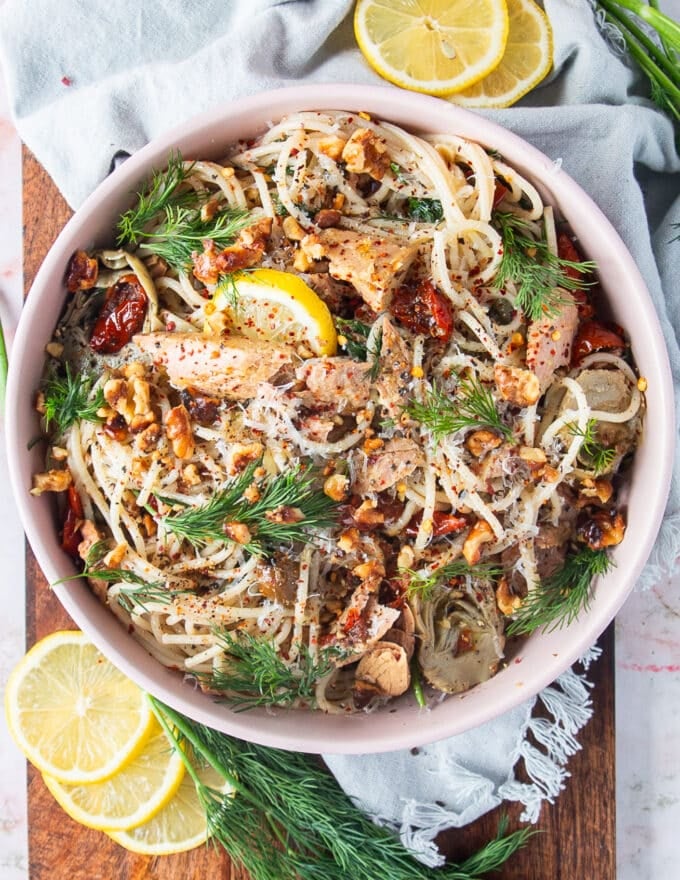 Our viral and ever so popular Sardine Pasta is similar to this Tuna Pasta recipe. It’s simple, tasty and quick to make. This is our family recipe and I’m sharing it with you in details as a guide for everything you need to know!If you love tuna, some of our viral fresh tuna recipes are Tuna Tartare, Seared Ahi Tuna, Tuna Tataki, Tuna Crudo, Tuna Carpaccio and Ahi Tuna Salad. Our canned tuna recipes you need to try are Tuna Noodle Casserole, Tuna Salad Recipe with Olive Oil Dressing, Tuna Cucumber Salad.
What Is Tuna Pasta?
Tuna pasta is a dish combining pasta with canned or fresh tuna and various sauces or seasonings. Popular along the Mediterranean, it balances protein, carbs, and healthy fats, making it a complete, simple, and filling meal. Our family tuna pasta recipe features flakey jarred tuna infused with garlic, sun dried tomatoes, fresh dill, artichokes, capers and crunchy toasted nuts. You can use our Candied Walnuts or simple toasted pine nuts.Along other regions, you’ll find tuna pasta popular in Italy (Sicily and Genova), France and Spain. It’s usually made with canned tuna, fresh bright veggies and herbs, and can be served warm or cold.
What Does it Taste Like?
- Savory, briny with delicate umami from the tuna
- Sweet tangy tomato depth
- Fresh herbal brightness with a tangy lemon finish
- Subtle nutty cheese finish
- Silky but light texture
- Soft, chewy pasta balanced with tender tuna flakes
- Optionally creamy if you choose to add cream.

Why You’ll Love Tuna Pasta
- This recipe is ready in under 30 minutes!
- All you need is one pot for the pasta and a saucepan for the sauce.
- It’s super affordable and pantry friendly
- The tuna pasta is high in protein and omega 3s
- This recipe is so easily customizable and verstaile.
- It works hot or cold for salads or bowls
- The recipe has a blend of savory, fresh and bright flavors with umami from the tuna.
- The texture is silky, not creamy so instead of a thick sauce, this pasta is glossy and lightly coated.
- You can make it spicy, lemony, capery, or even add greens. It adapts beautifully.
Ingredients You’ll Need

Tuna
Use cans of tuna or tuna in a jar, which ever is your favorite. Chosse oil packed tuna because it offers:
- Better moisture retention
- More flavor
- Better integration into sauce since you will use the oil. While you can use butter, we prefer the oil.
Water packed tuna is leaner but can taste drier. Look for firm flakes, not mushy shreds.
Sun Dried Tomatoes:
They’re better than fresh because they have natural sugars and very mild acidity, so they enhance flavor and savory depth without needed tomato sauce. You can use fresh baby cherry tomatoes too.
Pasta Cooking Water:
Similar to the Sardine Pasta and Burrata Pasta and Pasta Primavera, using pasta water to thicken the sauce is a critical technique. Pasta water has surface starch and it’s well seasoned with salt. It emulsifies beautifully with grated parmesan into a thick silky sauce that’s not heavy.
Seasoning:
A simple kosher salt and black pepper is all the seasoning needed. We add a sprinkle of chili flakes too.
Aromatics:
Garlic cloves fresh and thinly sliced make for a great base to the sauce. Lemon slices, lemon juice and lemon zest are the top sources of brightness!
Herbs:
You can use fresh oregano, thyme, parsley, basil or dill.
Parmesan Cheese:
It adds umami, saltiness and body to the sauce.
Pasta:
Long pasta is preferable here. Use linguine or spaghetti if you can.
Toasted Nuts:
This is our family addition, we added some toatsed pine nuts or walnuts on top for crunch. You can likewise use toasted panko like our Spaghetti aglio e olio or Olive oil Pasta.
How to Make Tuna Pasta
1. Boil the Pasta

- Use heavily salted water (it should taste like the sea). Cook the pasta until just shy of al dente.
- Reserve 1 cup pasta water before draining.
2.Build the Tuna Pasta Sauce

- In a sauce pan or deep skillet start by adding the oil from the jarred tuna over medium heat.
- Add sliced garlic and cook for 2-3 minutes until it turns fragrant and opaque and lightly toasted.
- Avoid burning the garlic or having it turn golden as it becomes bitter.

- Stir in chopped sun dried tomatoes, or use sun dried cherry tomatoes as we have here.
- Add in capers and artichokes if using, and stir for 1-2 minutes until fragrant.

3. Add cooked Pasta and Tuna

- Break tuna gently into chunks as large or small as you want.
- Then add in the cooked and drained pasta.
- Toss them gently without breaking the tuna.
4. Emulsify The Sauce

- Add a splash of reserved pasta water and toss vigorously.
- Gradually add in the freshly grated parmesan while tossing it with the pasta.
- Continue the same process, toss continuously while adding small splashes of pasta water until glossy.
Finish The Tuna Pasta

- Fold in chopped herbs ( we love dill), some lemon zest, chili flakes and adjust seasoning.
- Top with the toasted nuts or panko for an extra crunch on top. SO GOOD!!
Expert Tips For Tuna Pasta Recipe
- Use Oil Packed Tuna, Not Water Packed. High quality olive oil packed tuna delivers best texture, a rich flavor and natural silkiness. Water packed tuna can turn out super dry and flat unless you compensate with plenty of olive oil and butter. Also keep the oil that the tuna was packed in for ultimate flavor.
- Don’t Overcook the Tuna: Remember that the tuna is actually cooked, so we just need to warm it through. Over cooking the tuna will create dryness and grainy texture.
- Emulsify Properly With Pasta Water: This is where most recipes fail. You ned to add hot reserved pasta water gradually while tossing emulsify that with the oil and parmesan cheese in the pasta. Add the water and cheese gradually and simultaneously to create a glossy coating.
- Chop Sun Dried Tomatoes Small: Large pieces overpower the pasta, they can also alter the texture balance and acidity of the sauce. So cut the sun dried tomatoes into smaller ones or use cherry sun dried tomatoes.
- Salt the Pasta Water Aggressively: You will be using this water for the sauce, and if your pasts isn’t seasoned well, the whole dish will taste bland irrespective if the quality of the tuna.
- Add Parmesan on low or off Heat: It’s best to avoid high heat with the parmesan addition because i can clump and turn greasy or show off a broken texture.
- Use lemon Zest more than Juice: Lemon zest is so aromatic and flavorful and by adding it to the sauce, you get the lemon flavor without the watery effect of lemon juice. We love a squeeze of lemon juice that we add sparingly at the end.
- Cook Garlic Gently: You want the garlic to be golden and fragrant, not browned. Burnt garlic makes the entire dish bitter and overpowers the tuna.
- Choose the Right Pasta Shape: Avoid heavy pasta shapes that overwhelm delicate tuna flakes
- Finish With Fresh Herbs: Add herbs at the end, never during long cooking, they add freshness and contrast to the richness.
Tuna Pasta Variations
- Mediterranean Tuna Pasta Salad: serve it chilled with cherry tomatoes, olives, and capers.
- Creamy Tuna Pasta: add cream or crème fraîche.
- Tuna Puttanesca : add olives, capers, anchovy paste, red chili flakes.
- Spicy Tuna Pasta: add red pepper flakes or Chili Oil.
- Whole Wheat / Gluten-free / Protein Pasta Versions; use whole wheat pasta, gluten free pasta, or protein pasta for health conscious eaters.

Why Is My Tuna Pasta Dry?
This happens when you haven’t added enough pasta water or if you overcooked the pasta. To fix this, add some warm pasta water and toss everything vigorously.
Why Does It Taste Oily?
If you haven’t completed the process of emulsification properly, the pasta will taste oily. Or if you added too much oil to the pasta initially as you cook the garlic. If you find an oily result, fix it by adding pasta water gradually while tossing to emulsify.
Why Is My Tuna Mushy?
A mushy Tuna pasta happens when you over stir the dish once you add in the tuna, or if you use fine tuna packed in water rather than chunks packed in oil. If you over cook the tuna, it will also by mushy, so avoid those two things.
Why Is It Bland?
A bland dish is caused by under salting the pasta, so you end up with tasteless pasta and tasteless pasta water to create the sauce with. Always salt the water generously. And to fix this, compensate with extra herbs and lemon.
Why Did My Cheese Clump?
The cheese will clump at high heat, so we recommend always adding it over low heat or off heat while tossing it gently to emulsify. Don’t add the entire amount one go, rather add the cheese gradually with the water and observe how much more to add.
Is Canned Tuna Safe to Eat Warm?
Yes. It is fully cooked and shelf stable so you don’t have to cook it through, just warming is enough.
Storage & Reheating
- Refrigerator: store leftovers in the fridge for 3–4 days in an airtight container.
- Freezer: store in a well sealed container for 2 months (best without cream). Texture will change so it’s not highly recommended.
- Reheat: The best way is to reheat gently in a pan with olive oil, add water if needed and more cheese to re emulsify the sauce if you feel it needs to. Avoid the microwave to preserve texture.

Can I use canned tuna in tuna pasta?
Yes, high quality canned tuna in olive oil works best for flavor and moisture.
Can I make tuna pasta ahead of time?
Yes, it stores well for 3–4 days refrigerated. Add fresh herbs before serving.
What pasta is best for tuna pasta?
Penne, fusilli, farfalle, or spaghetti, choose pasta that holds sauce well.
Can I make creamy tuna pasta?
Yes, fold in cream or crème fraîche after mixing pasta and tuna. You don’t need cream to make a silky sauce, it’s optional if you want a creamy sauce only. Similar to our Cajun Pasta where we added cream cheese.
Is tuna pasta healthy?
It’s high in protein and omega-3s; use moderate olive oil and whole grain pasta for extra nutrition.
Can I make tuna pasta spicy?
Absolutely, add chili flakes or a drizzle of Chili Oil Recipe.
What is the best tuna for pasta?
Oil packed, solid tuna is BEST for best flavor and texture.
How do you keep tuna pasta from drying out?
Reserve pasta water and toss to emulsify.
What herbs go best with tuna pasta?
Parsley, basil, oregano, dill and thyme work well.
Tuna Recipes
Seared Ahi Tuna
Tuna Tataki
Tuna Ceviche
Spicy Tuna Sandwich
Tuna Noodle Casserole From Scratch
Tuna Crudo
Best Tuna Wrap
Tuna Carpaccio

Tuna Pasta
Ingredients
- 2 cans Tuna in oil Jarred is best, but canned tuna works
- 2 tablespoons oil from the canned tuna
- 3 garlic cloves thinly sliced
- 1 lemon slice
- 2/3 cup sun dried cherry tomatoes drained
- 2 tablesoons capers drained
- 4-5 artichoke hearts drained and chopped lightly
- 1/2 lb pasta cooked and pasta water reserved
- 1/4 cup dill minced, or any herb of your choice
- 1 lemon sliced
- 1/2 teaspoon salt and pepepr to taste
- 1/4 teaspoon chili flakes to taste
- 1/3 cup walnuts chopped
Instructions
-
Boil the Pasta

-
Use heavily salted water (it should taste like the sea). Cook the pasta until just shy of al dente.
-
Reserve 1 cup pasta water before draining.
-
Build the Tuna Pasta Sauce
-
In a sauce pan or deep skillet start by adding the oil from the jarred tuna over medium heat.
-
Add sliced garlic and cook for 2-3 minutes until it turns fragrant and opaque and lightly toasted.
-
Avoid burning the garlic or having it turn golden as it becomes bitter.
-
Stir in chopped sun dried tomatoes, or use sun dried cherry tomatoes as we have here.
-
Add in capers and artichokes if using, and stir for 1-2 minutes until fragrant.
-
Break tuna gently into chunks as large or small as you want.
-
Then add in the cooked and drained pasta.
-
Toss them gently without breaking the tuna.
-
Emulsify The Sauce
-
Add a splash of reserved pasta water and toss vigorously.
-
Gradually add in the freshly grated parmesan while tossing it with the pasta.
-
Continue the same process, toss continuously while adding small splashes of pasta water until glossy.
-
Fold in chopped herbs ( we love dill), some lemon zest, chili flakes and adjust seasoning.
-
Top with the toasted nuts or panko for an extra crunch on top. SO GOOD!!


Recipe Video
Recipe Notes
Expert Tips For Tuna Pasta Recipe
- Use Oil Packed Tuna, Not Water Packed. High quality olive oil packed tuna delivers best texture, a rich flavor and natural silkiness. Water packed tuna can turn out super dry and flat unless you compensate with plenty of olive oil and butter. Also keep the oil that the tuna was packed in for ultimate flavor.
- Don’t Overcook the Tuna: Remember that the tuna is actually cooked, so we just need to warm it through. Over cooking the tuna will create dryness and grainy texture.
- Emulsify Properly With Pasta Water: This is where most recipes fail. You ned to add hot reserved pasta water gradually while tossing emulsify that with the oil and parmesan cheese in the pasta. Add the water and cheese gradually and simultaneously to create a glossy coating.
- Chop Sun Dried Tomatoes Small: Large pieces overpower the pasta, they can also alter the texture balance and acidity of the sauce. So cut the sun dried tomatoes into smaller ones or use cherry sun dried tomatoes.
- Salt the Pasta Water Aggressively: You will be using this water for the sauce, and if your pasts isn't seasoned well, the whole dish will taste bland irrespective if the quality of the tuna.
- Add Parmesan on low or off Heat: It's best to avoid high heat with the parmesan addition because i can clump and turn greasy or show off a broken texture.
- Use lemon Zest more than Juice: Lemon zest is so aromatic and flavorful and by adding it to the sauce, you get the lemon flavor without the watery effect of lemon juice. We love a squeeze of lemon juice that we add sparingly at the end.
- Cook Garlic Gently: You want the garlic to be golden and fragrant, not browned. Burnt garlic makes the entire dish bitter and overpowers the tuna.
- Choose the Right Pasta Shape: Avoid heavy pasta shapes that overwhelm delicate tuna flakes
- Finish With Fresh Herbs: Add herbs at the end, never during long cooking, they add freshness and contrast to the richness.
Tuna Pasta Variations
- Mediterranean Tuna Pasta Salad: serve it chilled with cherry tomatoes, olives, and capers.
- Creamy Tuna Pasta: add cream or crème fraîche.
- Tuna Puttanesca : add olives, capers, anchovy paste, red chili flakes.
- Spicy Tuna Pasta: add red pepper flakes or Chili Oil.
- Whole Wheat / Gluten-free / Protein Pasta Versions; use whole wheat pasta, gluten free pasta, or protein pasta for health conscious eaters.
Why Is My Tuna Pasta Dry?
This happens when you haven't added enough pasta water or if you overcooked the pasta. To fix this, add some warm pasta water and toss everything vigorously.
Why Does It Taste Oily?
If you haven't completed the process of emulsification properly, the pasta will taste oily. Or if you added too much oil to the pasta initially as you cook the garlic. If you find an oily result, fix it by adding pasta water gradually while tossing to emulsify.
Why Is My Tuna Mushy?
A mushy Tuna pasta happens when you over stir the dish once you add in the tuna, or if you use fine tuna packed in water rather than chunks packed in oil. If you over cook the tuna, it will also by mushy, so avoid those two things.
Why Is It Bland?
A bland dish is caused by under salting the pasta, so you end up with tasteless pasta and tasteless pasta water to create the sauce with. Always salt the water generously. And to fix this, compensate with extra herbs and lemon.
Why Did My Cheese Clump?
The cheese will clump at high heat, so we recommend always adding it over low heat or off heat while tossing it gently to emulsify. Don't add the entire amount one go, rather add the cheese gradually with the water and observe how much more to add.
Is Canned Tuna Safe to Eat Warm?
Yes. It is fully cooked and shelf stable so you don't have to cook it through, just warming is enough.
Storage & Reheating
- Refrigerator: store leftovers in the fridge for 3–4 days in an airtight container.
- Freezer: store in a well sealed container for 2 months (best without cream). Texture will change so it's not highly recommended.
- Reheat: The best way is to reheat gently in a pan with olive oil, add water if needed and more cheese to re emulsify the sauce if you feel it needs to. Avoid the microwave to preserve texture.
Can I use canned tuna in tuna pasta?
Yes, high quality canned tuna in olive oil works best for flavor and moisture.
Can I make tuna pasta ahead of time?
Yes, it stores well for 3–4 days refrigerated. Add fresh herbs before serving.
What pasta is best for tuna pasta?
Penne, fusilli, farfalle, or spaghetti, choose pasta that holds sauce well.
Can I make creamy tuna pasta?
Yes, fold in cream or crème fraîche after mixing pasta and tuna. You don't need cream to make a silky sauce, it's optional if you want a creamy sauce only. Similar to our Cajun Pasta where we added cream cheese.
Is tuna pasta healthy?
It’s high in protein and omega-3s; use moderate olive oil and whole grain pasta for extra nutrition.
Can I make tuna pasta spicy?
Absolutely, add chili flakes or a drizzle of Chili Oil Recipe.
What is the best tuna for pasta?
Oil packed, solid tuna is BEST for best flavor and texture.
How do you keep tuna pasta from drying out?
Reserve pasta water and toss to emulsify.
What herbs go best with tuna pasta?
Parsley, basil, oregano, dill and thyme work well.

Leave a Reply