

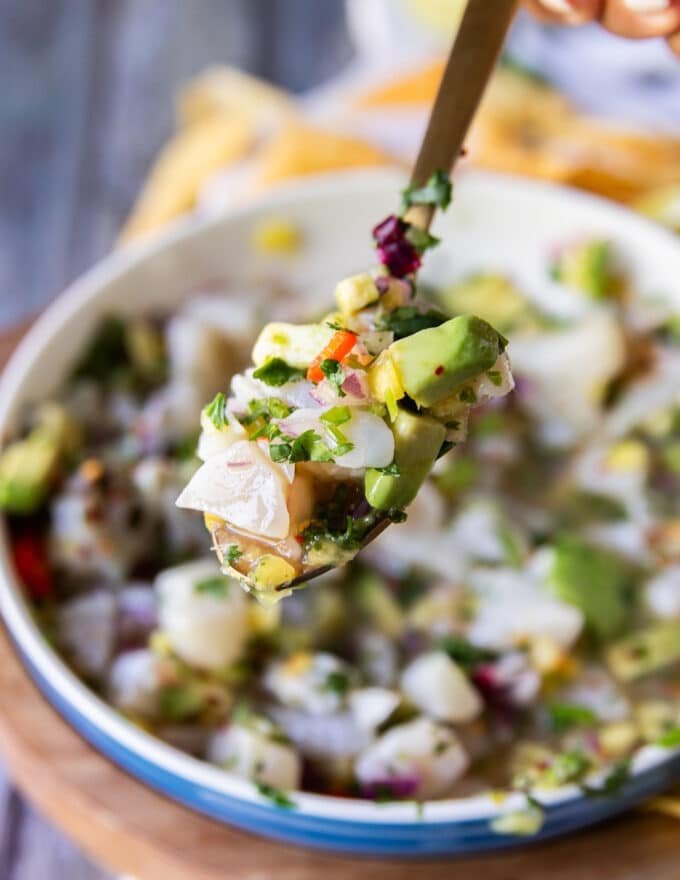
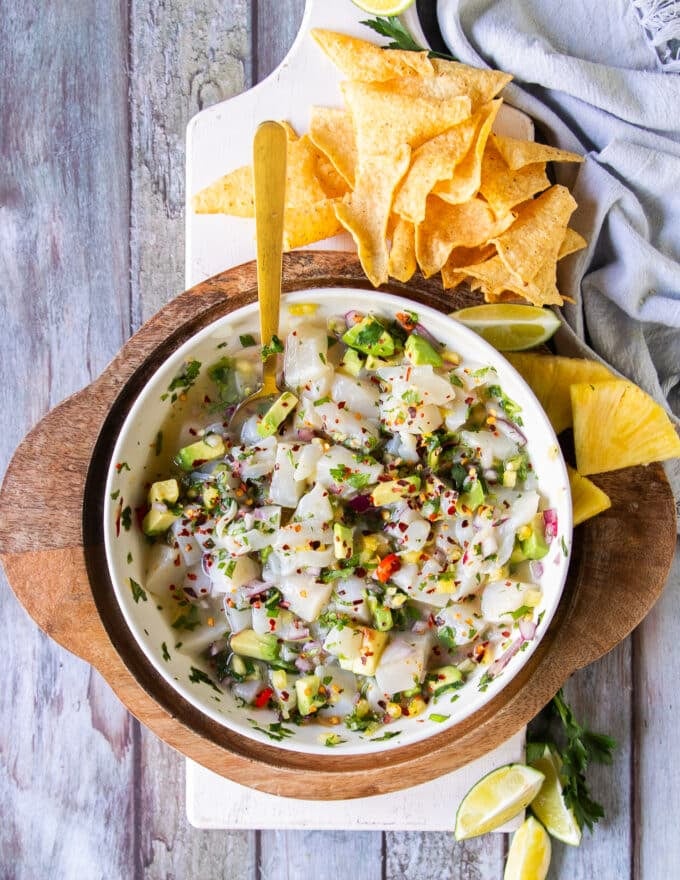
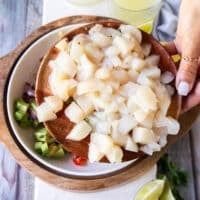
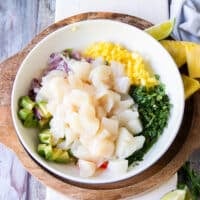
Scallop ceviche is one of those dishes where a handful of really fresh ingredients can create the richest yet brightest dish. Sweet sushi grade large Hokkaido scallops are seasoned with fresh lime and lemon, red onion, chile, cilantro, and pineapple to balance the sharp citrus. They are then served as the BEST appetizer in minutes!
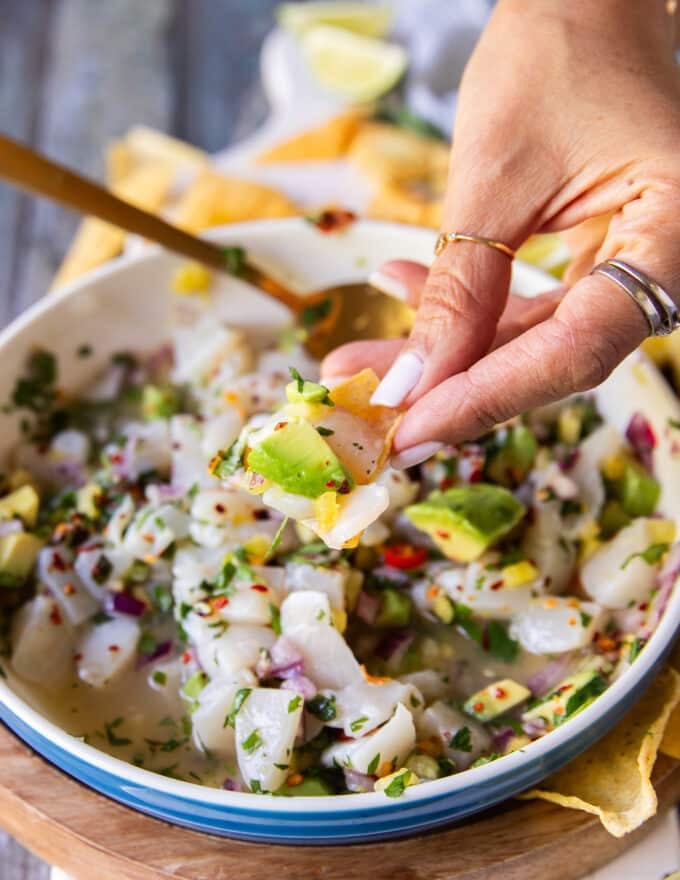
We’ve had so many inspiring Peruvian ceviches over so many restaurants. And we’ve made so many versions like this Octopus Ceviche, Tuna Ceviche or Shrimp Ceviche. Scallops make particularly good ceviche because of their naturally sweet flavor and delicate texture.
Last week we got ourselves some fresh Hokkaido scallops and fell on scallop madness! It started wit some Scallop Pasta, Broiled Scallops and we saved some for this scallop ceviche recipe.
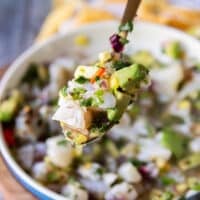
What makes this dish super special is the balance, so citrus should be bright but not harsh, the onion should add crunch without overwhelming the tender sweet scallops. Adding chile should give you just enough heat, avocado for a creamy texture, bright cilantro and sweet pineapple to balance it all out.
What Is Scallop Ceviche?
Scallop ceviche is a seafood dish from Peru made with raw scallops that are marinated in an acidic mixture, usually citrus juice, along with ingredients such as onion, chile, herbs, and sometimes fruit or vegetables.
The acid changes the structure of proteins in the scallops, producing the opaque appearance and firmer texture associated with ceviche. But ceviche isn’t simply seafood cooked in lime juice.
The process is different from heat cooking, and the citrus does not make potentially contaminated seafood automatically safe. That’s why starting with properly handled and fresh scallops from a trustworthy source is so important.
So when you’re making this dish, remember that ceviche is not cooked by heat. Citrus changes the proteins in the scallops, making them firmer and more opaque, but this is not equivalent to cooking seafood with heat and does not eliminate all food-safety risks.
For that reason, raw fish is not appropriate for everyone. Pregnant women, immunocompromised, older adults, or very young children should avoid raw or undercooked shellfish. When making ceviche, use seafood specifically sold by a reputable supplier for raw preparation and keep it properly refrigerated.
Now back to this recipe, the scallops are marinated, remain tender with a sweet and delicate texture. You don’t want to keep it for too long soaking in the citrus because it turns firm, chalky, or mushy.
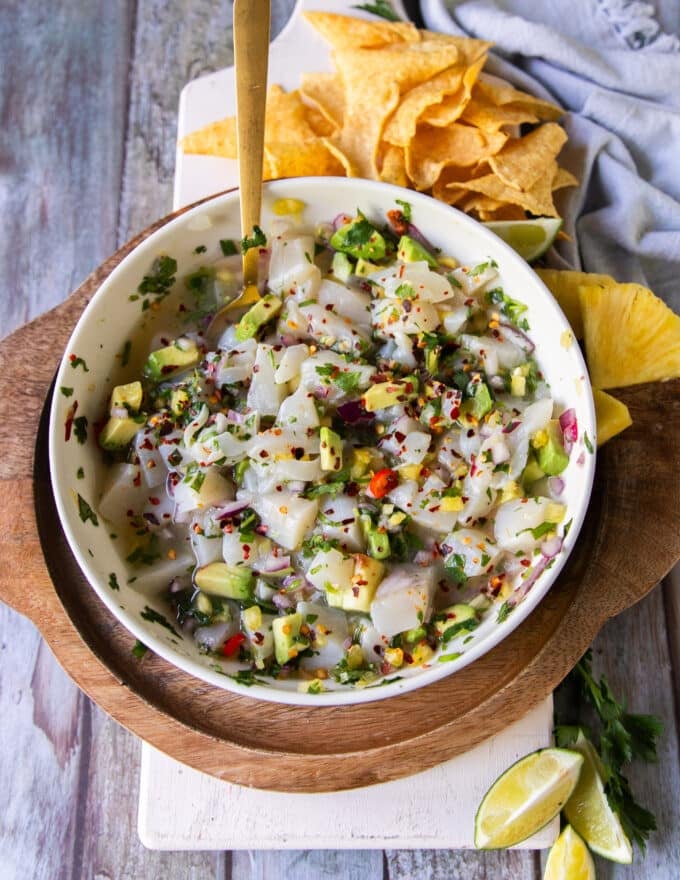
Why You’ll Love Scallop Ceviche
- This dish is SO bright and refreshing, it tastes like a citrusy fresh seafood with a tender bite! Really delicious!
- The scallops are the star of the dish, and you taste that in every bite.
- The balance of citrus, some heat, bright herb, creamy avocado and sweet pineapple all blend into a phenomenally balanced dish!
- This is a NO COOK recipe, so it comes together without messing up any pots!
- It is light but satisfying and filling.
- Ceviche makes for a really elegant looking appetizer, especially is serving it with seafood main dishes!
- This recipe is super versatile, you can adjust the heat, sweetness, saltiness and acidity to your taste.
Ingredients You’ll Need
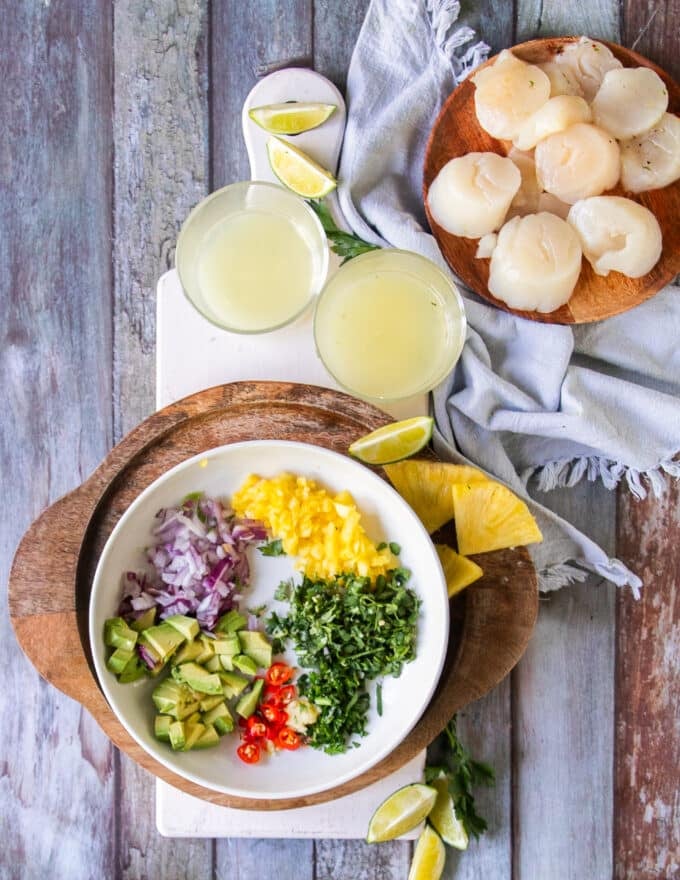
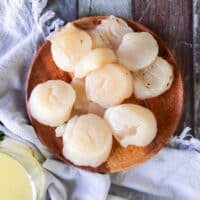
- Scallops: Scallops are the most important ingredient, so this is not the place to compromise on quality. For this recipe, both sea scallops and bay scallops can be used.
- Sea scallops are larger and have a naturally sweet, buttery texture. Bay scallops are smaller and more delicate and can work especially well when you want small pieces throughout the ceviche.
- Since this is a raw preparation, make sure to buy scallops from a reputable seafood supplier and tell the seller that you intend to serve them raw. It’s often referred to as “Sushi grade”.
- Lime Juice and Lemon Juice: Lime provides the characteristic sharp, fresh acidity associated with ceviche. Freshly squeezed lime is strongly preferable to bottled juice because it tastes brighter and more aromatic. A little lemon alongside lime creates a more rounded citrus flavor rather than relying entirely on lime. You can also add a touch of orange juice and pineapple juice. This cuts the sharpness of the lemon and lime.
- Red Onion: Minced red onion gives ceviche crunch, color, sweetness, and a sharp savory contrast to the scallops. You can use white Spanish onions.
- Chiles: Jalapeno, serrano pepper, Fresno chile, or another fresh chile can be used. Remove the seeds and membranes for less heat, or leave some intact if you prefer a spicier ceviche.
- Pineapple or Bell pepper: To balance the chiles and strong citrus flavors, add in some finely diced pineapple or bell pepper.
- Cilantro: Fresh cilantro gives the ceviche its herbal freshness. If you’re not a fan of cilantro, use parsley.
- Olive Oil: A small amount of good extra virgin olive oil rounds out the acidity and gives the scallops a slightly richer finish.
- Salt: Salt isn’t just seasoning here. It helps bring out the natural sweetness of the scallops and balances the acidity.
- Avocado: We love the creamy buttery texture and taste the avocado adds to ceviche recipes, so we make sure to always add that in!
How to Buy Scallops for Ceviche
This is one of the most important parts of making scallop ceviche. Look for those factors:
- Come from a reputable seafood counter or supplier.
- Have a clean, mild ocean smell.
- Look moist and fresh rather than dried out.
- Have firm, intact flesh.
- Are intended by the supplier for raw preparation.
- Avoid scallops with an unpleasant, strongly fishy, sour, or ammonia-like odor.
- If the seafood counter cannot tell you how the scallops were handled or whether they are appropriate for raw preparation, then don’t buy it.
Fresh vs. Frozen Scallops
- Frozen scallops: can be suitable for ceviche if they were properly handled and are sold for raw preparation. Freezing can also affect texture, so thaw them slowly in the refrigerator rather than leaving them at room temperature.
- Pat thawed scallops completely dry before cutting them because water on the surface will dilute the citrus marinade and make the ceviche less flavorful.
- Fresh Scallops: If affordable and available in your area, they are the optimal choice.
How to Make Scallop Ceviche
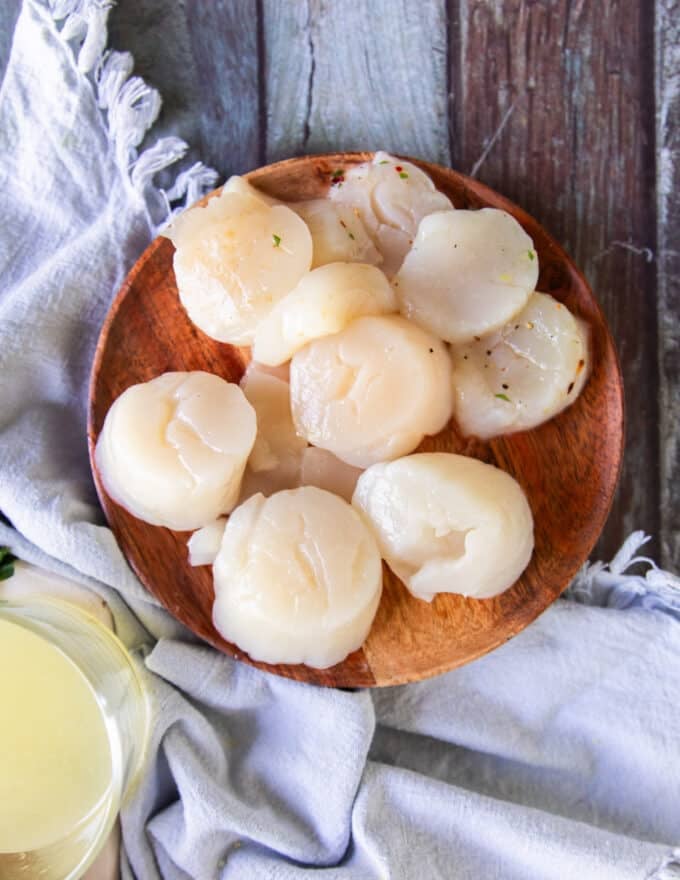
- Prepare, clean and remove any side muscle form your scallops. the side muscle.
- Pat the scallops dry using clean paper towels to remove excess moisture. This is particularly important if the scallops have been frozen and thawed.

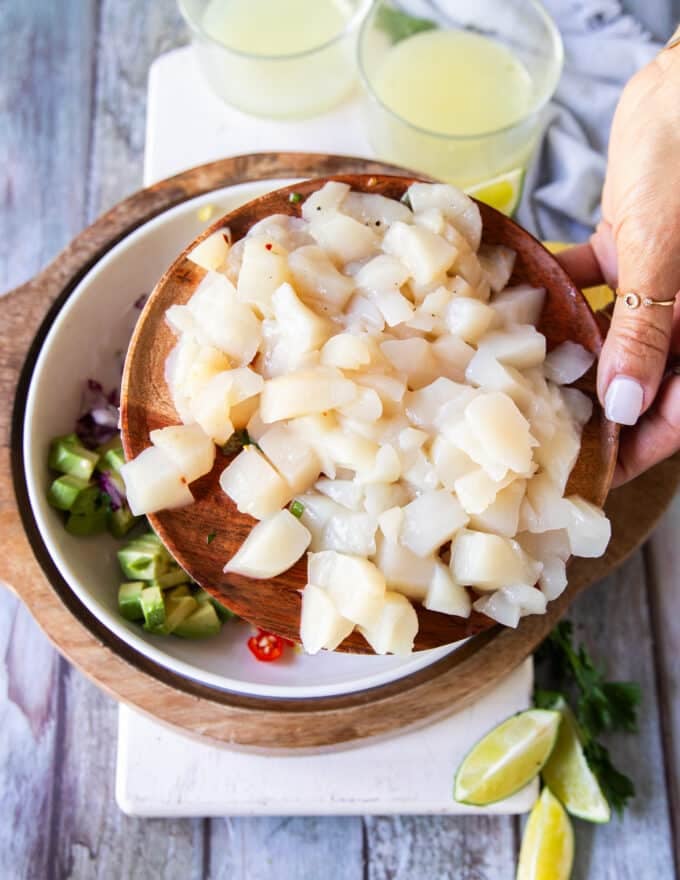
- Thinly slice or dice the scallops according to your taste. We prefer having all the ceviche similar in size.
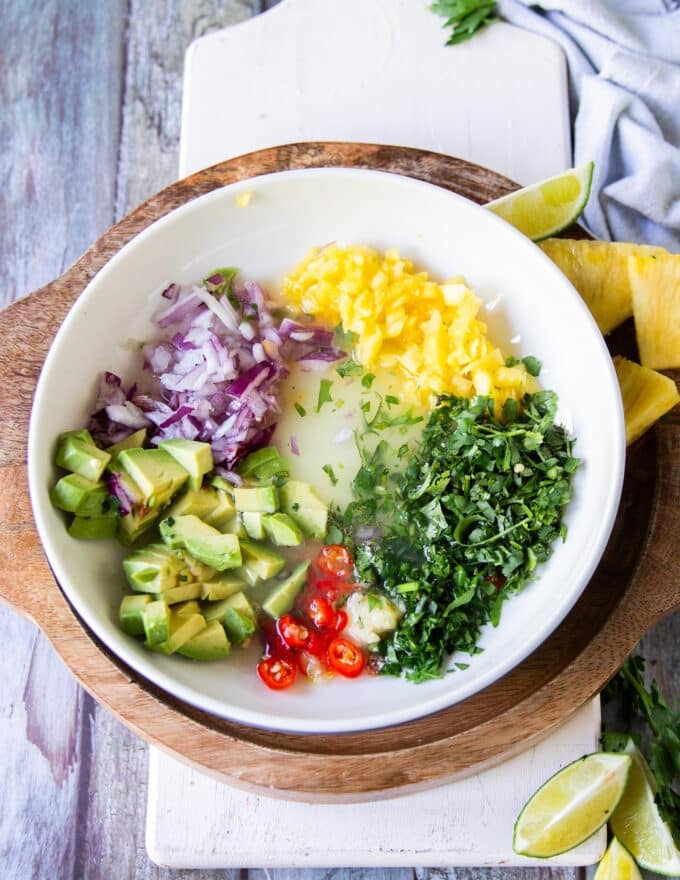
- Prepare the other ingredients by finely dicing them, and juice the citrus.
- Add all the citrus juices, pineapple or orange juice if using, then add salt and olive oil. Mix well.
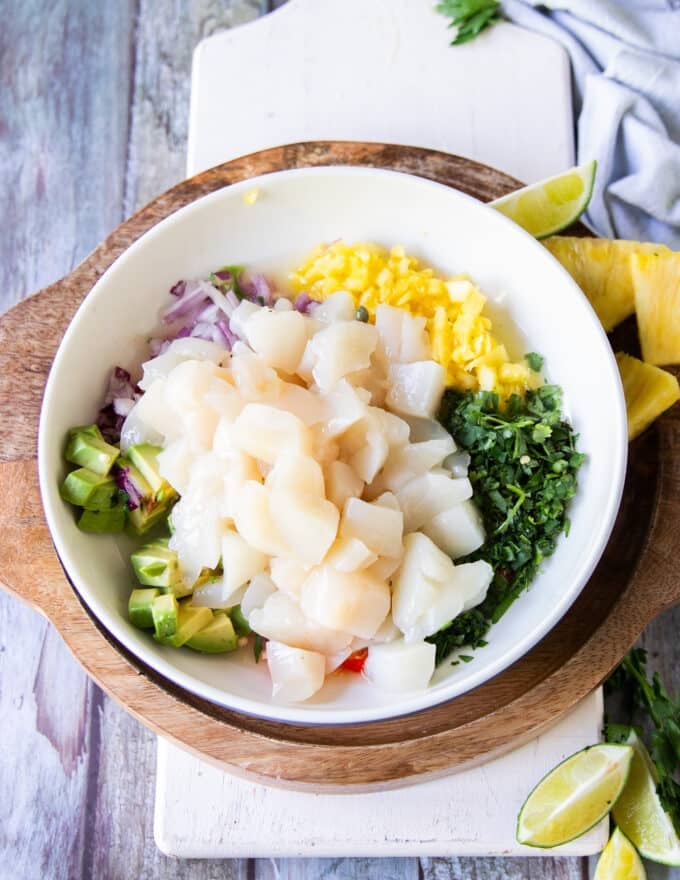
- Now add in your diced scallops in to the fragrant mixture, and toss. Do not aggressively stir the scallops since their texture is delicate.
- Refrigeration is KEY. You need to cover the bowl and place it in the fridge to maintain the safety of the raw seafood and tasty ceviche.
- The exact marinating time depends on the size of the scallop pieces and the acidity of the marinade. Thin slices will change texture faster than large chunks. Check on the mixture after 20-30 minutes and you should know when it’s ready.
- Taste and adjust with salt, lime juice, pineapple or orange juice, extra chilies or cilantro.
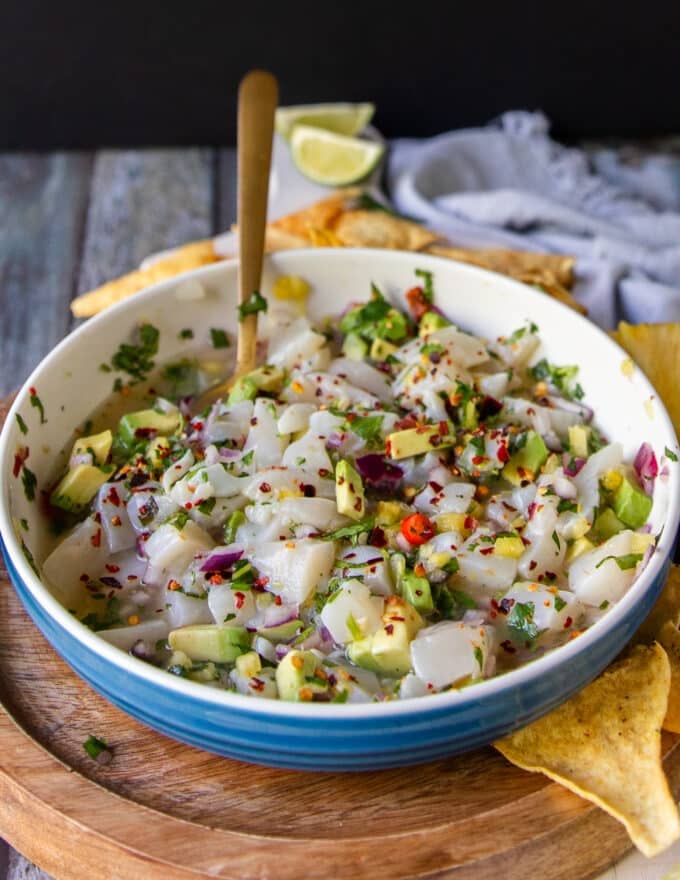
- Serve with tortilla chips or on its own and enjoy!
Pro Tips for the Best Ceviche Recipe
- Start with the best scallops you can find and make sure to tell the monger that you are using it raw.
- Keep the scallops cold at all times! From the moment you buy them to the moment you serve them, cold storage matters. Don’t let the seafood sit around on the counter while you prepare everything else.
- Dry the scallops really well because wet scallops dilute the citrus and leave you with a weaker, watery marinade.
- Cut the scallop ceviche ingredients evenly to make sure you can taste every ingredient in every bite!
- Don’t drown the scallops in citrus! It’s tempting but you need to remember to use enough citrus to coat the seafood well without turning the dish into a bowl of sour juice.
- Marinate for 15 minutes, toss and check every minutes. The acid continues changing the texture of the scallops. Too long and the delicate flesh can become firm, chalky, or mushy rather than tender.
- Serve it cold and fresh. All ceviches are best served shortly after the scallops reach the texture you’re looking for.
Variations of Scallop Ceviche To Try
- Peruvian Style Scallop Ceviche: Use ají amarillo, red onion, cilantro, lime, and a little leche de tigre for a more distinctly Peruvian inspired version.
- Mexican Scallop Ceviche: Add jalapeño or serrano, cilantro, lime, tomato, and avocado.
- Scallop Ceviche with Mango: Fold in small cubes of ripe mango for a sweet contrast to the lime, chile, and naturally sweet scallops.
- Scallop Ceviche with Cucumber: Finely diced cucumber adds coolness and crunch while keeping the dish light and refreshing.
- Scallop and Shrimp Ceviche: Combine scallops with cooked, chilled shrimp for a mixed seafood ceviche with contrasting textures.
- Scallop Ceviche with Grapefruit: Replace some of the orange or lemon with fresh grapefruit for a slightly bitter, sophisticated citrus flavor.
- Scallop Ceviche with Coconut: Add a small amount of coconut milk to the citrus marinade for a richer, tropical variation. Keep the coconut subtle so it doesn’t overwhelm the scallops.
- Spicy Scallop Ceviche: Use serrano, habanero, or another fresh chile when you want more heat. Add the chile gradually because the scallops have a delicate flavor.
- Mild Scallop Ceviche: For a less spicy version, remove the seeds and membranes from the chile or leave it out entirely. Use extra cilantro, cucumber, or avocado for flavor instead.
- Scallop Ceviche Tostadas: Spoon the finished ceviche over crisp tostadas and top with avocado, cilantro, and a little extra chile for an easy appetizer.
- Scallop Ceviche Lettuce Cups: Serve the ceviche in chilled butter lettuce or romaine leaves for a crisp, lighter presentation.
- Scallop Ceviche with Corn: Add fresh corn kernels or serve the ceviche alongside boiled corn (here’s the fool proof guide on how to boil corn) for sweetness and texture.
How Long Should Scallops Marinate for Ceviche?
The time depends on:
- The size of the scallop pieces
- How thinly they are sliced
- The amount and strength of citrus
- The temperature
- The texture you prefer
Some recipes use short marination times, while others call for several hours. For example, the James Beard Foundation’s scallop ceviche uses a relatively short citrus marination, while others use several hours. If you’re making this small serving for 4, we felt that 30 minutes was the perfect time.
How does Citrus Affect The Scallops
Ceviche is often described as seafood being cured or cooked in citrus, that’s because the acidic environment changes the structure of proteins at the surface of the seafood. So you’ll end up with seafood that’s more opaque and firm.
How to Make Scallop Ceviche Less Sour
If your ceviche tastes too sour or acidic, here’s how to fix it:
- Add a little more orange juice.
- Add more scallops if you have them.
- Add a little olive oil.
- Increase the fresh vegetables and herbs.
- Adjust the salt.
Why is my scallop ceviche watery?
The scallops may not have been dried thoroughly, or too much citrus juice was used. Drain some of the excess liquid just before serving and add fresh herbs, onion, and scallops if necessary.
What if my scallops are rubbery?
They may have been marinated too long or cut too thinly. The acid continues changing the texture, so scallop ceviche should not be treated like a dish that improves indefinitely in the refrigerator.
Why are my scallops still translucent?
The pieces may be too thick, or they may not have been exposed evenly to the citrus. Toss gently to ensure all surfaces are coated.
What if the scallops turn mushy?
They were likely exposed to acid for too long. For your next batch, use larger pieces and a shorter marination period.
Why does my ceviche taste fishy?
Fresh scallops should have a clean, mild ocean aroma rather than a strong unpleasant fishy smell. Strong fishy ordors are a reason not to use that particular seafood! Always start with clean ocean smelling fish.
Can You Make Scallop Ceviche Ahead?
The individual ingredients can be prepared ahead, but the finished ceviche is best assembled close to serving. Avoid preparing the completed ceviche far in advance because the citrus will continue changing the scallop texture.
How to Store Scallop Ceviche
- Keep ceviche refrigerated when you prepare it, marinate and serve it right away.
- We don’t recommend any long term storage in the fridge, and we absolutely don’t recommend room temperature storage.
Can You Freeze Scallop Ceviche?
No. We don’t recommend freezing finished scallop ceviche. Freezing and thawing can damage the delicate texture of the scallops and vegetables, and it isn’t a good way to extend the safe storage period of an already prepared raw seafood dish.
Is Scallop Ceviche Safe?
This is one of the most important questions about raw seafood recipes. Scallop ceviche is made using raw, citrus cured seafood. Citrus changes the texture of the scallops, but it does not reliably eliminate all pathogens or toxins that may be present in raw seafood.
Use scallops from a reputable supplier and follow safe seafood handling practices. Keep the seafood cold, prevent cross contamination, and serve it right away
ANYONE at higher risk from food borne illness, including pregnant women, young children, older adults, and people with weakened immune systems should avoid raw seafood at all times.
Cooked Scallop Ceviche
If you’re one of those people and truly crave a ceviche, then make it using cooked seafood. It’s JUST as GOOD! Try our Shrimp Ceviche and viral Octopus Ceviche!
Cook the scallops using this Scallops guide or use Broiled Scallops or Air Fryer Scallops. Now diced the cooled and cooked scallops and add it to the remaining ingredients, toss, marinade for 15 minutes so the flavors can infuse and enjoy safely!
Does lime juice really cook scallops?
No! Definitely not in the same way heat cooks them. The acid changes the proteins and makes the scallops opaque and firmer, but acid marination is not equivalent to heat cooking for food safety purposes.
Why is my scallop ceviche rubbery?
Over marinating is a common reason. The longer scallops remain exposed to acid, the more their texture changes. Very thin slices can become firm especially quickly.
Why is my scallop ceviche too sour?
There may be too much citrus relative to the scallops. Balance it with additional seafood, vegetables, orange juice, herbs, and seasoning.
What vegetables go well with scallop ceviche?
Red onion, cucumber, tomato, avocado, celery, and peppers all work well. Choose vegetables that provide freshness and crunch without overpowering the delicate scallops.
What should I serve with scallop ceviche?
Tostadas, tortilla chips, plantain chips, avocado, cucumber, corn, lettuce, and sweet potato are excellent choices.
Can I make scallop ceviche the night before?
It is better to prepare the components ahead and assemble the ceviche closer to serving. Leaving scallops in citrus overnight can significantly alter their texture.
How do you know when scallop ceviche is ready?
The exterior of the scallops should become more opaque and firmer while the interior remains pleasantly tender. Texture is a useful culinary cue, but it should never be treated as proof that raw seafood has become microbiologically safe.
Can you eat scallop ceviche while pregnant?
Raw or undercooked shellfish is generally avoided during pregnancy because of food borne illness risk. Choose thoroughly cooked scallops instead and follow current medical or public-health guidance.
Can children eat scallop ceviche?
Because ceviche contains raw or undercooked seafood, it is not an appropriate choice for young children. A cooked scallop preparation is the safer option.
Raw Seafood Recipes
Tuna Tartare
Salmon Carpaccio
Tuna Crudo
Salmon Tartare
Tuna Ceviche
Sushi Cake
Tuna Carpaccio
Sushi Burrito
Spicy Tuna Crispy Rice
Scallop Ceviche
Ingredients
Scallops
- 8 Large Scallops Hokkaido or fresh scallops cut into 1/4 inch bite sizes. This should make about a generous overfilled 1 cup.
Marinade
- 3 Tabelspoones lime juice
- 3 tablespoons lemon juice
- 3 Tablespoons Pineapple juice or orange juice
- 1 jalapeno pepper or serrano, finely minced.
- 3 tablespoons cilantro minced
- 1/2 red onion finely micned - about 1/4 cup
- 1 small hass avocados minced
- 1 small garlic clove optional, minced
- 1 teaspoon salt more or less to taste
- 1 Tablespoon olive oil extra virgin
Instructions
-
Prepare, clean and remove any side muscle form your scallops. the side muscle.

-
Pat the scallops dry using clean paper towels to remove excess moisture. This is particularly important if the scallops have been frozen and thawed.
-
Thinly slice or dice the scallops according to your taste. We prefer having all the ceviche similar in size.
-
Prepare the other ingredients by finely dicing them, and juice the citrus.
-
Add all the citrus juices, pineapple or orange juice if using, then add salt and olive oil. Mix well.
-
Now add in your diced scallops in to the fragrant mixture, and toss. Do not aggressively stir the scallops since their texture is delicate.
-
Refrigeration is KEY. You need to cover the bowl and place it in the fridge to maintain the safety of the raw seafood and tasty ceviche.
-
The exact marinating time depends on the size of the scallop pieces and the acidity of the marinade. Thin slices will change texture faster than large chunks. Check on the mixture after 20-30 minutes and you should know when it's ready.
-
Taste and adjust with salt, lime juice, pineapple or orange juice, extra chilies or cilantro.
-
Serve with tortilla chips or on its own and enjoy!

Recipe Video
Recipe Notes
Pro Tips for the Best Ceviche Recipe
- Start with the best scallops you can find and make sure to tell the monger that you are using it raw.
- Keep the scallops cold at all times! From the moment you buy them to the moment you serve them, cold storage matters. Don't let the seafood sit around on the counter while you prepare everything else.
- Dry the scallops really well because wet scallops dilute the citrus and leave you with a weaker, watery marinade.
- Cut the scallop ceviche ingredients evenly to make sure you can taste every ingredient in every bite!
- Don't drown the scallops in citrus! It's tempting but you need to remember to use enough citrus to coat the seafood well without turning the dish into a bowl of sour juice.
- Marinate for 15 minutes, toss and check every minutes. The acid continues changing the texture of the scallops. Too long and the delicate flesh can become firm, chalky, or mushy rather than tender.
- Serve it cold and fresh. All ceviches are best served shortly after the scallops reach the texture you're looking for.
Variations of Scallop Ceviche To Try
- Peruvian Style Scallop Ceviche: Use ají amarillo, red onion, cilantro, lime, and a little leche de tigre for a more distinctly Peruvian inspired version.
- Mexican Scallop Ceviche: Add jalapeño or serrano, cilantro, lime, tomato, and avocado.
- Scallop Ceviche with Mango: Fold in small cubes of ripe mango for a sweet contrast to the lime, chile, and naturally sweet scallops.
- Scallop Ceviche with Cucumber: Finely diced cucumber adds coolness and crunch while keeping the dish light and refreshing.
- Scallop and Shrimp Ceviche: Combine scallops with cooked, chilled shrimp for a mixed seafood ceviche with contrasting textures.
- Scallop Ceviche with Grapefruit: Replace some of the orange or lemon with fresh grapefruit for a slightly bitter, sophisticated citrus flavor.
- Scallop Ceviche with Coconut: Add a small amount of coconut milk to the citrus marinade for a richer, tropical variation. Keep the coconut subtle so it doesn't overwhelm the scallops.
- Spicy Scallop Ceviche: Use serrano, habanero, or another fresh chile when you want more heat. Add the chile gradually because the scallops have a delicate flavor.
- Mild Scallop Ceviche: For a less spicy version, remove the seeds and membranes from the chile or leave it out entirely. Use extra cilantro, cucumber, or avocado for flavor instead.
- Scallop Ceviche Tostadas: Spoon the finished ceviche over crisp tostadas and top with avocado, cilantro, and a little extra chile for an easy appetizer.
- Scallop Ceviche Lettuce Cups: Serve the ceviche in chilled butter lettuce or romaine leaves for a crisp, lighter presentation.
- Scallop Ceviche with Corn: Add fresh corn kernels or serve the ceviche alongside boiled corn (here's the fool proof guide on how to boil corn) for sweetness and texture.
How Long Should Scallops Marinate for Ceviche?
The time depends on:
- The size of the scallop pieces
- How thinly they are sliced
- The amount and strength of citrus
- The temperature
- The texture you prefer
Some recipes use short marination times, while others call for several hours. For example, the James Beard Foundation's scallop ceviche uses a relatively short citrus marination, while others use several hours. If you're making this small serving for 4, we felt that 30 minutes was the perfect time.
How does Citrus Affect The Scallops
Ceviche is often described as seafood being cured or cooked in citrus, that's because the acidic environment changes the structure of proteins at the surface of the seafood. So you'll end up with seafood that's more opaque and firm.
How to Make Scallop Ceviche Less Sour
If your ceviche tastes too sour or acidic, here's how to fix it:
- Add a little more orange juice.
- Add more scallops if you have them.
- Add a little olive oil.
- Increase the fresh vegetables and herbs.
- Adjust the salt.
Why is my scallop ceviche watery?
The scallops may not have been dried thoroughly, or too much citrus juice was used. Drain some of the excess liquid just before serving and add fresh herbs, onion, and scallops if necessary.
What if my scallops are rubbery?
They may have been marinated too long or cut too thinly. The acid continues changing the texture, so scallop ceviche should not be treated like a dish that improves indefinitely in the refrigerator.
Why are my scallops still translucent?
The pieces may be too thick, or they may not have been exposed evenly to the citrus. Toss gently to ensure all surfaces are coated.
What if the scallops turn mushy?
They were likely exposed to acid for too long. For your next batch, use larger pieces and a shorter marination period.
Why does my ceviche taste fishy?
Fresh scallops should have a clean, mild ocean aroma rather than a strong unpleasant fishy smell. Strong fishy ordors are a reason not to use that particular seafood! Always start with clean ocean smelling fish.
Can You Make Scallop Ceviche Ahead?
The individual ingredients can be prepared ahead, but the finished ceviche is best assembled close to serving. Avoid preparing the completed ceviche far in advance because the citrus will continue changing the scallop texture.
How to Store Scallop Ceviche
- Keep ceviche refrigerated when you prepare it, marinate and serve it right away.
- We don't recommend any long term storage in the fridge, and we absolutely don't recommend room temperature storage.
Can You Freeze Scallop Ceviche?
No. We don't recommend freezing finished scallop ceviche. Freezing and thawing can damage the delicate texture of the scallops and vegetables, and it isn't a good way to extend the safe storage period of an already prepared raw seafood dish.
Is Scallop Ceviche Safe?
This is one of the most important questions about raw seafood recipes. Scallop ceviche is made using raw, citrus cured seafood. Citrus changes the texture of the scallops, but it does not reliably eliminate all pathogens or toxins that may be present in raw seafood.
Use scallops from a reputable supplier and follow safe seafood handling practices. Keep the seafood cold, prevent cross contamination, and serve it right away
ANYONE at higher risk from food borne illness, including pregnant women, young children, older adults, and people with weakened immune systems should avoid raw seafood at all times.
Cooked Scallop Ceviche
If you're one of those people and truly crave a ceviche, then make it using cooked seafood. It's JUST as GOOD! Try our Shrimp Ceviche and viral Octopus Ceviche!
Cook the scallops using this Scallops guide or use Broiled Scallops or Air Fryer Scallops. Now diced the cooled and cooked scallops and add it to the remaining ingredients, toss, marinade for 15 minutes so the flavors can infuse and enjoy safely!
Does lime juice really cook scallops?
No! Definitely not in the same way heat cooks them. The acid changes the proteins and makes the scallops opaque and firmer, but acid marination is not equivalent to heat cooking for food safety purposes.
Why is my scallop ceviche rubbery?
Over marinating is a common reason. The longer scallops remain exposed to acid, the more their texture changes. Very thin slices can become firm especially quickly.
Why is my scallop ceviche too sour?
There may be too much citrus relative to the scallops. Balance it with additional seafood, vegetables, orange juice, herbs, and seasoning.
What vegetables go well with scallop ceviche?
Red onion, cucumber, tomato, avocado, celery, and peppers all work well. Choose vegetables that provide freshness and crunch without overpowering the delicate scallops.
What should I serve with scallop ceviche?
Tostadas, tortilla chips, plantain chips, avocado, cucumber, corn, lettuce, and sweet potato are excellent choices.
Can I make scallop ceviche the night before?
It is better to prepare the components ahead and assemble the ceviche closer to serving. Leaving scallops in citrus overnight can significantly alter their texture.
How do you know when scallop ceviche is ready?
The exterior of the scallops should become more opaque and firmer while the interior remains pleasantly tender. Texture is a useful culinary cue, but it should never be treated as proof that raw seafood has become microbiologically safe.
Can you eat scallop ceviche while pregnant?
Raw or undercooked shellfish is generally avoided during pregnancy because of food borne illness risk. Choose thoroughly cooked scallops instead and follow current medical or public-health guidance.
Can children eat scallop ceviche?
Because ceviche contains raw or undercooked seafood, it is not an appropriate choice for young children. A cooked scallop preparation is the safer optio





Leave a Reply