

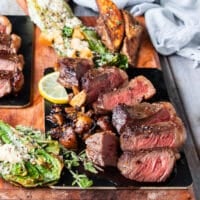
Picanha Steak is a juicy, rich and affordable cut of beef that makes a five star steakhouse meal at home! Prized for its’ rich beefy flavor, juicy texture, and distinctive fat cap that bastes the meat as it cooks. You’ll find Pinacha steak especially popular in Brazilian steakhouses, and today we’re making them at home in a simple yet tasty way!
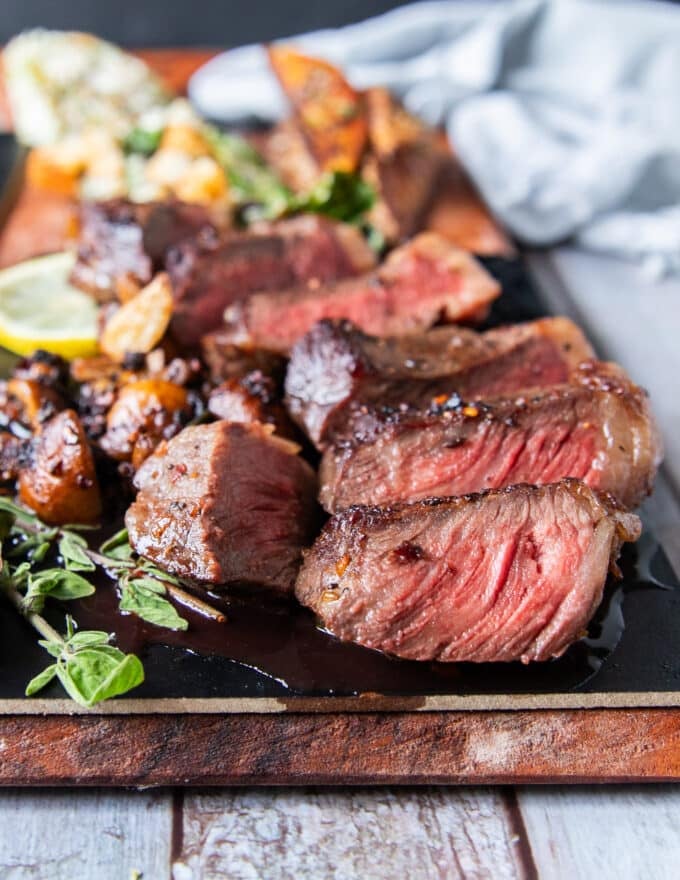
What makes picanha different from many other steak cuts is the combination of a flavorful beef muscle and its thick layer of fat. Cook it properly, and you get a beautifully seared exterior, a succulent center, and rich beef flavor without needing an elaborate marinade or complicated seasoning.
The key is knowing how to cut the steaks, how to handle the fat cap, and how to cook the meat without rendering away all its fat or overcooking the center.
PS, we have a variety of steak cuts on the website, so make sure not to miss those out too! Flank Steak Tacos, Reverse Sear Steak, Air Fryer Steak Bites, Ribeye Steak, Best NY Strip Steak, Filet Mignon Recipe and even Lamb Steaks.
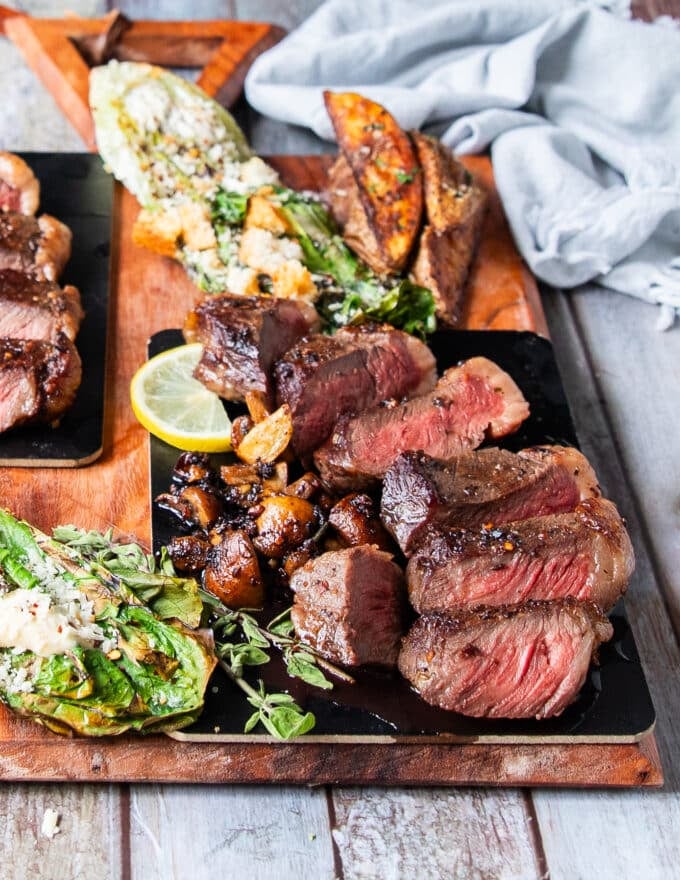
What Is a Picanha Steak?
Picanha, pronounced pee-KAHN-yah, is a cut of beef taken from the top of the rump, near the rear of the animal. In the United States, it is often sold as top sirloin cap, sirloin cap, or coulotte steak. It is the known as the star of every traditional Churrasco (Brazilian barbecue).
The cut is recognizable by its thick, external fat cap, which contributes flavor and helps protect the meat during cooking. The muscle itself has a robust beef flavor and is generally tender when cooked correctly and sliced against the grain.
Picanha is prized because of its fat, which is left on and rendered slowly to baste the meat, keep it juicy, and give it a distinct, slightly sweet, beefy richness.
Classically, you’ll find the meat sliced against the grain into thick steaks and skewered into a “C” shape. Then, it cooks over open flame, gets seasoned with nothing but coarse salt, and is carved table side. However, it can also be cut into individual steaks and grilled or seared in a skillet as we did today.
What Does Picanha Taste Like?
Picanha has a rich, concentrated beef flavor with a tender but slightly firm bite. It is not as heavily marbled through the muscle as a ribeye, so much of its characteristic richness comes from the external fat cap.
When cooked well, the meat develops a savory, browned crust while the center remains juicy. The fat cap becomes especially appealing when it is rendered and browned rather than left thick, pale, and rubbery.
Compared with filet mignon, picanha has a more pronounced beef flavor and a firmer texture. Compared with ribeye, it generally has less intramuscular marbling but a distinct layer of fat along one side.
How to Buy and Choose the Best Picanha
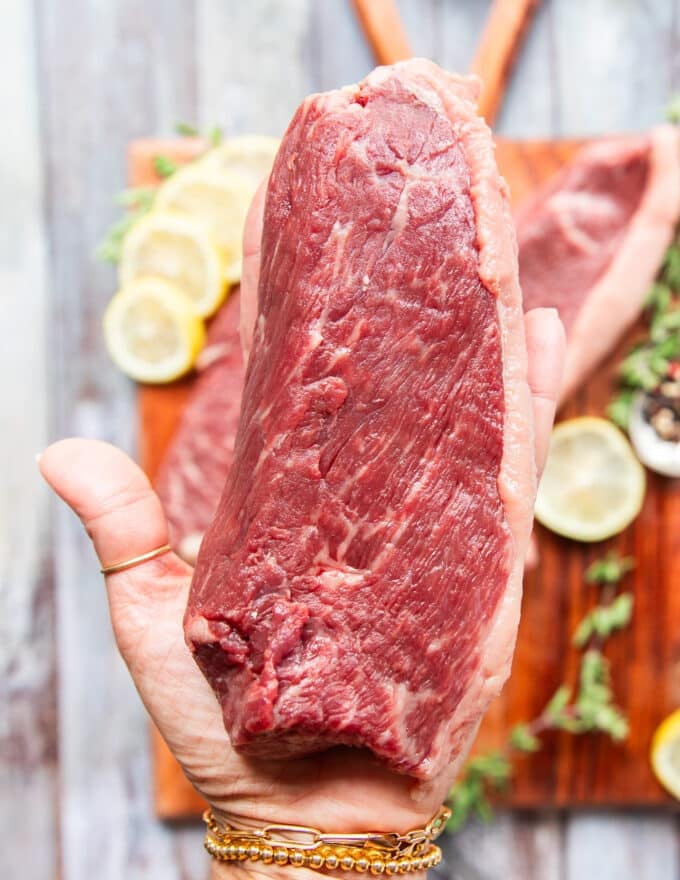
The quality and shape of the cut make a difference to how evenly your picanha steaks cook.
- Look for a thick fat cap. Picanha should have a layer of fat covering one side. This helps protect the surface from drying and contributes flavor during cooking. You can trim excessive thickness, but removing all the fat takes away part of what makes this cut distinctive.
- Choose a piece with an even shape, that way it’s easier to slice into steaks of similar thickness. If one end is much thinner than the other, the thinner steaks will cook faster.
- Check the grain before cutting, the grain is visible muscle fibers, and identifying their direction before slicing is important. Cut the steaks with the grain when portioning a whole picanha for cooking but after cooking, slice each steak against the grain for a more tender bite.
- Understand the label Look for picanha, top sirloin cap, or coulotte. Butcher terminology can vary, so if you’re unsure, ask whether the cut is specifically the sirloin cap with its fat layer intact.
- Grass fed vs. grain fed: Grass fed picanha (common from South American beef) tends to be leaner in the muscle but still carries the signature fat cap. Grain fed versions (common in the U.S.) are often more marbled throughout the meat itself.
Why You’ll Love This Picanha Steak Recipe
- It’s one of the most forgiving cuts of meat to cook as a steak. The fat cap self bastes the meat, so it’s quite impossible to dry out.
- This cut is quite affordable compared to the ribeye or filet mignon, while delivering comparable richness.
- It has a SUPER tasty and rich beef flavor.
- The cut develops a deeply browned crust when the surface is dry and the cooking surface is sufficiently hot.
- You need really simple seasoning like salt and black pepper, or any steak seasoning. You can flavor it with fresh herbs, or compound butter and feel free to personalize it even more!
- This steak can be cooked in so many different ways. Try it on a grill, in a cast iron skillet, or with a combination of stovetop searing and oven finishing.
- Leftovers are the BEST for sandwiches and lunches!
Ingredients You’ll Need
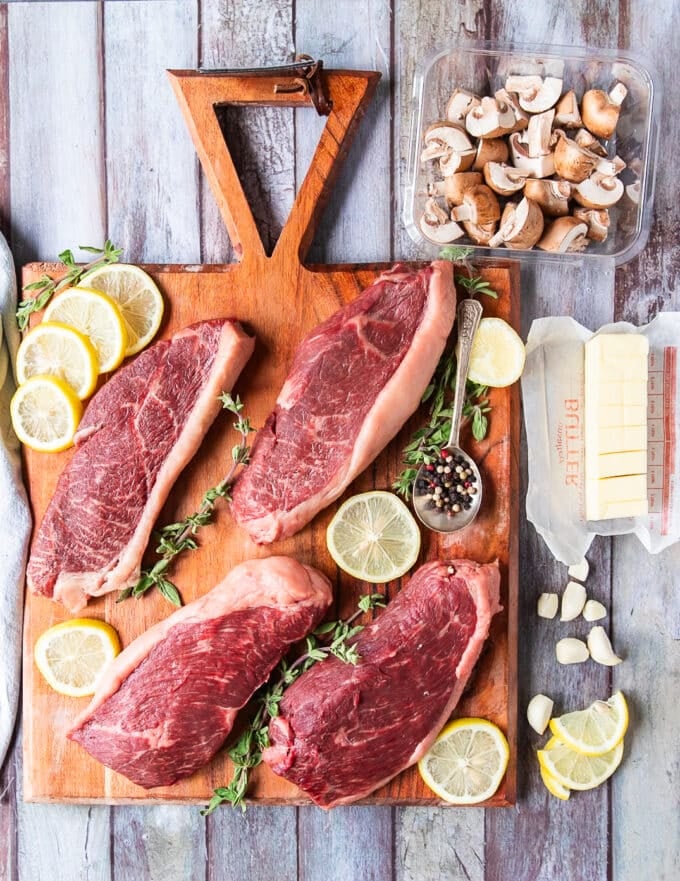
- Picanha (top sirloin cap): the whole cut, ideally with the fat cap intact and about a half inch thick.
- Seasoning: Salt and black pepper are classic, and any steak seasoning of your choice. Salt is the most important seasoning as it draws out moisture at the surface and forms a light crust.
- Garlic (optional): used here to add some flavor to the butter and oil where the steak is seared.
- Mushrooms: Often you’ll find Steakhouse Mushrooms on the side of steak recipes, and today we just added them right into the pan with the steak.
- Neutral high heat oil And Butter: Use avocado oil or any neutral oil to help the initial sear before the fat renders. Butter is used as a finishing flavor.
How to Cook Picanha Steak
Season the Steak
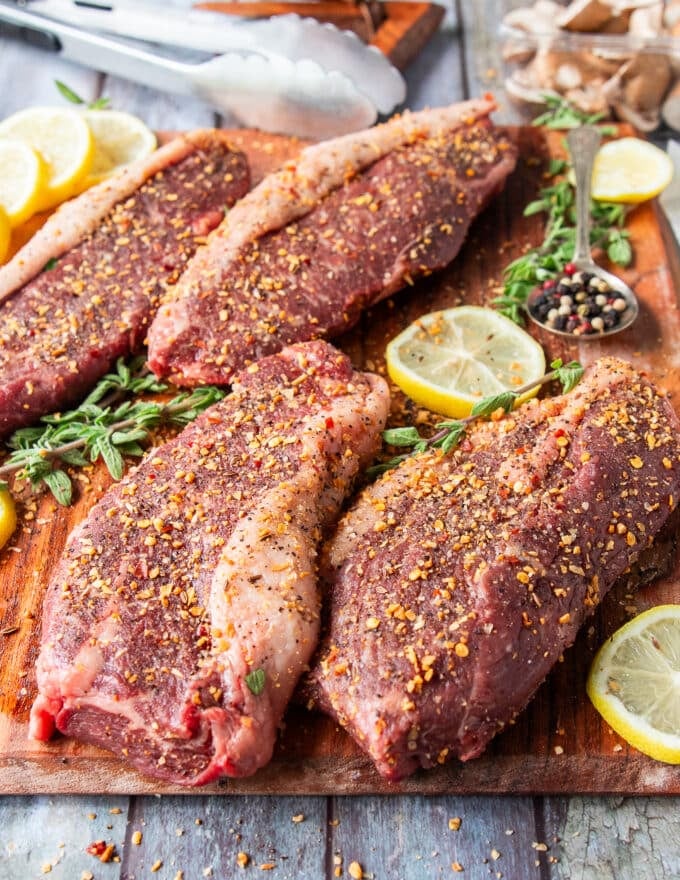
- This is a straightforward steak cooking method, so feel free to follow those steps or make it using our NO FAIL Reverse Sear Steak method too!
- You can keep the steaks the same size and cook them as whole, or you can cut them into the classical Brazilian shape. To do that, cut the steak into long strips and curve each steak into a C shape fat side out. Then thread each on to a skewer through the two thin ends.
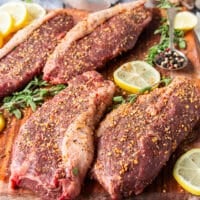
- Season the meat generously on both sides.
Grill Or Sear The Picanha
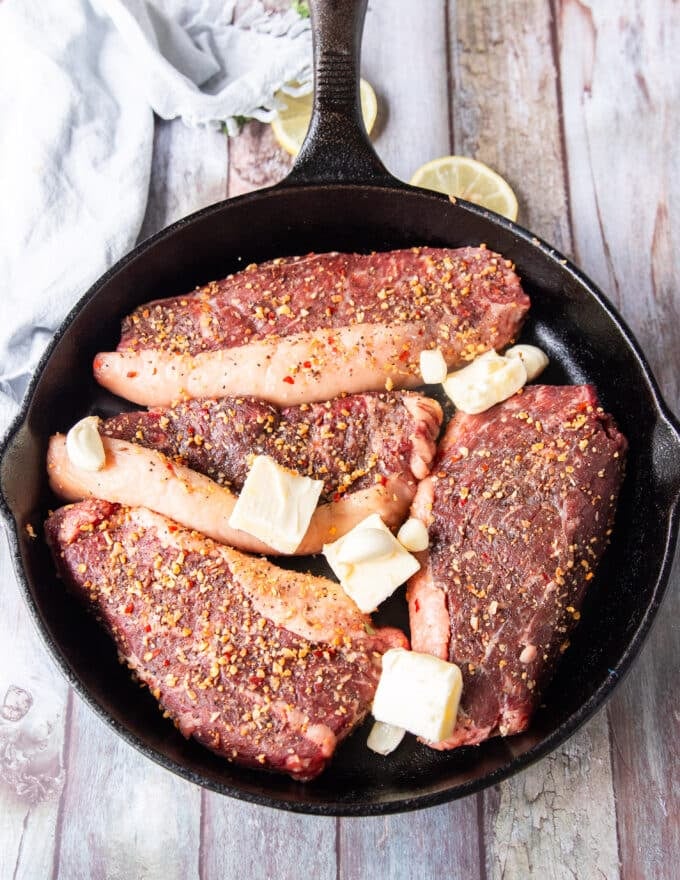
- Preheat an outdoor grill or indoor cast iron over high heat.
- Place the steak and drop the heat to medium high heat.

- If the meat is skewered, the grill fat side down first.
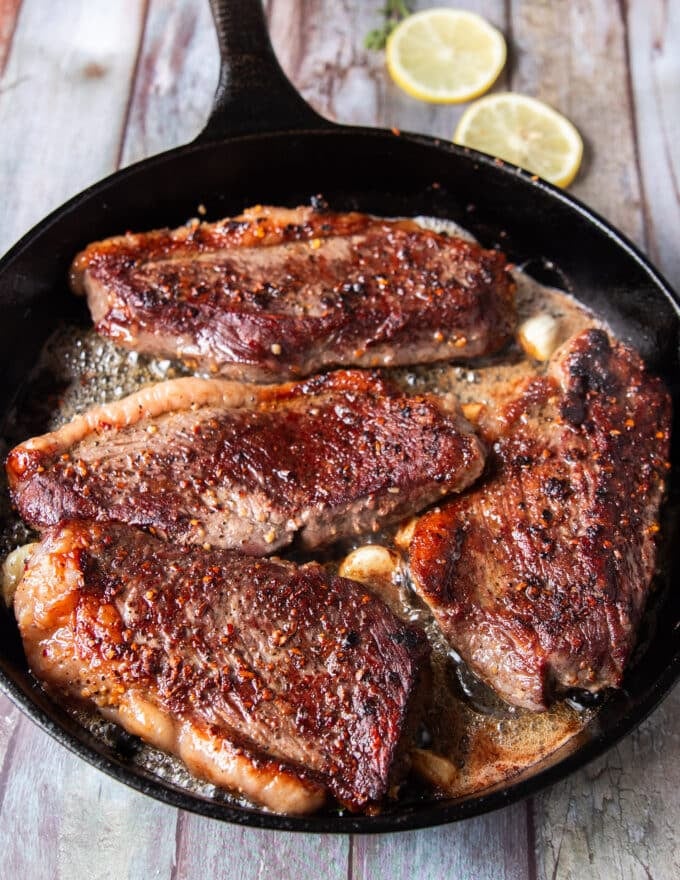
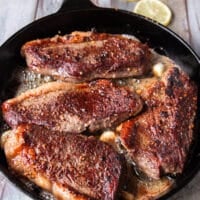
- Wait 2-4 minutes and flip the steak when the crust is golden.
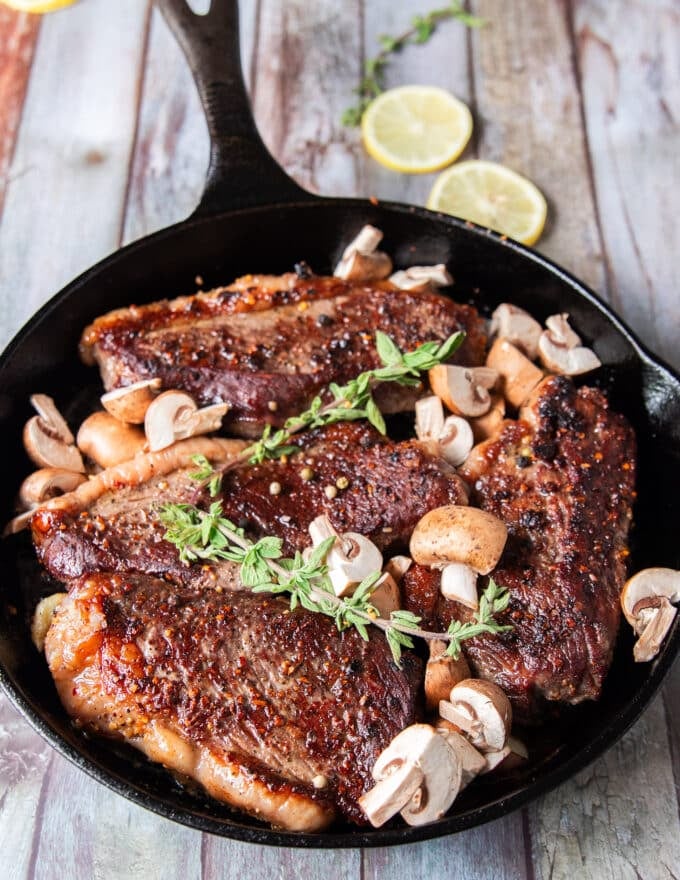
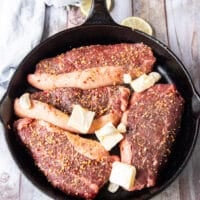
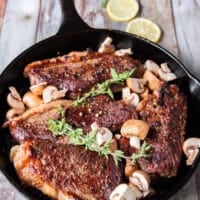
- Add in the whole garlic cloves, knobs of butter and whole baby mushrooms to the same cast iron.
- This will flavor the butter where the steak is cooked and will create a one pan side dish with the steaks.
- Add your favorite herbs like rosemary, oregano, thyme or a blend.
- Check internal temperature if you’d like to be sure of the doneness of your steak. Remove it at 125°F for rare, 135°F for medium rare or 145°F for medium.
- Rest the meat for 8 minutes before slicing, tented loosely with foil.
Slice and Serve the Picanha Steak
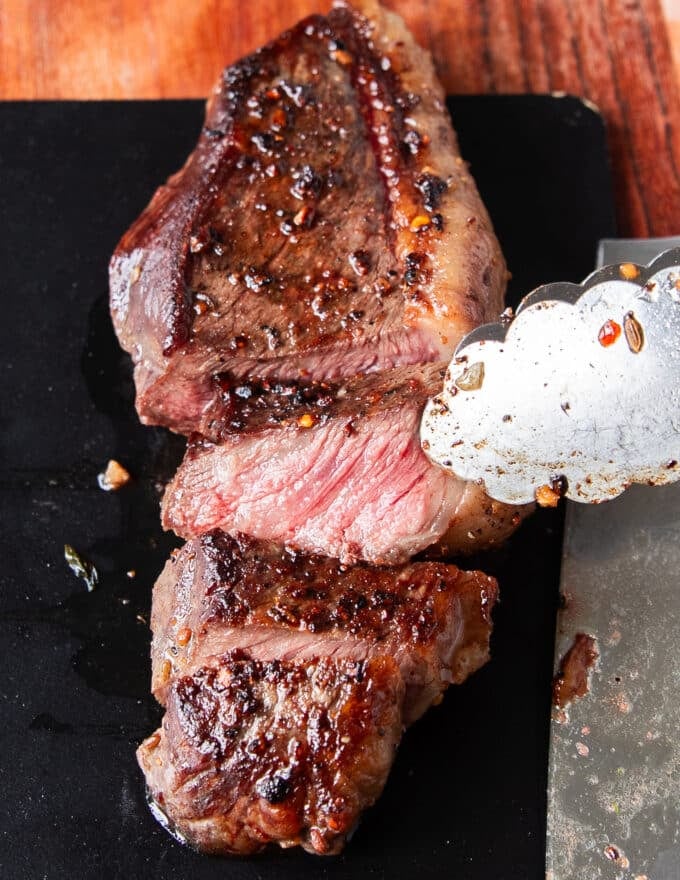
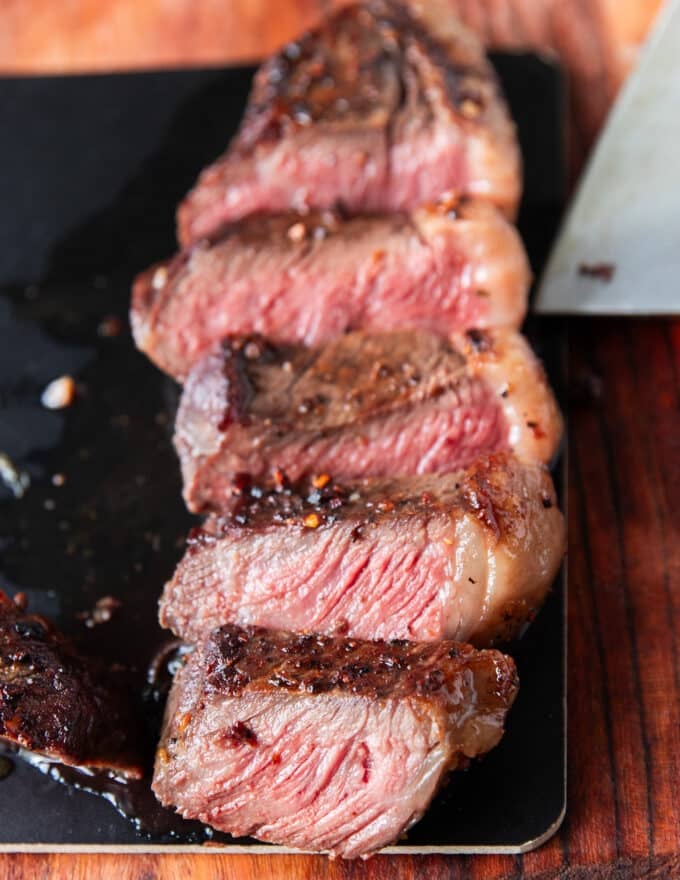
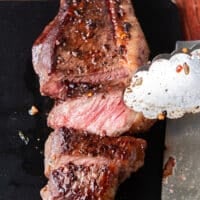
- Slice against the grain into the size of steaks you prefer for serving, keeping a bit of the rendered fat on each slice.
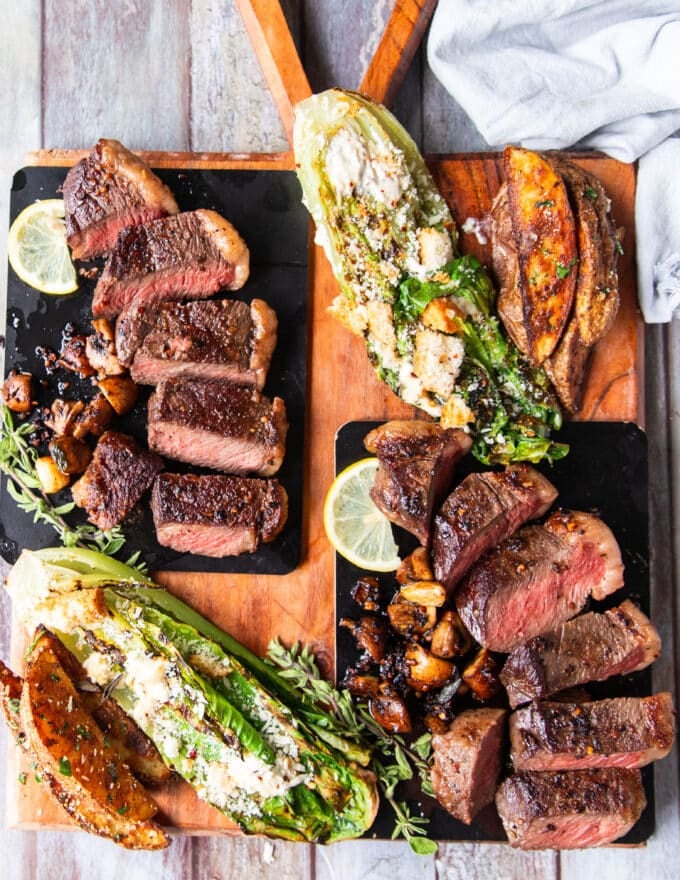
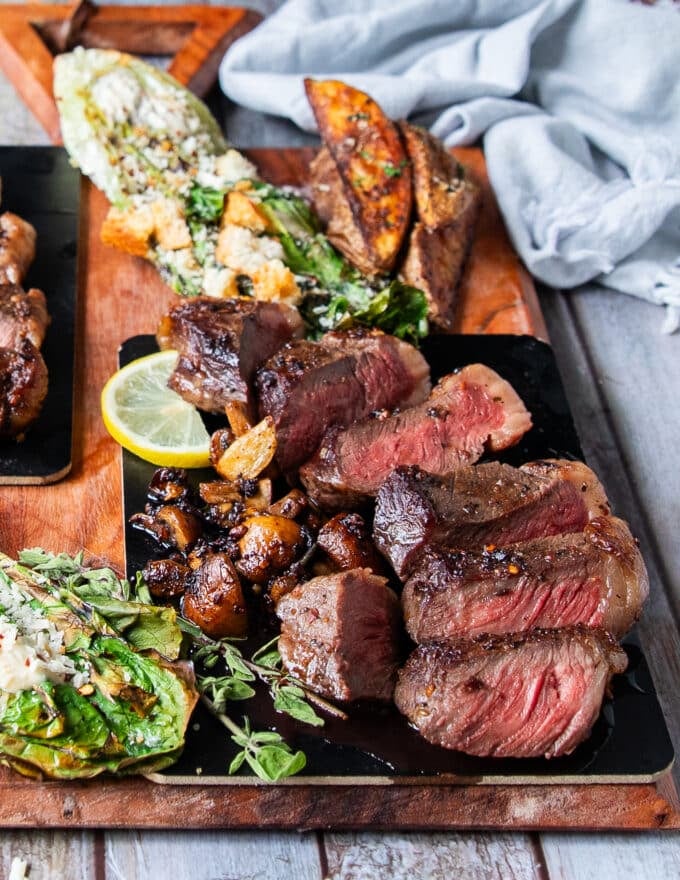
- We LOVE serving our steaks with these side dishes:
Steakhouse Mushrooms
Peppercorn Steak Sauce
Grilled Romaine Salad
Potato Wedges
Best Mashed Potatoes Recipe
Air Fryer Asparagus
Zucchini Fries
Broccoli Slaw
Expert Pro Tips For Picanha Steak
- Don’t skip the rest ing part when the steak is cooked. Cutting into picanha immediately after grilling releases most of the rendered juices while resting lets the muscle fibers reabsorb them.
- Always slice against the grain, and this applies to every steak. As for the Picanha cut, you’ll notice the grain runs in a single, fairly obvious direction.
- Let the fat do the seasoning when grilling. You want to be basting with any fat in the pan, including some butter and the pincanha steak fat as well.
- Use a meat thermometer as it’s the most reliable and avoid sticking to cooking times only. Since each steak thickness varies, the temperature is a far more reliable doneness indicator than a fixed cook time.
- Cook fat side down first, always to render the fat before the lean side ever touches direct heat.
- Bring the meat to room temperature before grilling to ensure even cooking.
Picanha Steak Recipe Variations
- Picanha na brasa : traditional skewer and open fire version
- Picanha steak in the oven: Cooked like our reverse sear method for those without a grill.
- Air fryer picanha: This works well for individual steaks, though it sacrifices some of the traditional smoky char
- Picanha kebabs / picanha espetinho: Small skewered chunks, popular as an appetizer
- Picanha with Chimichurri Recipe : Argentinian influenced pairing, increasingly common outside
My picanha turned out tough or chewy
This is almost always a slicing issue, not a cooking issue. You likely sliced with the grain instead of against it. Look at the direction of the muscle fibers before your first cut, and always slice perpendicular to them.
The fat didn’t render properly and it’s still chewy or rubbery.
The fat needs sustained direct heat, fat side down, for long enough to fully render which is about 8 minutes. Pulling it off too early leaves the fat under rendered.
I got flare ups while grilling.
This happens when rendering fat drips onto open flame. Starting fat side down gives you more control, and moving the steak to indirect heat briefly can help manage flare ups without losing the char.
My picanha is overcooked in the center but the fat isn’t crisp.
This usually means the heat was too low for too long. Picanha benefits from higher, more direct heat for a shorter time rather than low heat for a long time, except in reverse sear methods.
The steak looks done on the outside but is cold in the middle.
This is a sign the meat wasn’t brought to room temperature before cooking, causing an inconsistency between crust and core doneness.
Is it safe to eat picanha medium rare or rare?
Yes. Whole muscle cuts like picanha (unlike ground beef) only carry bacteria on the surface, which is killed by proper searing and the interior can safely be served rare to medium rare as long as the exterior reaches searing temperatures.
How do I know when picanha is done?
Use a meat thermometer and insert it into the thickest part of the steak, avoiding the fat cap. A temperature of 135°F is the traditional medium rare target.
Storage and Reheating
- Refrigeration: Store cooked picanha in an airtight container for up to 3–4 days.
- Freezing: Raw picanha freezes well for up to 6 months if tightly wrapped. Cooked picanha can be frozen for up to 2–3 months, though texture is best when reheated from fresh.
- Reheating: The best method is a low oven reheat (around 250°F) until just warmed through, followed by a very quick, hot sear to restore the crust. This avoids overcooking the steak.
- A skillet reheat over medium low heat with a splash of the reserved fat also works well.
- Air frying at 300 degrees F for just 2-3 minutes is a great way to reheat leftover steak as well.
- Microwaving is the least recommended method, as it tends to overcook the exterior before the center warms.
What is picanha called in the US?
It’s most commonly labeled as top sirloin cap or rump cap or coulotte in American grocery stores and butcher shops.
Is picanha the same as sirloin?
Not quite because picanha is a specific sub section of the sirloin primal which is the cap, sold with its fat layer intact. However sirloin steak in the U.S. usually refers to a leaner, trimmed cut from a different part of the same general area.
How long does it take to cook picanha?
Grilled steaks typically take 12–18 minutes total of searing all sides plus fat rendering.
Why is picanha so fatty?
The fat cap is intentional and traditional so it’s left on to render during cooking, basting the meat and adding flavor, rather than being trimmed off beforehand.
Do you eat the fat on picanha?
This is an ABSOLUTE taste thing! We, personally don’t. Many people eat the rendered fat since it becomes soft and flavorful when properly cooked while others trim it off after cooking.
Can you cook picanha without a grill?
Yes you can oven roast it, or reverse sear, or searing in a hot cast iron skillet, ALL of which produce excellent results indoors.
What’s the best way to slice picanha?
Always slice against the grain, in thin steaks, after the meat has rested for at least 8–10 minutes.
Is picanha a tender cut?
Yes, when sliced correctly against the grain and not overcooked. You’ll find more tender than tougher cuts like flank or skirt steak, but of course it’s firmer than the filet mignon.
What’s the difference between picanha and ribeye?
Ribeye has fat marbled throughout the muscle, while picanha has a distinct external fat cap over a leaner muscle resulting in a different texture and a more concentrated, separable fat flavor.
How much picanha to serve per person?
A common estimate is about half a pound before cooking per person for a main course, though it varies with appetite and side dishes.
Why does my picanha curl up on the grill?
This is caused by the fat cap contracting faster than the meat as it heats. To avoid this, score the fat in a crosshatch pattern before cooking helps it render evenly and reduces curling.
BEST Steak Recipes And Steakhouse Recipes
Reverse Sear Steak
Air Fryer Steak Bites
Ribeye Steak
Best NY Strip Steak
Filet Mignon Recipe
Steakhouse Mushrooms
Peppercorn Steak Sauce
Potato Wedges
Wedge Salad
Grilled Romaine Salad
Smashed Potatoes
Crispy Potatoes
Broccoli Salad
Picanha Steak
Ingredients
- 4 Picanha Steaks
- 1/2 teaspoon each salt and pepper to taste
- 1/2 teaspoon dried rosemary
- 1/2 teaspoon dried thyme or oregano
- 1/2 teaspoon granulated onion
- 1/2 teaspoon granulated garlic
- 1/4 teaspoon chili flakes
- 1 Tablespoon oil
- 3 Tablespoon butter unsalted
- 5 cloves garlic whole
- 2 cups mushrooms cut into quarters
Instructions
-
This is a straightforward steak cooking method, so feel free to follow those steps or make it using our NO FAIL Reverse Sear Steak method too!
-
You can keep the steaks the same size and cook them as whole, or you can cut them into the classical Brazilian shape. To do that, cut the steak into long strips and curve each steak into a C shape fat side out. Then thread each on to a skewer through the two thin ends.

-
Season the meat generously on both sides.
-
Preheat an outdoor grill or indoor cast iron over high heat.
-
Place the steak and drop the heat to medium high heat.
-
If the meat is skewered, the grill fat side down first.
-
Wait 2-4 minutes and flip the steak when the crust is golden.
-
Add in the whole garlic cloves, knobs of butter and whole baby mushrooms to the same cast iron.
-
This will flavor the butter where the steak is cooked and will create a one pan side dish with the steaks.
-
Add your favorite herbs like rosemary, oregano, thyme or a blend.
-
Check internal temperature if you'd like to be sure of the doneness of your steak. Remove it at 125°F for rare, 135°F for medium rare or 145°F for medium.
-
Rest the meat for 8 minutes before slicing, tented loosely with foil.
-
Slice against the grain into the size of steaks you prefer for serving, keeping a bit of the rendered fat on each slice.
Recipe Video
Recipe Notes
Expert Pro Tips For Picanha Steak
- Don't skip the rest ing part when the steak is cooked. Cutting into picanha immediately after grilling releases most of the rendered juices while resting lets the muscle fibers reabsorb them.
- Always slice against the grain, and this applies to every steak. As for the Picanha cut, you'll notice the grain runs in a single, fairly obvious direction.
- Let the fat do the seasoning when grilling. You want to be basting with any fat in the pan, including some butter and the pincanha steak fat as well.
- Use a meat thermometer as it's the most reliable and avoid sticking to cooking times only. Since each steak thickness varies, the temperature is a far more reliable doneness indicator than a fixed cook time.
- Cook fat side down first, always to render the fat before the lean side ever touches direct heat.
- Bring the meat to room temperature before grilling to ensure even cooking.
Picanha Steak Recipe Variations
- Picanha na brasa : traditional skewer and open fire version
- Picanha steak in the oven: Cooked like our reverse sear method for those without a grill.
- Air fryer picanha: This works well for individual steaks, though it sacrifices some of the traditional smoky char
- Picanha kebabs / picanha espetinho: Small skewered chunks, popular as an appetizer
- Picanha with Chimichurri Recipe : Argentinian influenced pairing, increasingly common outside
My picanha turned out tough or chewy
This is almost always a slicing issue, not a cooking issue. You likely sliced with the grain instead of against it. Look at the direction of the muscle fibers before your first cut, and always slice perpendicular to them.
The fat didn't render properly and it's still chewy or rubbery.
The fat needs sustained direct heat, fat side down, for long enough to fully render which is about 8 minutes. Pulling it off too early leaves the fat under rendered.
I got flare ups while grilling.
This happens when rendering fat drips onto open flame. Starting fat side down gives you more control, and moving the steak to indirect heat briefly can help manage flare ups without losing the char.
My picanha is overcooked in the center but the fat isn't crisp.
This usually means the heat was too low for too long. Picanha benefits from higher, more direct heat for a shorter time rather than low heat for a long time, except in reverse sear methods.
The steak looks done on the outside but is cold in the middle.
This is a sign the meat wasn't brought to room temperature before cooking, causing an inconsistency between crust and core doneness.
Is it safe to eat picanha medium rare or rare?
Yes. Whole muscle cuts like picanha (unlike ground beef) only carry bacteria on the surface, which is killed by proper searing and the interior can safely be served rare to medium rare as long as the exterior reaches searing temperatures.
How do I know when picanha is done?
Use a meat thermometer and insert it into the thickest part of the steak, avoiding the fat cap. A temperature of 135°F is the traditional medium rare target.
Storage and Reheating
- Refrigeration: Store cooked picanha in an airtight container for up to 3–4 days.
- Freezing: Raw picanha freezes well for up to 6 months if tightly wrapped. Cooked picanha can be frozen for up to 2–3 months, though texture is best when reheated from fresh.
- Reheating: The best method is a low oven reheat (around 250°F) until just warmed through, followed by a very quick, hot sear to restore the crust. This avoids overcooking the steak.
- A skillet reheat over medium low heat with a splash of the reserved fat also works well.
- Air frying at 300 degrees F for just 2-3 minutes is a great way to reheat leftover steak as well.
- Microwaving is the least recommended method, as it tends to overcook the exterior before the center warms.
What is picanha called in the US?
It's most commonly labeled as top sirloin cap or rump cap or coulotte in American grocery stores and butcher shops.
Is picanha the same as sirloin?
Not quite because picanha is a specific sub section of the sirloin primal which is the cap, sold with its fat layer intact. However sirloin steak in the U.S. usually refers to a leaner, trimmed cut from a different part of the same general area.
How long does it take to cook picanha?
Grilled steaks typically take 12–18 minutes total of searing all sides plus fat rendering.
Why is picanha so fatty?
The fat cap is intentional and traditional so it's left on to render during cooking, basting the meat and adding flavor, rather than being trimmed off beforehand.
Do you eat the fat on picanha?
This is an ABSOLUTE taste thing! We, personally don't. Many people eat the rendered fat since it becomes soft and flavorful when properly cooked while others trim it off after cooking.
Can you cook picanha without a grill?
Yes you can oven roast it, or reverse sear, or searing in a hot cast iron skillet, ALL of which produce excellent results indoors.
What's the best way to slice picanha?
Always slice against the grain, in thin steaks, after the meat has rested for at least 8–10 minutes.
Is picanha a tender cut?
Yes, when sliced correctly against the grain and not overcooked. You'll find more tender than tougher cuts like flank or skirt steak, but of course it's firmer than the filet mignon.
What's the difference between picanha and ribeye?
Ribeye has fat marbled throughout the muscle, while picanha has a distinct external fat cap over a leaner muscle resulting in a different texture and a more concentrated, separable fat flavor.
How much picanha to serve per person?
A common estimate is about half a pound before cooking per person for a main course, though it varies with appetite and side dishes.
Why does my picanha curl up on the grill?
This is caused by the fat cap contracting faster than the meat as it heats. To avoid this, score the fat in a crosshatch pattern before cooking helps it render evenly and reduces curling.



Leave a Reply