

This guide explains several methods and detailed ways for How to Cook Turkey Breast to make juicy, tender and guaranteed fool proof results. Cooking a turkey breast is a wonderful way to enjoy a traditional turkey dinner without preparing an entire bird.
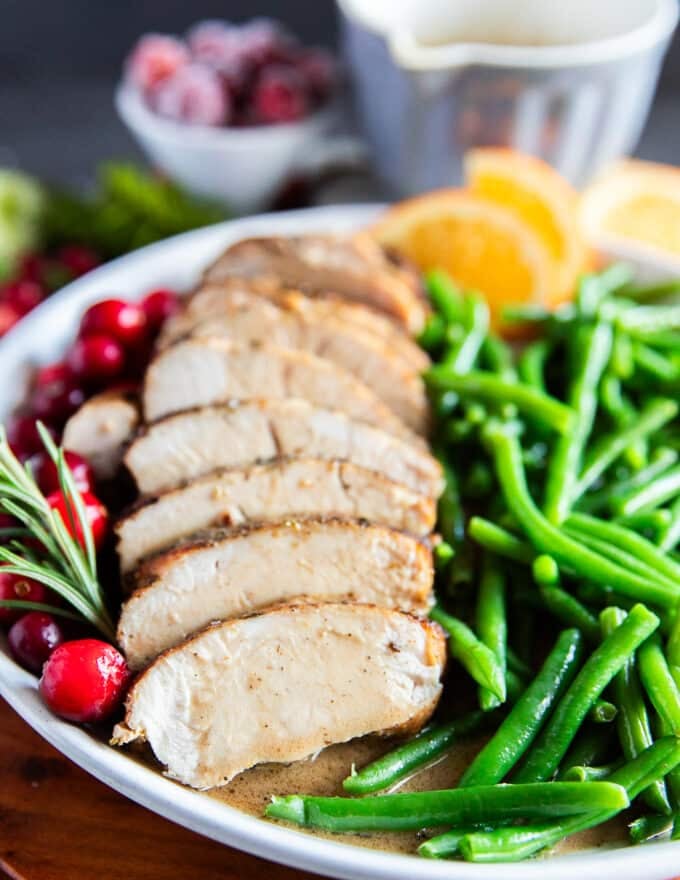
This is the guide for you if you’re looking for tender, juicy meat, beautifully seasoned skin and plenty of flavor in every slice. Whether you’re making a holiday meal or simply want a delicious roast for dinner, knowing how to cook turkey breast properly makes all the difference.
While so many people LOVE the turkey breast, they always end up roasting a whole turkey. This guide is for you if you just want to enjoy fool proof juicy tender turkey breast meat. And I’m sharing several methods of cooking, and even a simple gravy to serve with it!
The beauty of making turkey breast is that it’s everyone’s favorite and you can scale this recipe to feed 2-20 people. Just add on more of the breasts assuming 4 generous servings per turkey breast. Depending on the size of the bird, you can even have 6-8 servings per turkey breast, so keep an eye on the size when buying.
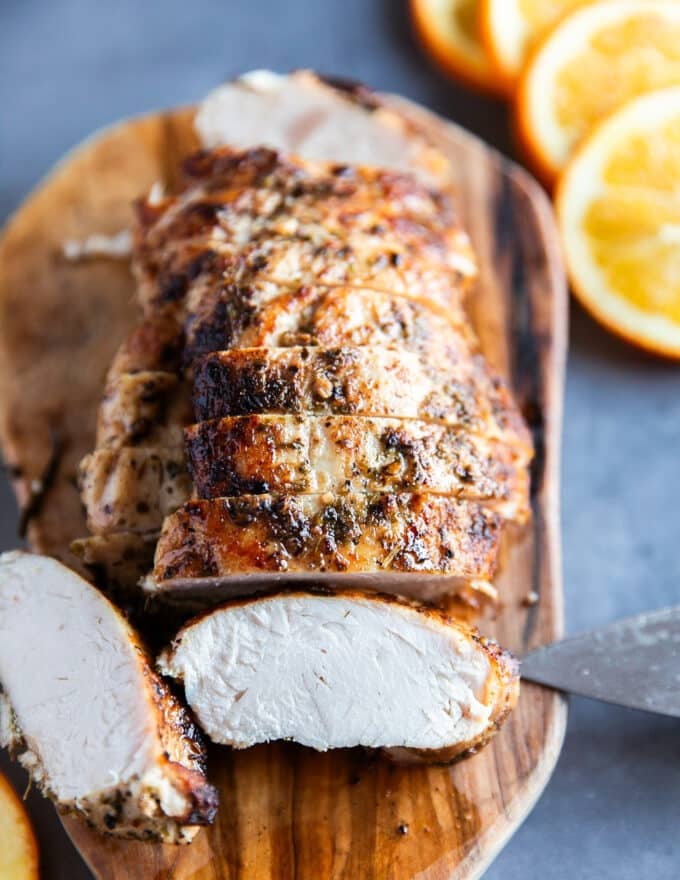
What Is Turkey Breast?
Turkey breast is the large, lean cut of white meat from the front of the turkey. It has a mild flavor and a relatively delicate texture, making it versatile enough to pair with everything from classic herbs and butter to garlic, citrus and bold seasonings. You can buy turkey breast in several forms:
- Bone in turkey breast: This cut includes the breastbone and usually the skin. It is a popular choice for roasting because the skin helps protect the surface of the meat while cooking, and the bones provide a convenient structure for carving. You can find it used in our Dry Brine Turkey Breast.
- Boneless turkey breast: This is the breast meat removed from the bone. It may be sold with or without the skin and sometimes comes tied or netted to help it hold its shape. Because it is often more compact, cooking time can differ from a bone-in breast of the same weight. You can find it used in our Turkey Breast Recipe On the Stove.
- Turkey tenderloin: Tenderloin is a smaller, separate muscle located beneath the breast. It is not the same as a whole turkey breast and generally requires a different cooking approach. Use my Turkey Tenderloin Recipe for guaranteed crowd pleasing results!
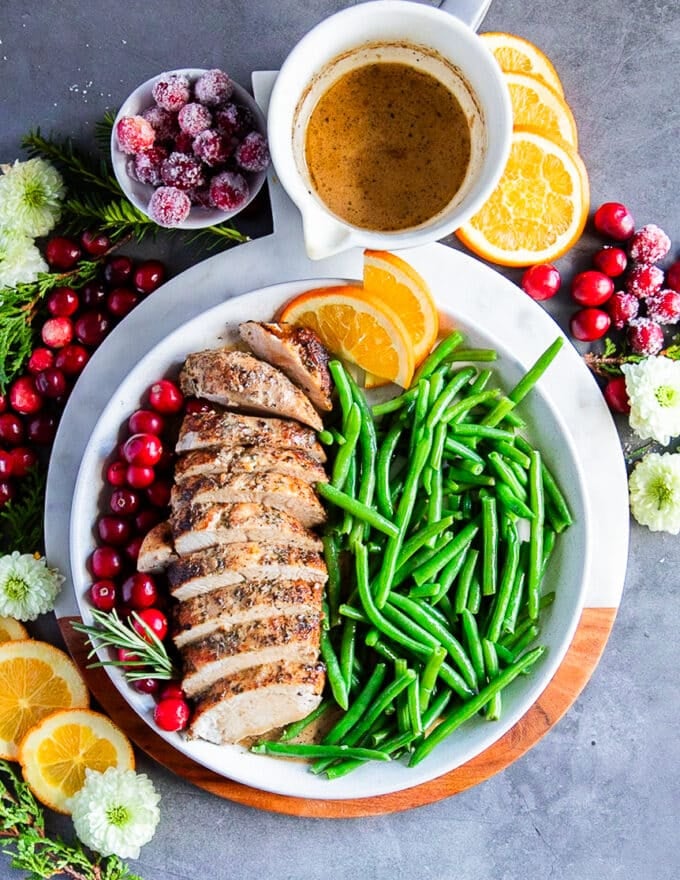
What Does Turkey Breast Taste Like?
Turkey breast has a mild, savory flavor with a lean, tender texture when cooked properly. It is less rich than dark turkey meat, which makes it particularly versatile.
Its mildness allows it to absorb the flavor of herbs, garlic, butter, citrus and spices. The skin, when left on and properly roasted, adds a richer flavor and a contrasting texture.
Turkey breast also pairs well with sauces and gravies. Classic turkey gravy is always a favorite, but lemon herb sauces, pan juices and garlic butter are equally delicious options.
Why You’ll Love Cooking Turkey Breast
- Perfect for smaller gatherings: You can enjoy a turkey dinner without cooking a whole bird.
- Versatile: Turkey breast works beautifully with traditional holiday seasonings, Mediterranean flavors, garlic, citrus and fresh herbs.
- Less preparation: A single cut is easier to handle, season and carve than a whole turkey.
- Great for leftovers: Sliced turkey is delicious in sandwiches, salads, wraps and hearty meals throughout the week.
- Easy to customize: You can change the seasoning, serve it with different sauces or prepare it using several cooking methods.
Ingredients You’ll Need
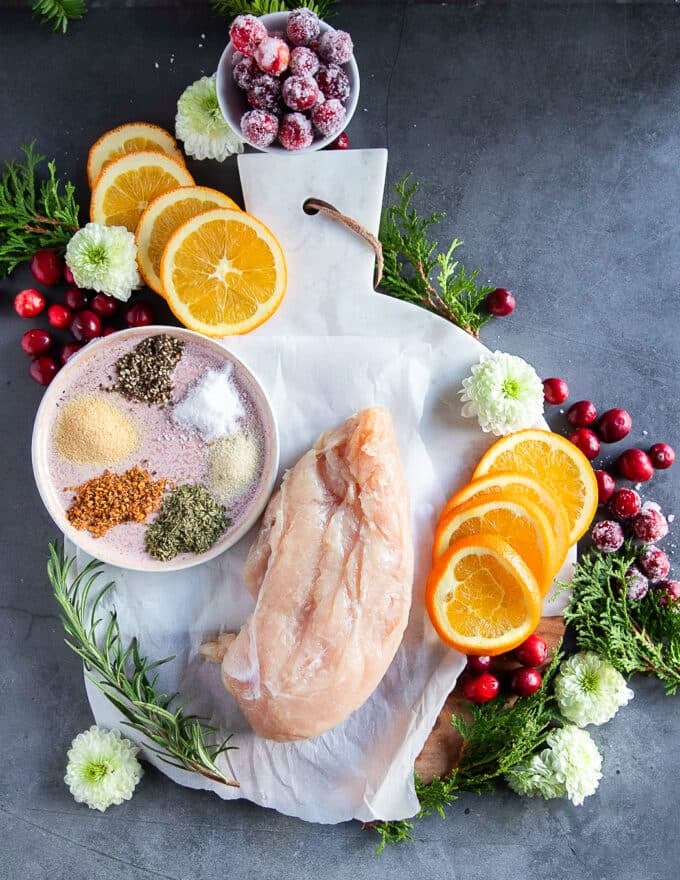
- Turkey breast: Choose bone in or boneless depending on your preference and the number of people you’re serving. If buying frozen turkey breast, allow enough time for it to thaw safely in the refrigerator.
- Butter or olive oil: Fat helps distribute the seasonings and contributes to a flavorful exterior. Butter adds richness, while olive oil offers a lighter, savory flavor.
- Garlic: Fresh garlic adds depth and pairs particularly well with turkey’s mild flavor.
- Fresh herbs: Rosemary, thyme, sage and parsley are classic choices. They complement turkey without overpowering it.
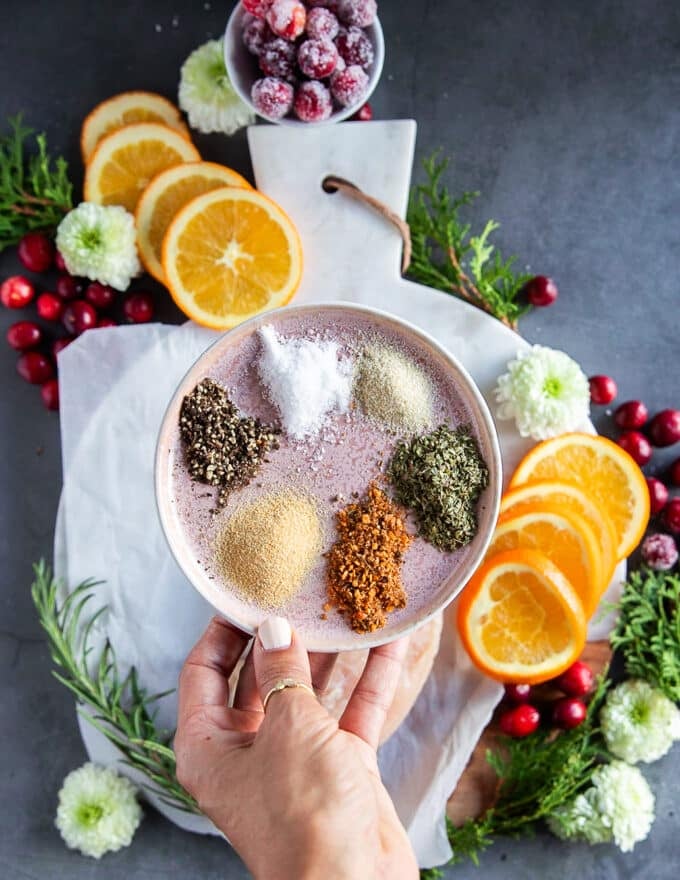
- Seasonings: Salt and black pepper form the foundation. Paprika, onion powder, garlic powder, oregano and other spices can add warmth and color.
- Citrus and aromatics: Lemon, orange, onion and other aromatics can bring freshness and fragrance to the roasting pan.
- Broth or stock: A little broth can help create flavorful pan juices that can be used for serving or gravy. Use chicken stock or vegetable.
How to Prepare Turkey Breast Before Cooking
A little preparation makes roasting easier and helps the turkey cook more evenly.
- Thaw it safely. If your turkey breast is frozen, thaw it in the refrigerator rather than leaving it on the counter. Larger cuts need more time, so plan ahead.
- Remove excess moisture. Pat the surface dry with paper towels. This is particularly helpful if you want the skin to brown rather than steam.
- Prepare the roasting pan. Use a pan that comfortably accommodates the turkey breast without crowding it. A roasting rack can help air circulate around the meat, although it is not essential for every preparation.
Should You Dry Brine Turkey Breast?
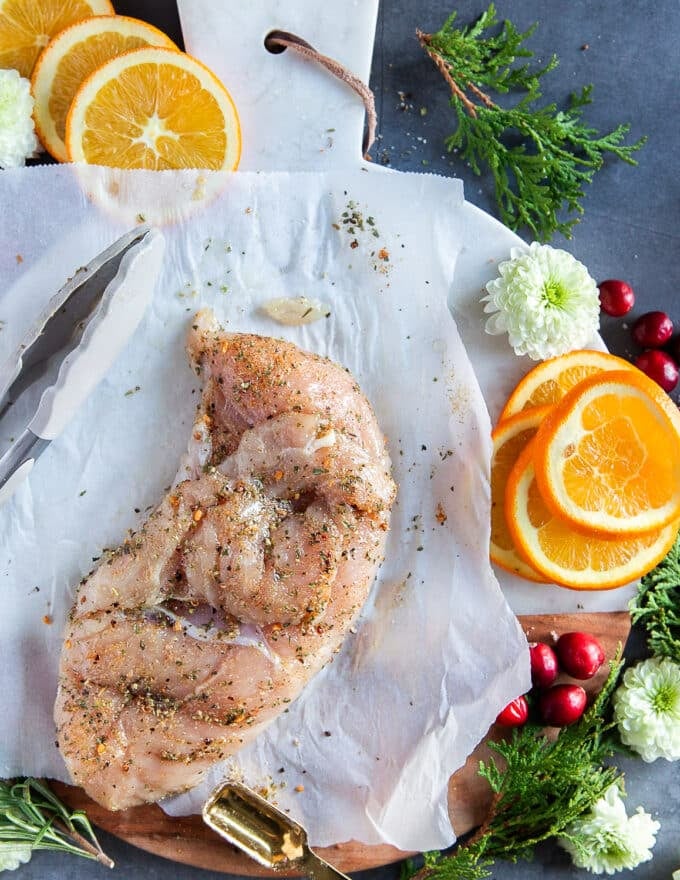
Dry brining is an optional preparation technique in which salt is applied to the turkey ahead of cooking. The resting period allows the seasoning to penetrate the meat and can help improve the final texture and flavor.
It is especially useful when planning a holiday meal because much of the preparation can be done in advance. If you want to explore this method in more detail, read this Dry Brine Turkey Breast article.
How to Cook Turkey Breast in the Oven
Oven roasting is a straightforward method that produces tender meat and a beautifully browned exterior when done properly.
Prepare the oven.
Preheat the oven to 325°F.
Season and Sear the turkey.
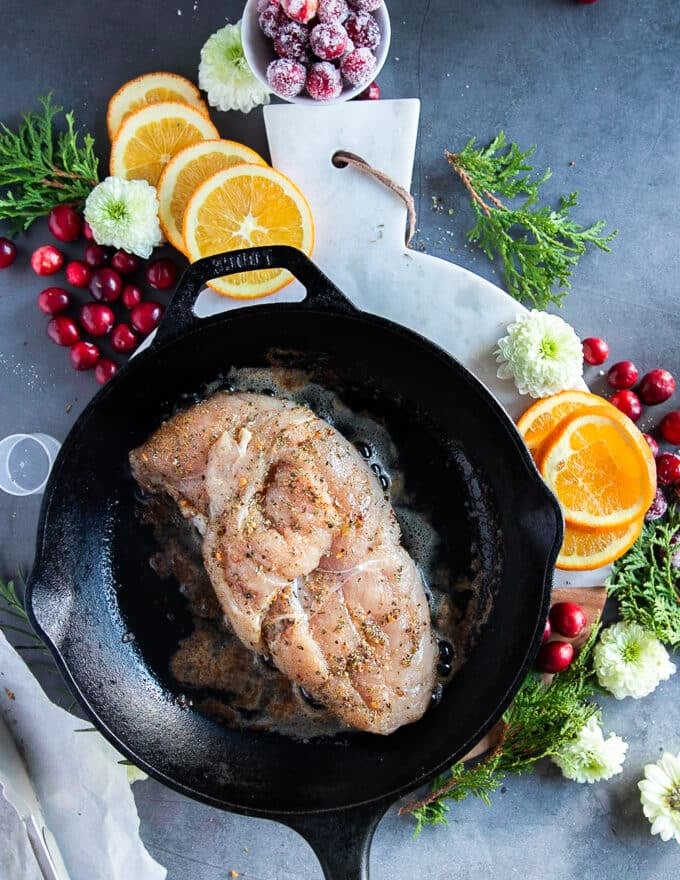
- Remove the turkey from its packaging and pat it dry. If it has skin, gently loosen it where possible so you can season beneath it.

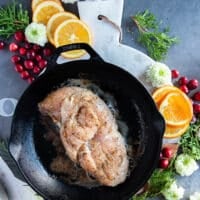
- Take the seasoned turkey breast, or dry brined or turkey tenderloin and sear it in a hot heavy duty skillet. We prefer a cast iron or heavy skillet that’s also oven friendly.
- You want the turkey breast to be well seared and browned on both sides, but not necessarily cooked through.
- You’ll add in the herbs, and citrus slices and the stock.
- Immediately cover the pan with some parchment paper and foil.
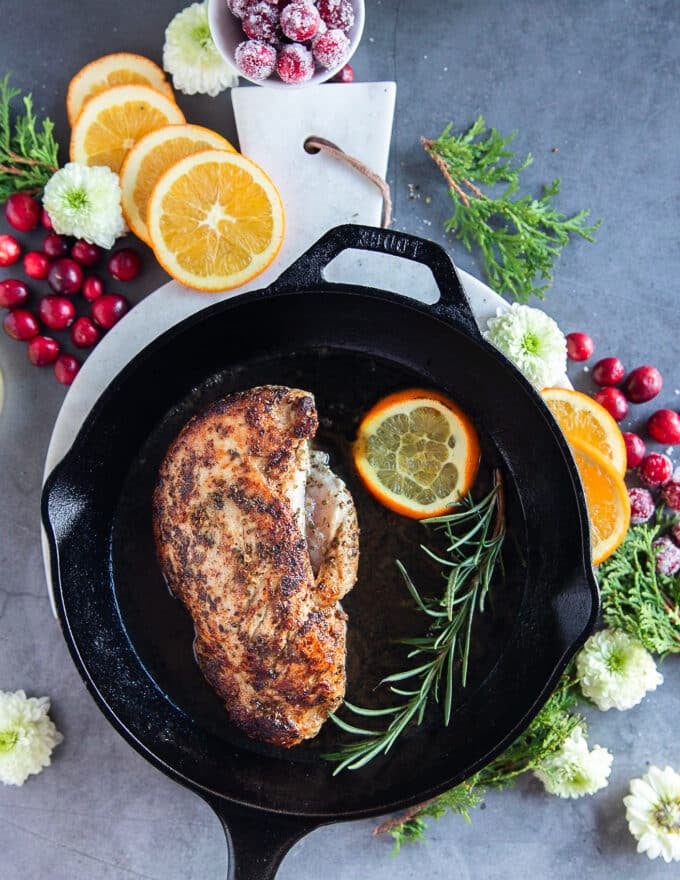
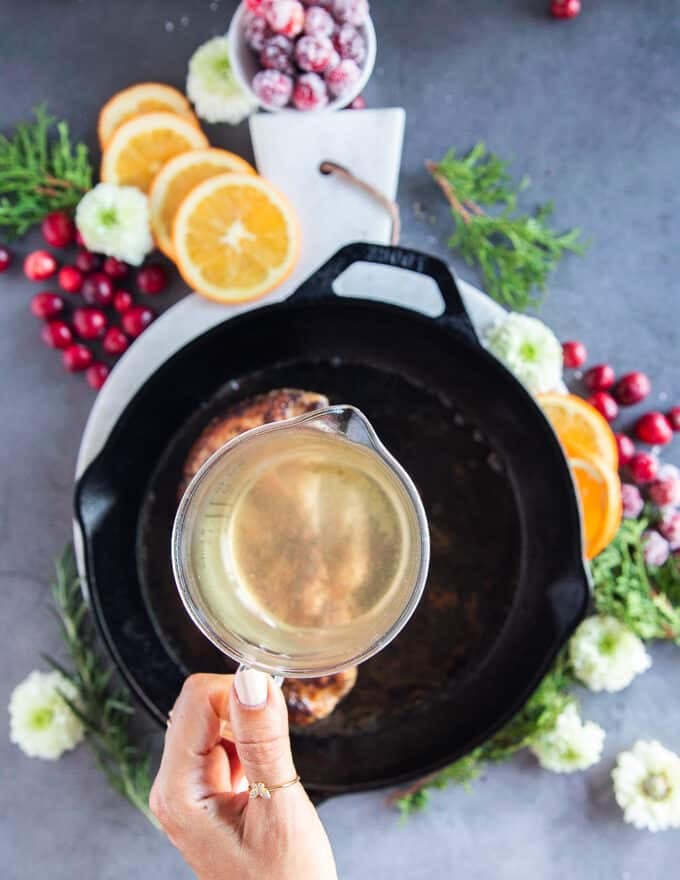
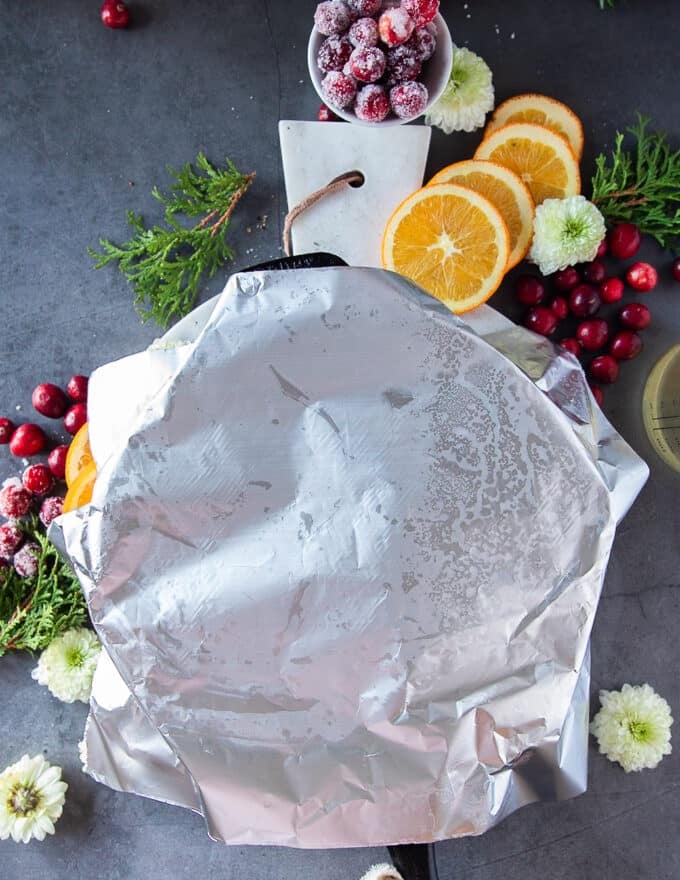
Roast the turkey
- Place the pan in the preheated oven. Allow the turkey to roast without repeatedly opening the oven door. Monitor its progress as it approaches the estimated cooking time.
- Insert a meat thermometer into the thickest portion of the breast, making sure it does not touch the bone. The turkey is ready when it reaches 165°F.
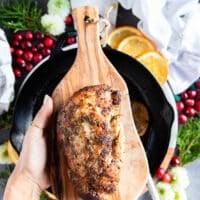
- Transfer the turkey to a cutting board and allow it to rest before slicing. Resting gives the juices time to redistribute and makes carving easier.
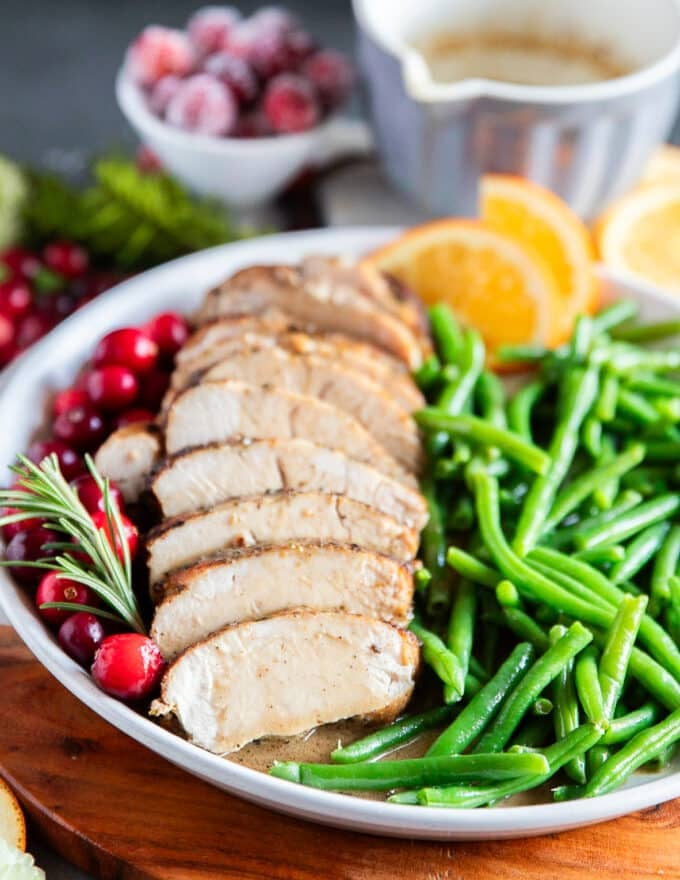
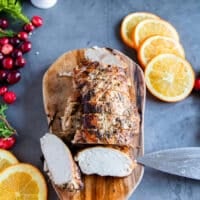
- Carve the turkey into even slices and look HOW JUICY it is??
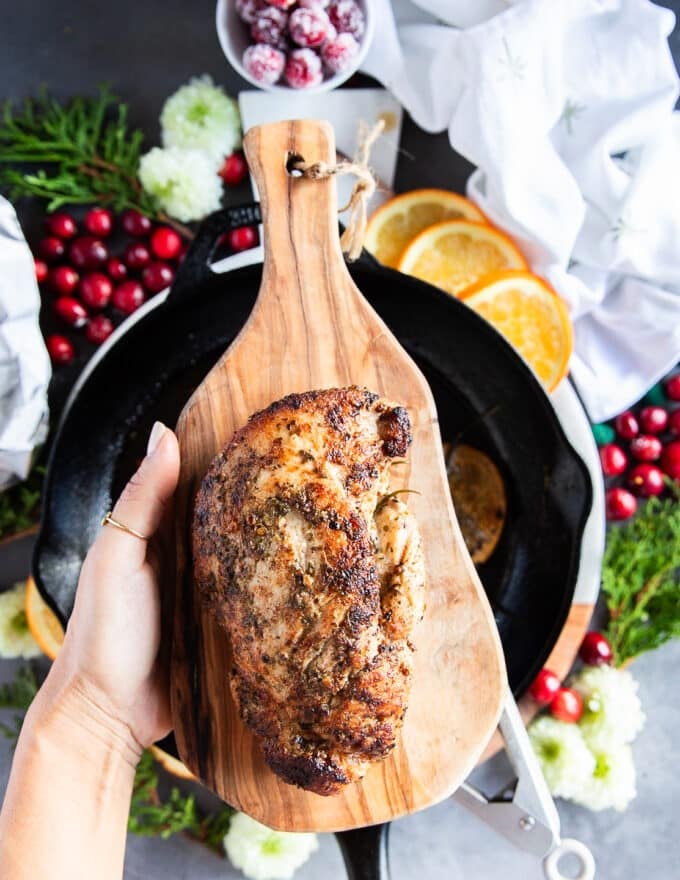
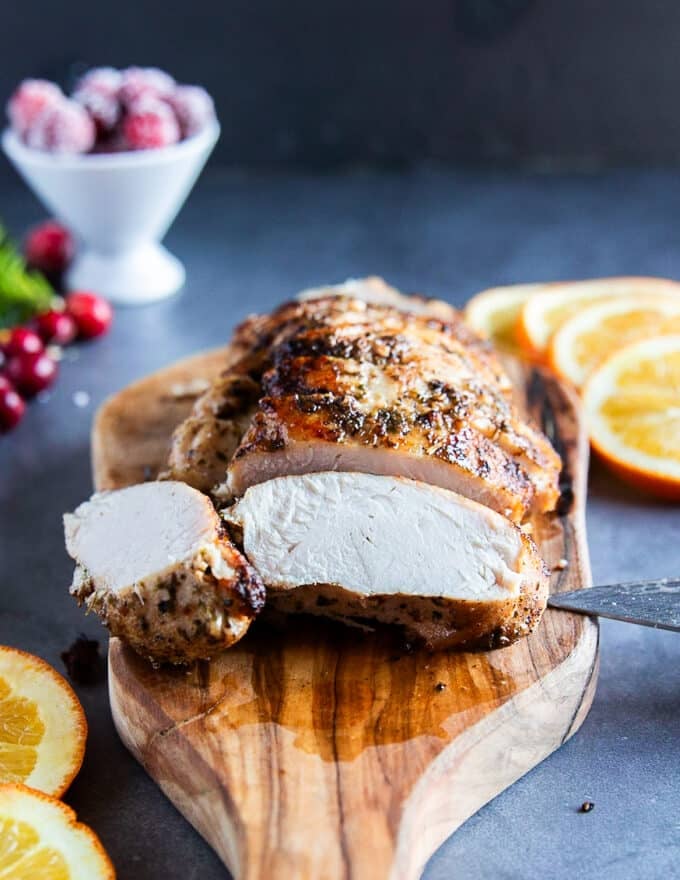
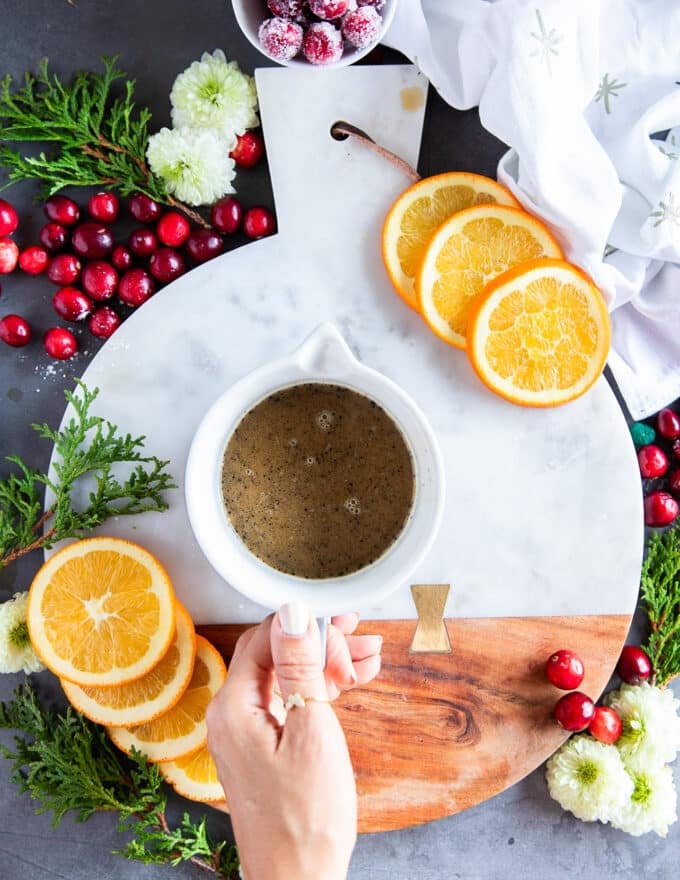
Make the Gravy Step By Step
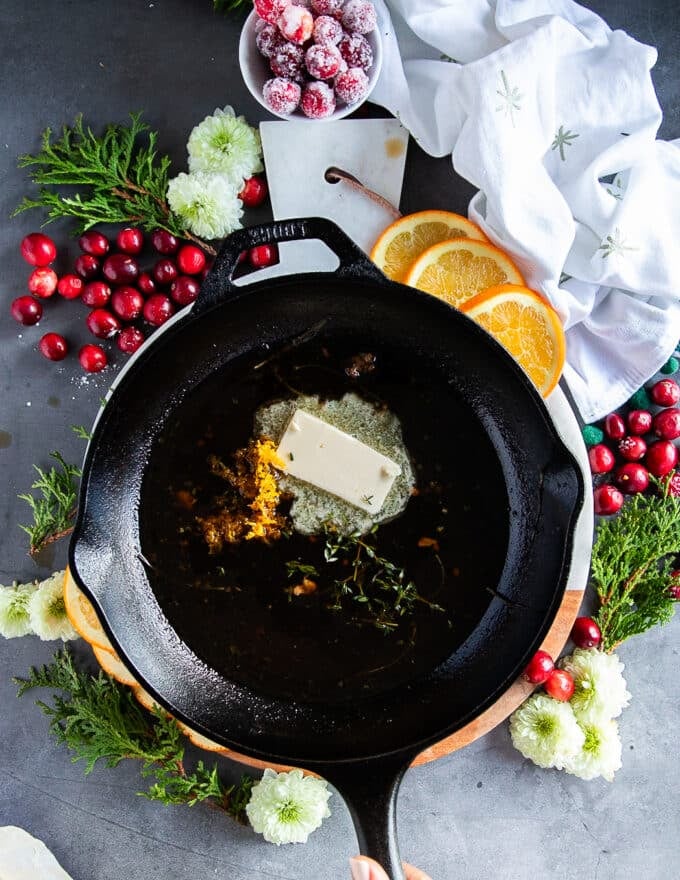
- Use the same skillet that you seared the turkey breast in, and the same one where it was roasted for maximum flavor.
- The base of the gravy starts by adding to the pan drippings and liquid.
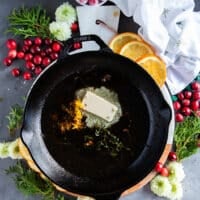
- Add Roasted Garlic , butter, orange zest and herbs.
- You can use shallots here as well and lemon zest.
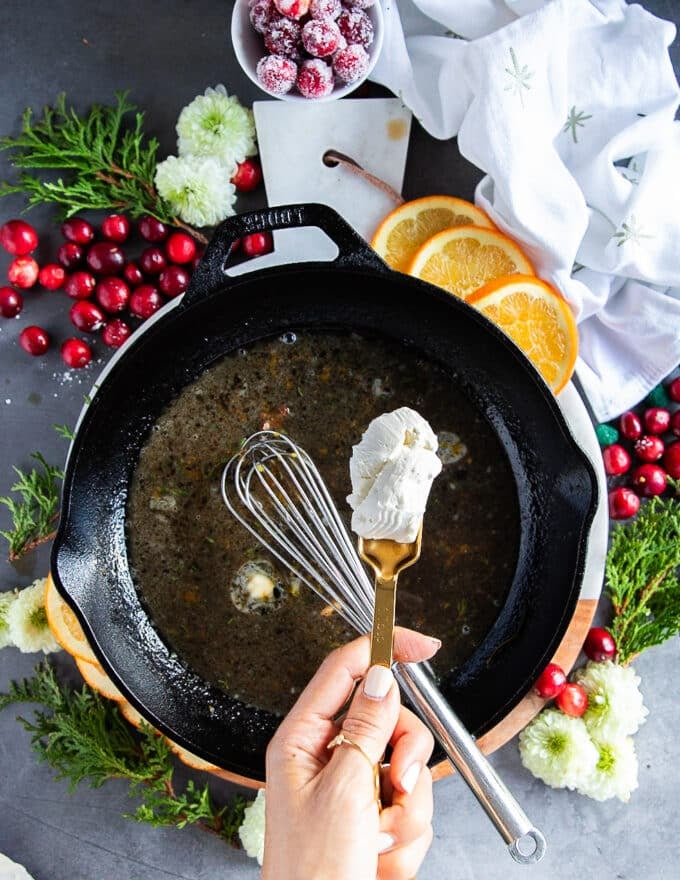
- Over low heat, once the butter has dissolved add in cream cheese. This thickens the gravy and makes it super luxurious and creamy!
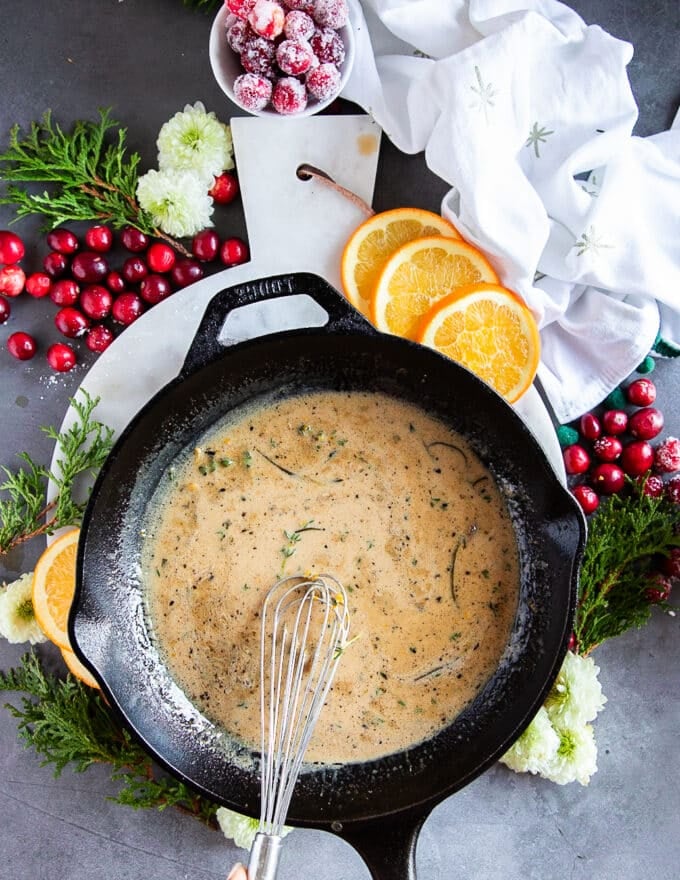
- Whisk over low heat until it has blended into one smooth gravy.
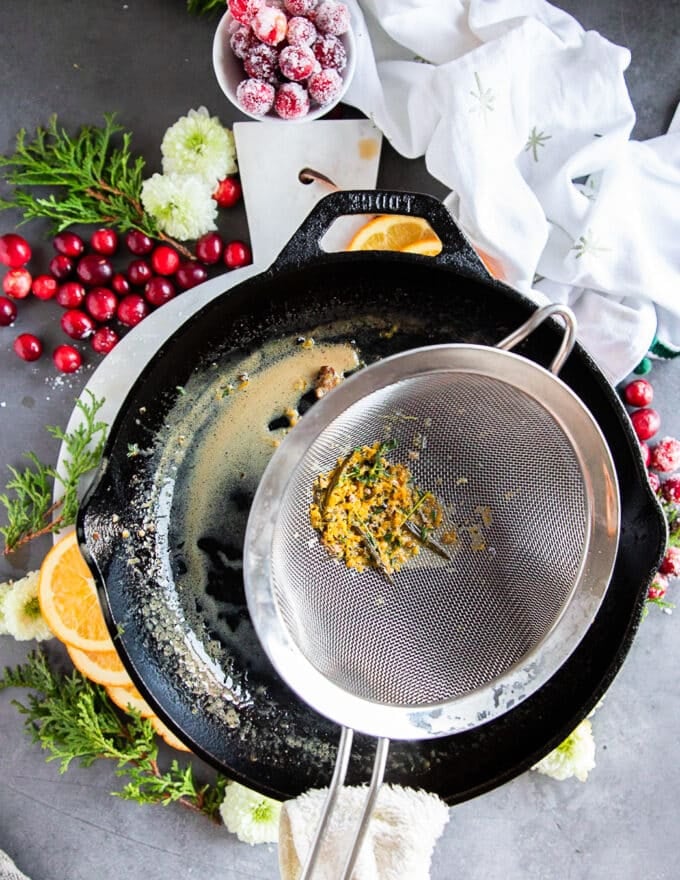
- Strain the gravy for an extra creamy and luxurious feel! This step is optional completely but HIGHLY recommended!
- Now your gravy is ready!
- NOTE: This gravy is made really simple and one pan method, if you want the flour based gravy, you’ll find it in this Turkey Tenderloin Recipe.
Slice and Serve the Turkey Breast
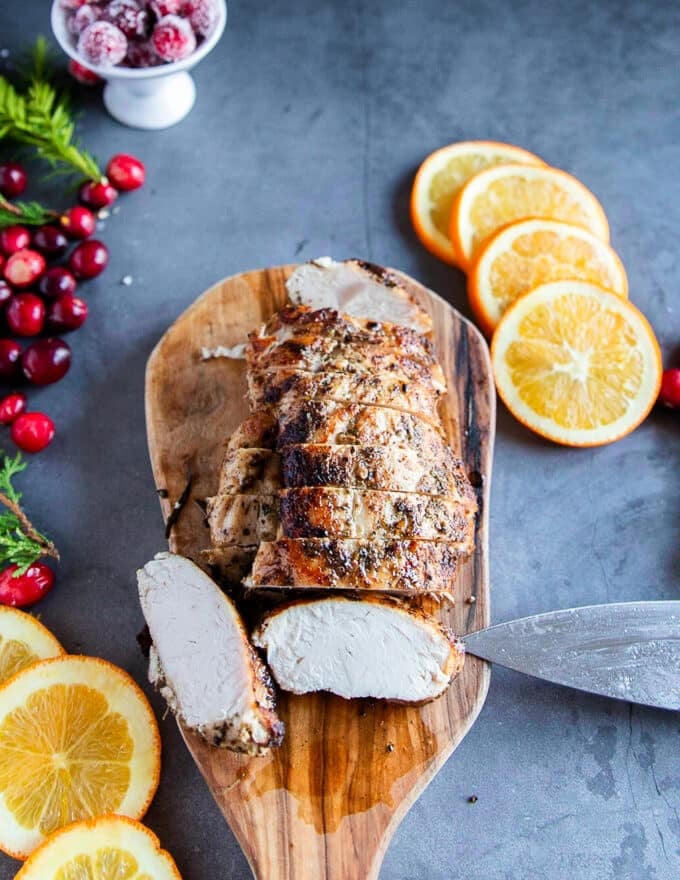
- Start by slicing each turkey breast into a third inch slices. You can make the slices thinner or thicker depending on what you prefer.
- Make sure to use a really sharp knife for this as you don’t want to tear apart the tender meat.
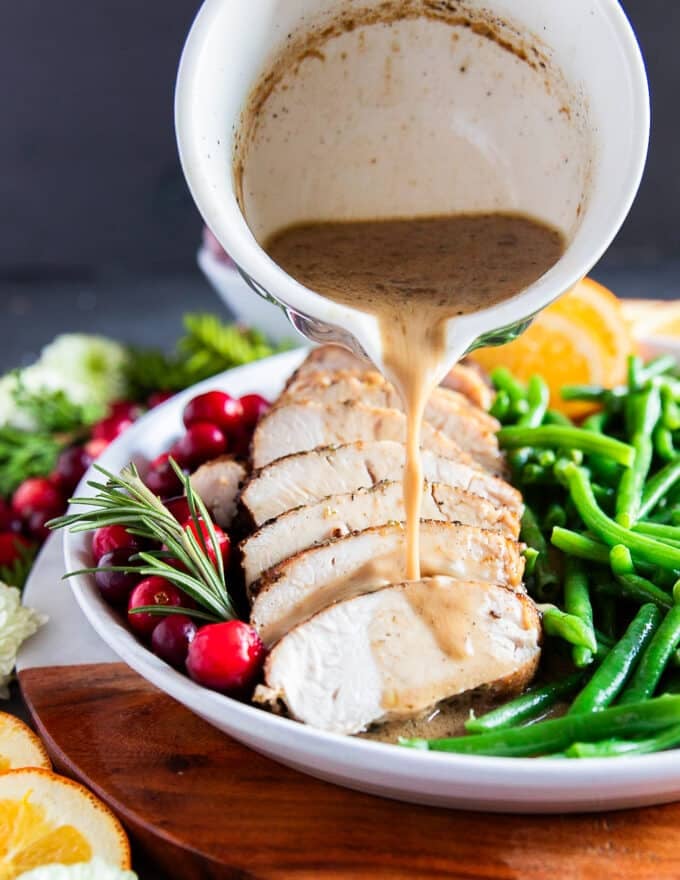
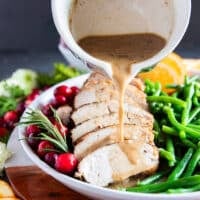
- Once it’t sliced, drizzle some of the gravy over the turkey and let it absorb it well! Keep the extra gravy on the side.
What Is the Best Temperature to Cook Turkey Breast?
- For oven roasted turkey breast, 325°F is the best roasting temperature. It allows the meat to cook steadily without requiring an excessively high oven temperature.
- According to food safety guidance, turkey should reach an internal temperature of 165°F. Check the thickest part of the breast with a food thermometer, avoiding contact with the bone.
- Do not rely on the color of the meat or the appearance of the juices to determine doneness. A thermometer provides a much more dependable answer.
How Long to Cook Turkey Breast?
- The cooking time depends on the weight of the turkey breast, whether it is bone in or boneless, the oven temperature and how cold the meat was when it went into the oven.
- At 325°F, a bone in turkey breast weighing approximately 4–6 pounds may take around 1 1/2 hours, while a 6–8-pound breast may take approximately 2 1/2 hours. These are estimates, not guaranteed cooking times.
- Boneless turkey breast may cook more quickly, depending on its shape and thickness. A compact, rolled breast can cook differently from a flatter cut of the same weight.
- Always begin checking the internal temperature before the estimated cooking time is complete.
- Insert the thermometer into the thickest portion of the meat.
- Check more than one spot if the breast has an uneven shape.
- Remove it from the oven once it reaches the safe internal temperature of 165°F.
- The most important thing to remember is that cooking time is a guide. The internal temperature determines doneness.
Expert Tips for Juicy, Tender Turkey Breast
- Choose the right size. A turkey breast should suit the number of people you’re serving and the amount of leftovers you want. Remember that bone in cuts include weight from the bone.
- Dry the skin before roasting. Removing excess moisture helps the surface brown more effectively. This is especially important if crisp skin is one of your goals.
- Season beneath the skin. When the skin is intact, gently work some of the seasoning underneath it. This helps flavor the meat itself.
- Always SEAR before roasting as it creates a perfect crust, and starts developing the flavors in the roasting pan or skillet.
- Don’t overcrowd the pan if you’re searing multiple turkey breasts, do so in batches for best results.
- Use a meat thermometer. This is the most important tool for preventing overcooking. Cooking time can vary, even between turkey breasts of similar weights.
- Avoid opening the oven repeatedly. Every time the oven door opens, heat escapes and the cooking environment changes.
- Check the turkey periodically instead of constantly.
- Do not skip the resting period. Resting makes the turkey easier to carve and helps retain moisture when sliced.
- Slice against the grain. Cutting across the direction of the muscle fibers produces more tender slices.
How to Keep Turkey Breast from Drying Out
- Turkey breast is naturally lean, so it can become dry if cooked for too long. The most effective way to prevent this is to control the internal temperature rather than simply extending the cooking time.
- Start by seasoning the turkey properly and be generous with BUTTER! Fat from butter or olive oil contributes flavor and helps the exterior brown. If the breast has skin, keeping it intact during roasting provides another layer of protection.
- A thermometer is essential. Even a relatively small amount of overcooking can affect the texture of lean breast meat.
- Resting is equally important. Cutting into the turkey immediately after cooking can cause more of its juices to escape onto the cutting board. Allow it to rest before carving.
- Finally, slice only what you need for serving. Keeping the remaining turkey breast intact helps it retain moisture during storage.
How to Know When Turkey Breast Is Done
The most reliable way to check turkey breast is with an instant read food thermometer. Insert it into the thickest part of the breast, avoiding the bone. Check the temperature in more than one location if the cut is uneven.
Turkey breast should reach an internal temperature of 165°F. Do not use cooking time, skin color or the appearance of the juices as the only indication that it is ready. These can be misleading.
How to Carve Turkey Breast
Allow the turkey to rest before carving. Place it on a stable cutting board and use a sharp carving knife.
- For bonemin turkey breast, locate the breastbone and follow the natural separation between the meat and bone. Remove the breast meat in large sections, then slice those sections across the grain.
- For boneless turkey breast, identify the direction of the muscle fibers and slice across them.
- Aim for even slices so each serving has a similar texture and thickness.
Different Ways to Cook Turkey Breast
Oven roasting is a popular choice, but it is not the only way to prepare turkey breast. The best method depends on the cut you have, the flavor you’re looking for and the time available.
Turkey Breast on the Stove

Cooking turkey breast on the stovetop is a wonderful alternative to oven roasting. It is particularly useful when you want a covered-skillet preparation with flavorful cooking juices and a lemon gravy.
My Turkey Breast Recipe on the Stove uses a different technique from oven roasting and is worth exploring when you want to prepare turkey breast without making a traditional roast.
Dry Brined Turkey Breast
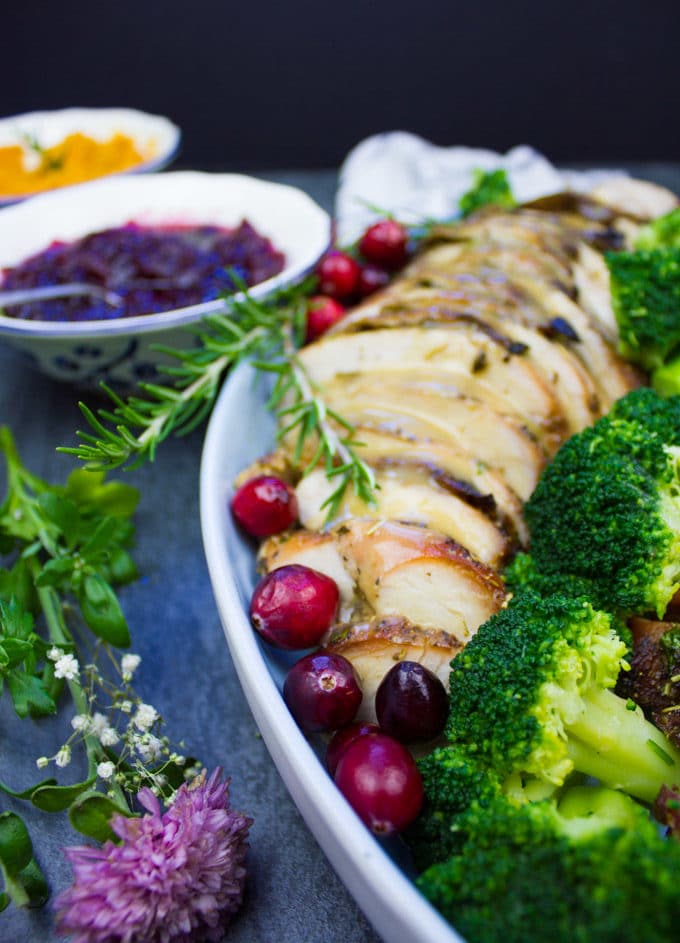
Dry brining is an excellent option when you have time to prepare the turkey in advance. Salt seasons the meat during its resting period, while the uncovered preparation can also help dry the skin before roasting.
For a complete recipe and preparation method, see my Dry Brine Turkey Breast.
Turkey Tenderloin

Turkey tenderloin is a smaller cut than a whole turkey breast. Because it has a different shape and thickness, it requires its own cooking approach rather than simply following the roasting time for a large breast.
If you have turkey tenderloin instead, try my Turkey Tenderloin Recipe.
Cooking a Whole Turkey
If you’re preparing a whole turkey rather than just the breast, spatchcocking is another cooking option. This technique involves removing the backbone and flattening the bird to help it cook more evenly.
You can find the full method in my Spatchcock Turkey recipe.
Air Fryer Turkey Breast

An air fryer is another excellent way to cook turkey breast, especially when you want golden, crispy skin and juicy meat in less time than traditional oven roasting. The circulating hot air cooks the turkey efficiently while helping the outside brown beautifully.
Both bone in and boneless turkey breast can be cooked in an air fryer, provided the cut fits comfortably inside the basket or air fryer oven. Avoid overcrowding so the hot air can circulate around the meat.
Air frying is particularly convenient for smaller holiday gatherings, weeknight dinners and anyone who wants roasted turkey flavor without heating up a large oven.
For the complete method, including air fryer temperatures, cooking times, seasoning, and tips for both bone-in and boneless cuts, see my Air Fryer Turkey Breast recipe.
What to Serve with Turkey Breast
Turkey breast works with a wide range of sides, from traditional holiday favorites to lighter everyday dishes.
- Potatoes: Roasted potatoes, mashed potatoes and crispy potato wedges are all excellent choices.
- Vegetables: Roasted carrots, green beans, Brussels sprouts, asparagus, Roasted Butternut Squash and more veggies!
- Salads: A fresh grilled romaine salad, a fig salad or a seasonal apple salad with broccoli cauliflower salad.
What to Do with Leftover Turkey Breast
Leftover turkey breast is incredibly versatile. Slice it for sandwiches, add it to salads, use it in wraps or serve it with vegetables and grains for another meal.
One of my favorite ways to turn cooked turkey into a new meal is with Turkey Sliders. They’re a delicious option when you have leftover turkey and want something different from the original dinner.
Another AMAZING option is to make those Mediterranean Turkey Sandwich!
You can also add sliced turkey to pasta, soups and casseroles. Because the meat is already cooked, add it toward the end of cooking when possible so it does not become dry.
How to Store and Reheat Cooked Turkey Breast
- Refrigerating: Refrigerate cooked turkey within two hours of cooking. Store it in an airtight container and use it within three to four days.
- Freezing: For longer storage, freeze cooked turkey in airtight, freezer safe packaging. Dividing it into meal sized portions makes it easier to thaw only what you need.
- Reheating: Reheat turkey gently with a little broth, gravy or pan juices to help maintain moisture. Covering it while reheating can also help prevent the surface from drying out. Reheat leftovers to 165°F.
Turkey Breast Troubleshooting
Why Did My Turkey Breast Turn Out Dry?
The most common reason is overcooking. Turkey breast is lean, so even a small difference in cooking time can affect its texture. Use a thermometer and remove the turkey once it reaches 165°F.
Why Is My Turkey Breast Cooking Unevenly?
An uneven shape or thickness can cause some areas to cook faster than others. Check the thickest portions with a thermometer and make sure the turkey is positioned evenly in the roasting pan.
Should I Cover Turkey Breast While Roasting?
YES if you have seared it prior to roasting as we showed above. Covering will keep it moist and juicy and will not affect the golden crust as we already have it established from searing.
Should I Baste Turkey Breast?
Basting is optional since this is a small cut and cooks relatively fast.
Why Is the Skin Not Crispy?
Excess moisture on the skin can prevent it from browning properly. Pat it dry before roasting and avoid covering it if crisp skin is your goal. The roasting temperature and the amount of moisture in the pan also influence browning.
Can I Cook Turkey Breast from Frozen?
It is possible to cook turkey from frozen in an oven, but we don’t really recommend it! It will take significantly longer and requires careful temperature monitoring. Never cook frozen turkey in a slow cooker. For more predictable results, thaw it safely in the refrigerator before roasting. The safest cooking method for frozen turkey breast would be Air Fryer Turkey Breast
Can I Cook Turkey Breast Ahead of Time?
Yes. You can roast it ahead, refrigerate it promptly and reheat it gently before serving. For the best texture, keep the breast in larger pieces rather than slicing everything in advance.
Why Is My Turkey Breast Still Pink?
Color alone is not a reliable indication of doneness. Properly cooked turkey can sometimes retain a pink tint. Use a food thermometer to confirm that the thickest part has reached 165°F.
Should I Let Turkey Breast Rest Before Slicing?
Yes. Resting allows the juices to redistribute and makes the meat easier to carve. It also helps prevent excessive moisture from escaping when you slice it.
What Is the Best Temperature to Cook Turkey Breast?
A roasting temperature of 325°F is a dependable choice for oven-roasted turkey breast. Regardless of the oven temperature, the turkey must reach an internal temperature of 165°F.
Is Bone In or Boneless Turkey Breast Better?
Both are good options. Bone-in turkey breast is a traditional choice for roasting and carving, while boneless turkey breast is convenient to slice and serve. Your choice depends on the preparation and presentation you prefer.
How Much Turkey Breast Should I Prepare Per Person?
A bone in turkey breast requires a larger portion allowance because some of its weight comes from the bone. Boneless turkey breast provides more edible meat per pound. Consider the number of guests, appetites and whether you want leftovers when choosing the size.
Is Turkey Breast Healthier Than Other Cuts of Turkey?
Turkey breast is a lean source of protein and generally contains less fat than darker cuts. The overall nutritional value of the meal also depends on the preparation, skin, added fats and accompanying sides.
Can I Cook Turkey Breast Without a Roasting Rack?
Yes. You can roast turkey breast directly in a cast iron or suitable baking dish or roasting pan. A rack helps elevate the meat and allows air to circulate underneath, but it is not essential.
Can I Season Turkey Breast the Night Before?
You really don’t need to.
How Do I Keep Turkey Breast Moist When Reheating?
Reheat it gently with a little broth or gravy, preferably covered. Avoid prolonged reheating, and make sure leftovers reach 165°F before serving.
How To Cook Turkey Breast
Ingredients
- 2 Turkey breasts boneless or bone in
Seasoning
- 2 teaspoons salt and pepper
- 2 teaspoons onion powder
- 2 teaspoons garlic powder
- 1 teaspoon paprika
- 2 teaspoons oregano
- 1 teaspoon lemon pepper
To Roast & Gravy
- 1 orange zest and juice
- 1 lemon zest and juice
- 3 rosemary sprigs
- 1 roast garlic whole head
- 2 1/2 cups stock
- 6 Tablespoon butter
- 2 tablespoons cream cheese
Instructions
-
Preheat the oven to 325°F.
-
Remove the turkey from its packaging and pat it dry. If it has skin, gently loosen it where possible so you can season beneath it.

-
Take the seasoned turkey breast, or dry brined or turkey tenderloin and sear it in a hot heavy duty skillet. We prefer a cast iron or heavy skillet that's also oven friendly.
-
You want the turkey breast to be well seared and browned on both sides, but not necessarily cooked through.
-
You'll add in the herbs, and citrus slices and the stock.
-
Immediately cover the pan with some parchment paper and foil.
-
Roast the turkey
-
Place the pan in the preheated oven. Allow the turkey to roast without repeatedly opening the oven door. Monitor its progress as it approaches the estimated cooking time.
-
Insert a meat thermometer into the thickest portion of the breast, making sure it does not touch the bone. The turkey is ready when it reaches 165°F.
-
Transfer the turkey to a cutting board and allow it to rest before slicing. Resting gives the juices time to redistribute and makes carving easier.
-
Use the same skillet that you seared the turkey breast in, and the same one where it was roasted for maximum flavor.
-
The base of the gravy starts by adding to the pan drippings and liquid.
-
Add Roasted Garlic , butter, orange zest and herbs.
-
You can use shallots here as well and lemon zest.
-
Over low heat, once the butter has dissolved add in cream cheese. This thickens the gravy and makes it super luxurious and creamy!
-
Whisk over low heat until it has blended into one smooth gravy.
-
Strain the gravy for an extra creamy and luxurious feel! This step is optional completely but HIGHLY recommended!
-
Now your gravy is ready!
-
NOTE: This gravy is made really simple and one pan method, if you want the flour based gravy, you'll find it in this Turkey Tenderloin Recipe.
-
Start by slicing each turkey breast into a third inch slices. You can make the slices thinner or thicker depending on what you prefer.
-
Make sure to use a really sharp knife for this as you don't want to tear apart the tender meat.
-
Once it't sliced, drizzle some of the gravy over the turkey and let it absorb it well! Keep the extra gravy on the side.




Recipe Notes
Expert Tips for Juicy, Tender Turkey Breast
- Choose the right size. A turkey breast should suit the number of people you're serving and the amount of leftovers you want. Remember that bone in cuts include weight from the bone.
- Dry the skin before roasting. Removing excess moisture helps the surface brown more effectively. This is especially important if crisp skin is one of your goals.
- Season beneath the skin. When the skin is intact, gently work some of the seasoning underneath it. This helps flavor the meat itself.
- Always SEAR before roasting as it creates a perfect crust, and starts developing the flavors in the roasting pan or skillet.
- Don't overcrowd the pan if you're searing multiple turkey breasts, do so in batches for best results.
- Use a meat thermometer. This is the most important tool for preventing overcooking. Cooking time can vary, even between turkey breasts of similar weights.
- Avoid opening the oven repeatedly. Every time the oven door opens, heat escapes and the cooking environment changes.
- Check the turkey periodically instead of constantly.
- Do not skip the resting period. Resting makes the turkey easier to carve and helps retain moisture when sliced.
- Slice against the grain. Cutting across the direction of the muscle fibers produces more tender slices.
How to Keep Turkey Breast from Drying Out
- Turkey breast is naturally lean, so it can become dry if cooked for too long. The most effective way to prevent this is to control the internal temperature rather than simply extending the cooking time.
- Start by seasoning the turkey properly and be generous with BUTTER! Fat from butter or olive oil contributes flavor and helps the exterior brown. If the breast has skin, keeping it intact during roasting provides another layer of protection.
- A thermometer is essential. Even a relatively small amount of overcooking can affect the texture of lean breast meat.
- Resting is equally important. Cutting into the turkey immediately after cooking can cause more of its juices to escape onto the cutting board. Allow it to rest before carving.
- Finally, slice only what you need for serving. Keeping the remaining turkey breast intact helps it retain moisture during storage.
How to Know When Turkey Breast Is Done
The most reliable way to check turkey breast is with an instant read food thermometer. Insert it into the thickest part of the breast, avoiding the bone. Check the temperature in more than one location if the cut is uneven.
Turkey breast should reach an internal temperature of 165°F. Do not use cooking time, skin color or the appearance of the juices as the only indication that it is ready. These can be misleading.
How to Carve Turkey Breast
Allow the turkey to rest before carving. Place it on a stable cutting board and use a sharp carving knife.
- For bonemin turkey breast, locate the breastbone and follow the natural separation between the meat and bone. Remove the breast meat in large sections, then slice those sections across the grain.
- For boneless turkey breast, identify the direction of the muscle fibers and slice across them.
- Aim for even slices so each serving has a similar texture and thickness.
Different Ways to Cook Turkey Breast
Oven roasting is a popular choice, but it is not the only way to prepare turkey breast. The best method depends on the cut you have, the flavor you're looking for and the time available.
Turkey Breast on the Stove
Cooking turkey breast on the stovetop is a wonderful alternative to oven roasting. It is particularly useful when you want a covered-skillet preparation with flavorful cooking juices and a lemon gravy.
My Turkey Breast Recipe on the Stove uses a different technique from oven roasting and is worth exploring when you want to prepare turkey breast without making a traditional roast.
Dry Brined Turkey Breast
Dry brining is an excellent option when you have time to prepare the turkey in advance. Salt seasons the meat during its resting period, while the uncovered preparation can also help dry the skin before roasting.
For a complete recipe and preparation method, see my Dry Brine Turkey Breast.
Turkey Tenderloin
Turkey tenderloin is a smaller cut than a whole turkey breast. Because it has a different shape and thickness, it requires its own cooking approach rather than simply following the roasting time for a large breast.
If you have turkey tenderloin instead, try my Turkey Tenderloin Recipe.
Cooking a Whole Turkey
If you're preparing a whole turkey rather than just the breast, spatchcocking is another cooking option. This technique involves removing the backbone and flattening the bird to help it cook more evenly.
You can find the full method in my Spatchcock Turkey recipe.
Air Fryer Turkey Breast
An air fryer is another excellent way to cook turkey breast, especially when you want golden, crispy skin and juicy meat in less time than traditional oven roasting. The circulating hot air cooks the turkey efficiently while helping the outside brown beautifully.
Both bone in and boneless turkey breast can be cooked in an air fryer, provided the cut fits comfortably inside the basket or air fryer oven. Avoid overcrowding so the hot air can circulate around the meat.
Air frying is particularly convenient for smaller holiday gatherings, weeknight dinners and anyone who wants roasted turkey flavor without heating up a large oven.
For the complete method, including air fryer temperatures, cooking times, seasoning, and tips for both bone-in and boneless cuts, see my Air Fryer Turkey Breast recipe.
What to Serve with Turkey Breast
Turkey breast works with a wide range of sides, from traditional holiday favorites to lighter everyday dishes.
- Potatoes: Roasted potatoes, mashed potatoes and crispy potato wedges are all excellent choices.
- Vegetables: Roasted carrots, green beans, Brussels sprouts, asparagus, Roasted Butternut Squash and more veggies!
- Salads: A fresh grilled romaine salad, a fig salad or a seasonal apple salad with broccoli cauliflower salad.
What to Do with Leftover Turkey Breast
Leftover turkey breast is incredibly versatile. Slice it for sandwiches, add it to salads, use it in wraps or serve it with vegetables and grains for another meal.
One of my favorite ways to turn cooked turkey into a new meal is with Turkey Sliders. They're a delicious option when you have leftover turkey and want something different from the original dinner.
Another AMAZING option is to make those Mediterranean Turkey Sandwich!
You can also add sliced turkey to pasta, soups and casseroles. Because the meat is already cooked, add it toward the end of cooking when possible so it does not become dry.
How to Store and Reheat Cooked Turkey Breast
- Refrigerating: Refrigerate cooked turkey within two hours of cooking. Store it in an airtight container and use it within three to four days.
- Freezing: For longer storage, freeze cooked turkey in airtight, freezer safe packaging. Dividing it into meal sized portions makes it easier to thaw only what you need.
- Reheating: Reheat turkey gently with a little broth, gravy or pan juices to help maintain moisture. Covering it while reheating can also help prevent the surface from drying out. Reheat leftovers to 165°F.
Turkey Breast Troubleshooting
Why Did My Turkey Breast Turn Out Dry?
The most common reason is overcooking. Turkey breast is lean, so even a small difference in cooking time can affect its texture. Use a thermometer and remove the turkey once it reaches 165°F.
Why Is My Turkey Breast Cooking Unevenly?
An uneven shape or thickness can cause some areas to cook faster than others. Check the thickest portions with a thermometer and make sure the turkey is positioned evenly in the roasting pan.
Should I Cover Turkey Breast While Roasting?
YES if you have seared it prior to roasting as we showed above. Covering will keep it moist and juicy and will not affect the golden crust as we already have it established from searing.
Should I Baste Turkey Breast?
Basting is optional since this is a small cut and cooks relatively fast.
Why Is the Skin Not Crispy?
Excess moisture on the skin can prevent it from browning properly. Pat it dry before roasting and avoid covering it if crisp skin is your goal. The roasting temperature and the amount of moisture in the pan also influence browning.
Can I Cook Turkey Breast from Frozen?
It is possible to cook turkey from frozen in an oven, but we don't really recommend it! It will take significantly longer and requires careful temperature monitoring. Never cook frozen turkey in a slow cooker. For more predictable results, thaw it safely in the refrigerator before roasting. The safest cooking method for frozen turkey breast would be Air Fryer Turkey Breast
Can I Cook Turkey Breast Ahead of Time?
Yes. You can roast it ahead, refrigerate it promptly and reheat it gently before serving. For the best texture, keep the breast in larger pieces rather than slicing everything in advance.
Why Is My Turkey Breast Still Pink?
Color alone is not a reliable indication of doneness. Properly cooked turkey can sometimes retain a pink tint. Use a food thermometer to confirm that the thickest part has reached 165°F.
Should I Let Turkey Breast Rest Before Slicing?
Yes. Resting allows the juices to redistribute and makes the meat easier to carve. It also helps prevent excessive moisture from escaping when you slice it.
What Is the Best Temperature to Cook Turkey Breast?
A roasting temperature of 325°F is a dependable choice for oven-roasted turkey breast. Regardless of the oven temperature, the turkey must reach an internal temperature of 165°F.
Is Bone In or Boneless Turkey Breast Better?
Both are good options. Bone-in turkey breast is a traditional choice for roasting and carving, while boneless turkey breast is convenient to slice and serve. Your choice depends on the preparation and presentation you prefer.
How Much Turkey Breast Should I Prepare Per Person?
A bone in turkey breast requires a larger portion allowance because some of its weight comes from the bone. Boneless turkey breast provides more edible meat per pound. Consider the number of guests, appetites and whether you want leftovers when choosing the size.
Is Turkey Breast Healthier Than Other Cuts of Turkey?
Turkey breast is a lean source of protein and generally contains less fat than darker cuts. The overall nutritional value of the meal also depends on the preparation, skin, added fats and accompanying sides.
Can I Cook Turkey Breast Without a Roasting Rack?
Yes. You can roast turkey breast directly in a cast iron or suitable baking dish or roasting pan. A rack helps elevate the meat and allows air to circulate underneath, but it is not essential.
Can I Season Turkey Breast the Night Before?
You really don't need to.
How Do I Keep Turkey Breast Moist When Reheating?
Reheat it gently with a little broth or gravy, preferably covered. Avoid prolonged reheating, and make sure leftovers reach 165°F before serving.



Leave a Reply