

Baked asparagus is one of the easiest and most rewarding vegetable side dishes you can make. Roasting asparagus in the oven transforms its naturally grassy, slightly earthy flavor into something sweeter, nuttier, and more complex. The high heat caramelizes the exterior while keeping the stalks tender and the tips lightly crisp, creating the perfect side dish.
We never run out of ways to make asparagus a fancy side dish. Our Air Fryer Asparagus is perfectly cooked to delicate crisp perfection and topped with some Burrata Cheese for a show stopper dish!
Our Roasted Asparagus are roasted with a layer of parmesan cheese for maximum flavor and a slight nutty crust which is perfect served along steak! Your favorite Air Fryer Steak Bites, Reverse Sear Steak, Ribeye Steak, Filet Mignon Recipe or Best NY Strip Steak!
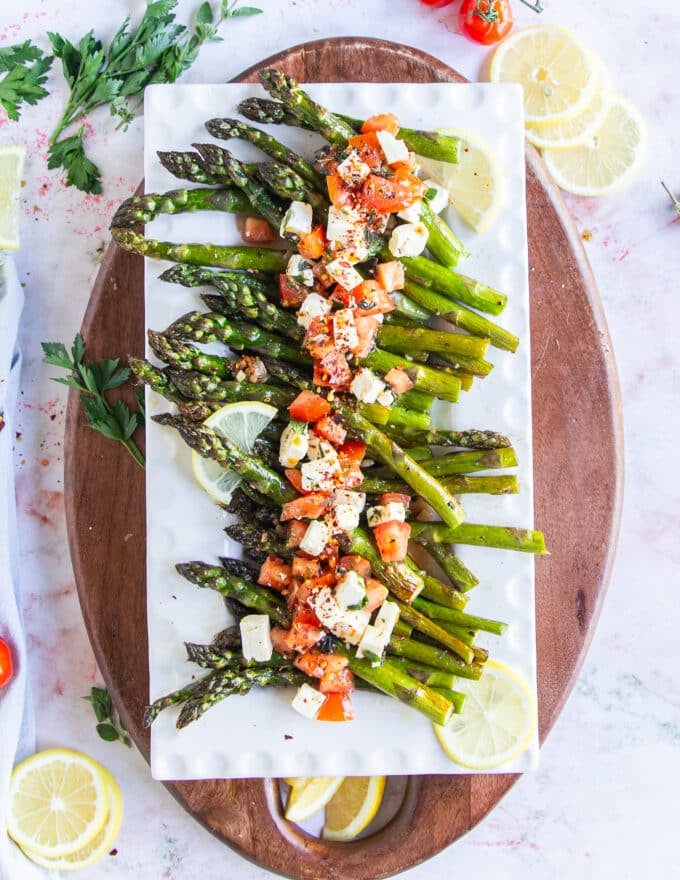
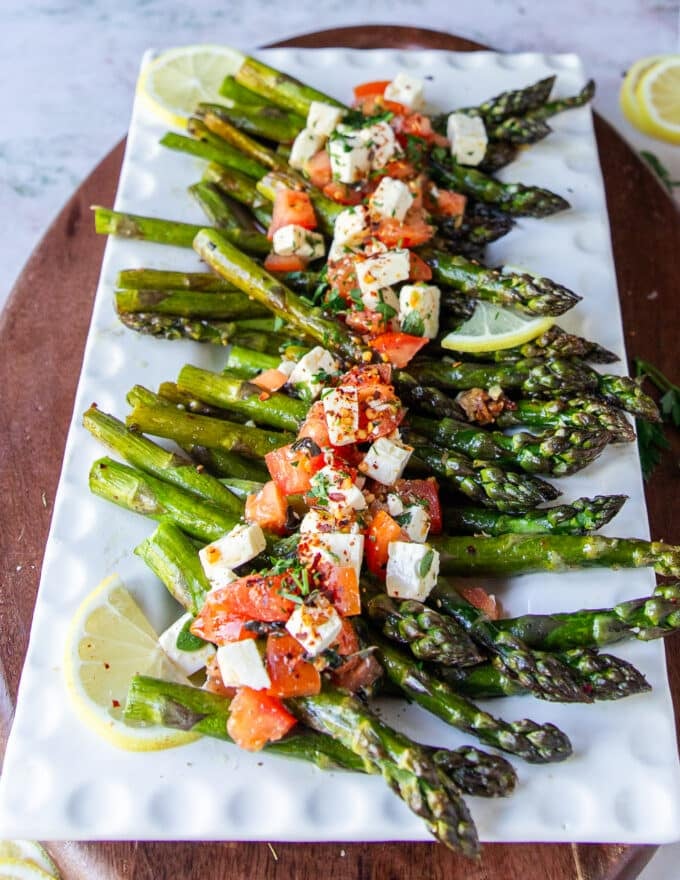
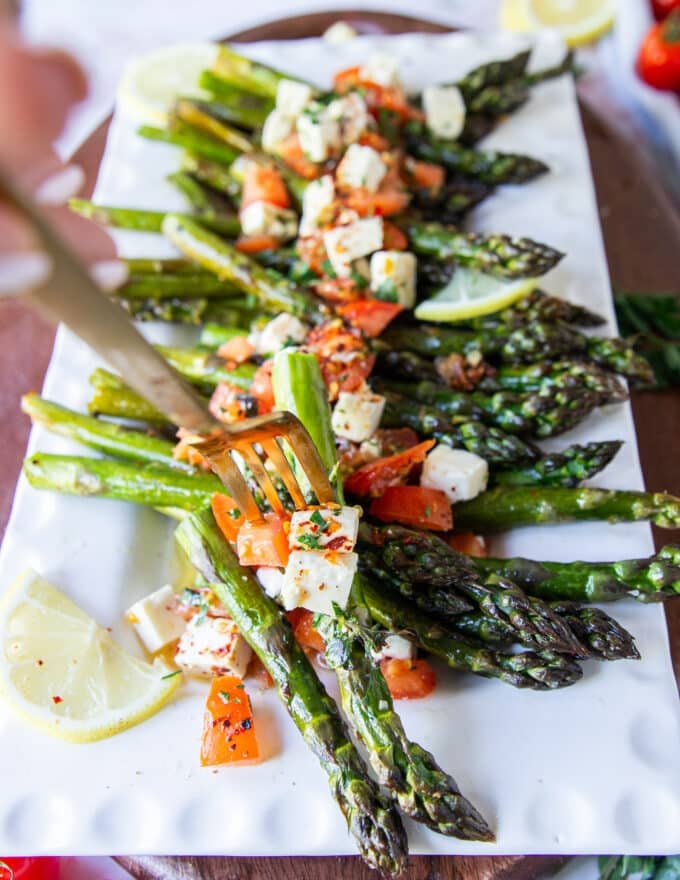
Today’s baked asparagus is similar in the sense that it’s cooked in the oven, while you can also grill it! Grilling asparagus is as easy roasting, and then top it with bright tomatoes, feta and herbs! SO GOOD!
What Is Baked Asparagus?
Baked asparagus can be also called roasted asparagus, is fresh asparagus cooked in the oven at a high temperature until tender with lightly browned caramelized edges.
Unlike steaming or boiling, baking uses dry heat to evaporate the excess moisture. And this will concentrate the vegetable’s natural sugars creating a deeper flavor, better texture, and a lightly crisp finish.
The secret to perfect baked asparagus is choosing fresh spears, roasting at a high temperature, and cooking just until tender. Overcooking quickly turns asparagus soft and dull, while proper roasting preserves its vibrant color, fresh flavor, and satisfying bite.
Why You’ll Love This Baked Asparagus Recipe
- TASTY and delicious way to serve asparagus, you will be making it over and over.
- This recipe is ready in about 20 minutes
- Healthy and nutrient dense side dish
- You need only a few simple ingredients to make this recipe
- The texture is PERFECT with crispy tips and tender stalks
- It’s one of those perfect and easy recipes for weeknights and just as great served on holidays.
- Pairs with any main dish you’re making.
- Easy to customize with different herbs, cheese, veggies, citrus or a sprinkle of cheese.
- Perfect for meal prep as it reheats so well!
Ingredients You Need
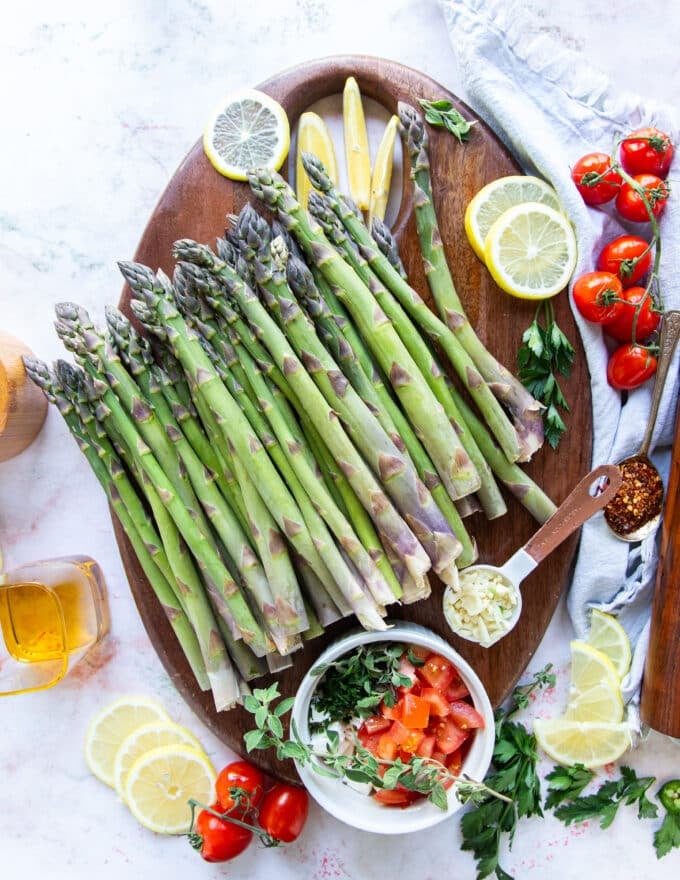
Asparagus
Fresh asparagus is the star of the recipe. Make sure to follow the buying guide below. Asparagus has a mild grassy flavor with natural sweetness, a tender yet crisp texture and a high nutritional value.
You can find thin spears or thick spears, the thicker spears remain meatier after roasting, while thinner spears cook more quickly and develop crisp tips.
Olive Oil
A light coating of olive oil before baking the asparagus promotes caramelization, prevents drying, helps seasonings adhere and adds richness. Extra virgin olive oil offers the most flavor, while avocado oil is an excellent high heat alternative.
Seasoning
Salt and black pepper enhance the asparagus natural sweetness while balancing its slight bitterness. Kosher salt and freshly ground black pepper are the best simplest seasonings.
Other Seasoning Options
We add fresh minced garlic for a burst of flavor, You can add lemon zest, lemon juice, fresh herbs like fresh parsley, fresh dill, thyme, a dab of butter or balsamic glaze. Other seasonings like garlic powder, paprika, red pepper flakes, cheeses like Parmesan or feta are great!
How to Buy Fresh Asparagus
- Look for: Bright green stalks, firm, straight spears, tightly closed tips, moist, freshly cut ends and smooth skin.
- Avoid: Wrinkled stalks, mushy tips, dry or cracked ends, yellowing spears, any strong odors from the veggie.
Thick vs. Thin Asparagus
- Thin Spears: Cook faster, have a more delicate texture, crisper tips and are great for salads and quick sides.
- Thick Spears: Meatier texture, better for roasting, usually more forgiving as they don’t overcook easily, and are excellent for hearty meals.
- For Roasting: Both work beautifully, the cooking time simply needs to be adjusted.
How to Bake Asparagus
Preheat the Oven
Preheat the oven to 425°F. A hot oven is essential for roasting rather than steaming the asparagus.
Prepare the Asparagus
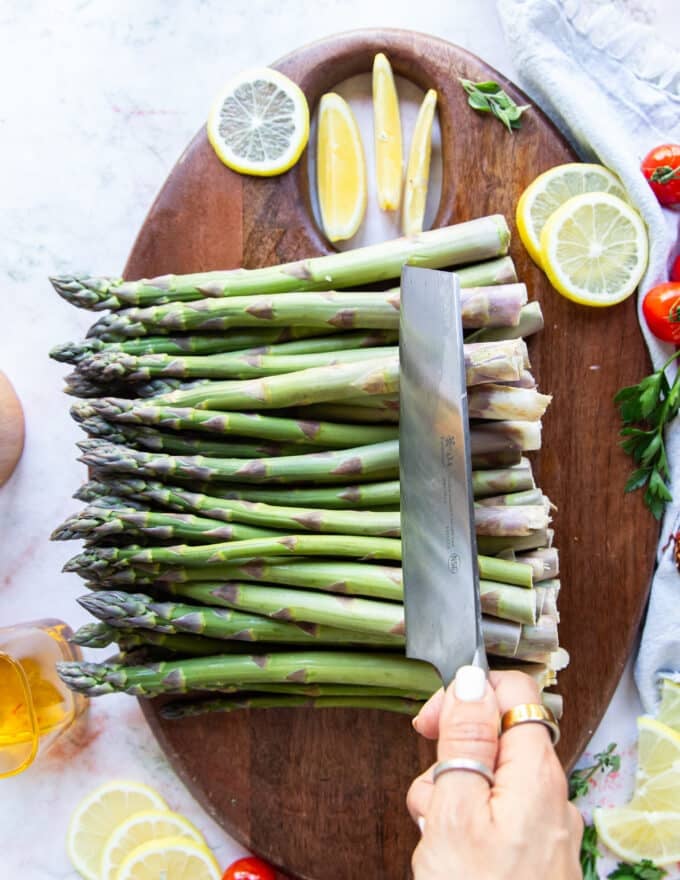
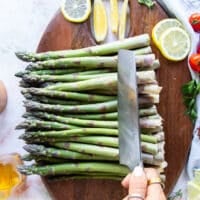
- Rinse and dry the asparagus thoroughly. Take the bunch of asparagus and place it on a cutting board.
- Trim asparagus or snap off the woody ends where they naturally break.
Season
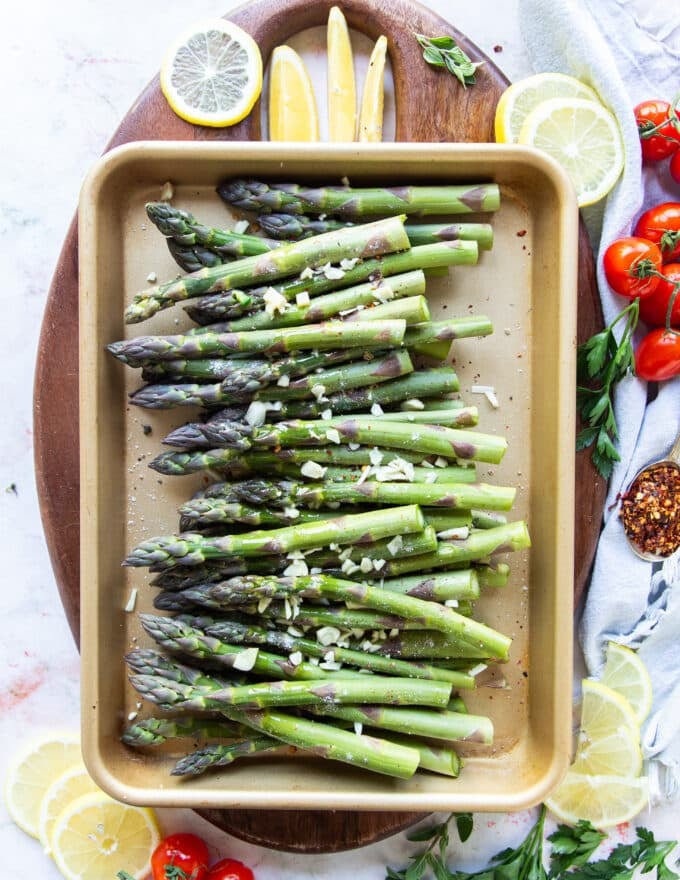
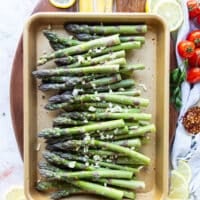
- Place asparagus on a baking sheet.
- Drizzle with olive oil and season with salt and pepper and add in minced garlic. Toss until every spear is evenly coated.
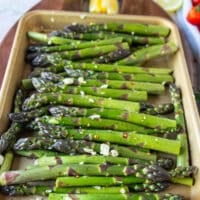
- Arrange or spread the asparagus into a single layer without overlapping as best as you can.
- Crowding traps steam and prevents caramelization.
Bake Asparagus
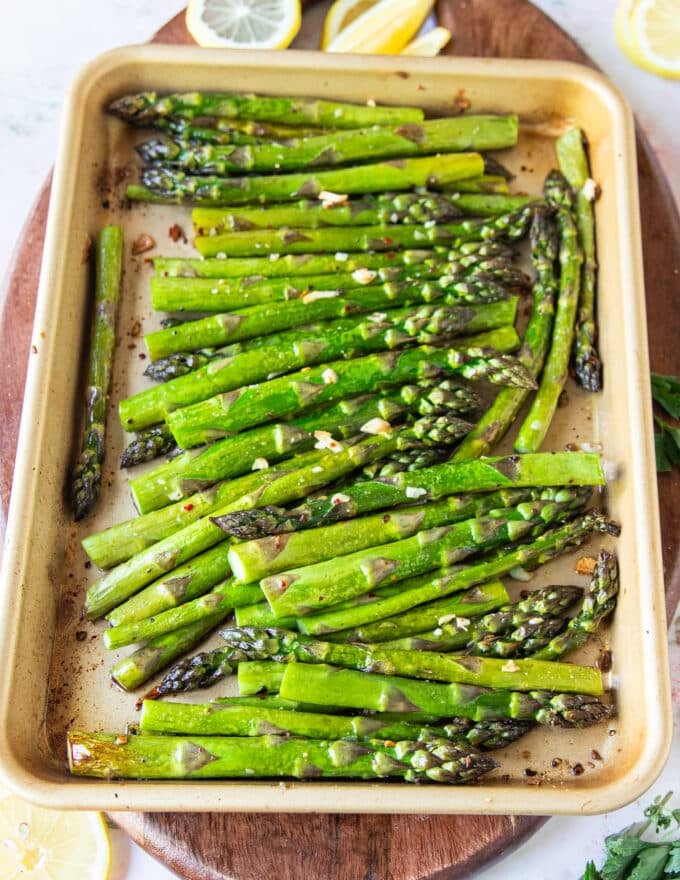
- Roast until the stalks are tender and the tips are lightly browned.
- Cooking time depends on thickness.
Finish
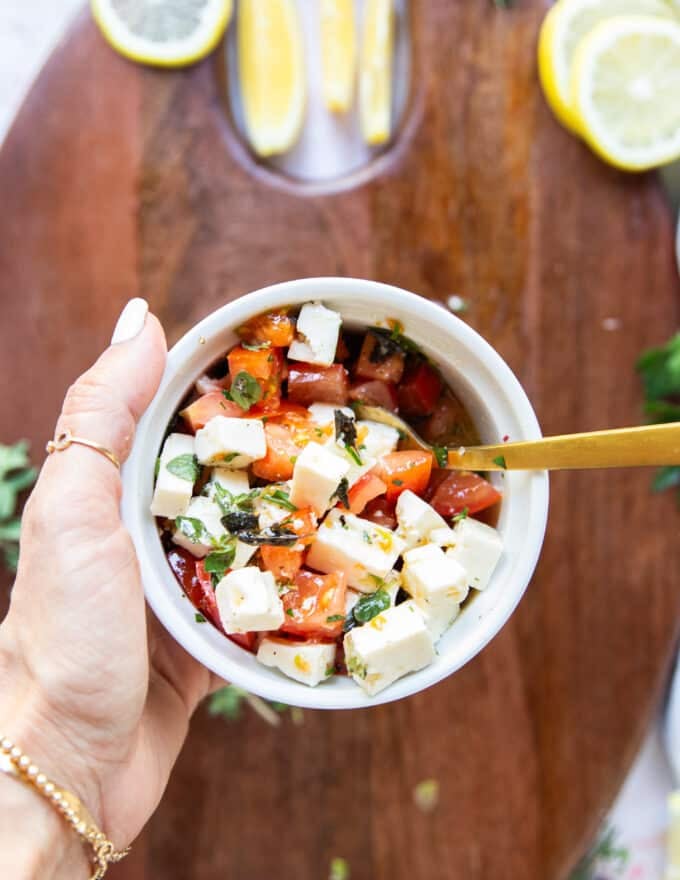
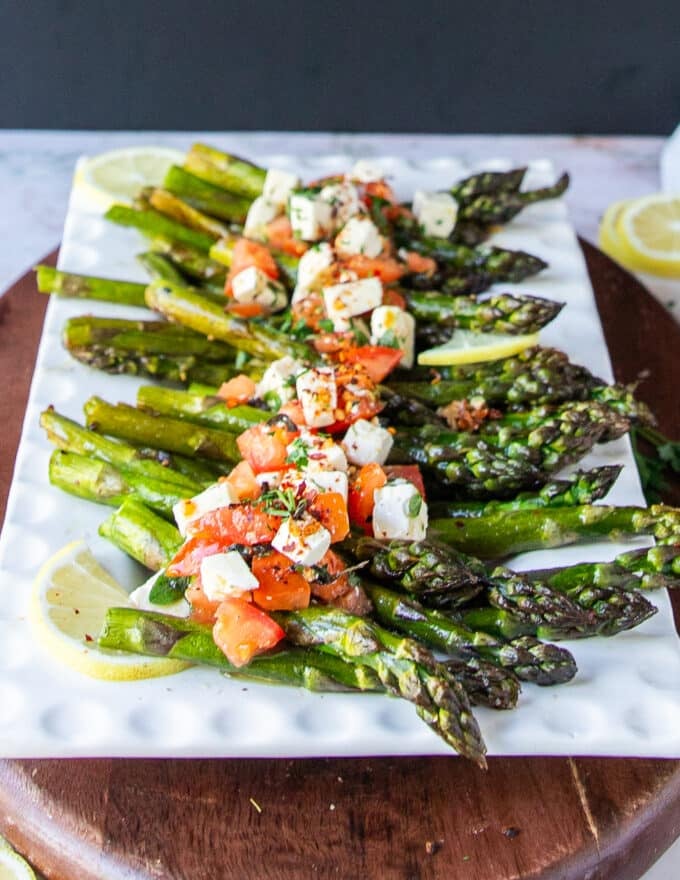
- Once the asparagus is hot and out of the oven, you can finish it with any dressing like Greek Salad Dressing. Or you can the herbs, tomatoes, feta, lemon juice and olive oil in a bowl and drizzle on top.
- This adds a burst of freshness to the dish and makes it a perfect summer side dish with your BBQ.
Expert Tips For Baked Asparagus
- Choose asparagus with similar thickness. Uniform spears cook at the same rate, preventing some from becoming mushy while others remain undercooked.
- Dry the asparagus thoroughly after washing. Even a small amount of excess water creates steam in the oven, reducing browning and preventing caramelization.
- Roast at high heat. Temperatures around 425°F produce the best balance of tender stalks and lightly crisp tips. Lower temperatures often soften the asparagus before it has a chance to caramelize.
- Don’t overcrowd the pan. Leave a little space between each spear so the hot air can circulate freely. If the asparagus is piled together, it will steam instead of roast.
- Use just enough oil. A light coating is all you need. Too much oil can make the asparagus greasy instead of beautifully roasted.
- Add delicate ingredients after roasting.Fresh herbs, Parmesan, lemon juice, and balsamic glaze are best added after the asparagus comes out of the oven to preserve their flavor and texture. Greek Salad Dressing is perfect added here or a blend of tomatoes, feta herbs, lemon juice and olive oil.
- Watch the tips carefully. The tips cook faster than the stalks and are the first part to overcook. Check the asparagus a minute or two before the expected cooking time.
- Finish with acid. A squeeze of fresh lemon juice brightens the roasted flavors and balances the richness of the olive oil.
- Serve immediately. Baked asparagus is at its best straight from the oven while the tips are lightly crisp and the stalks are perfectly tender.
Baked Asparagus Variations
- Garlic Baked Asparagus: Roast with fresh garlic for a savory, aromatic side dish.
- Parmesan Roasted Asparagus: Use plenty of freshly grated Parmesan for nutty richness.
- Lemon Asparagus: Add lemon zest and fresh lemon juice just before serving.
- Balsamic Asparagus: Drizzle with balsamic glaze for a sweet and tangy finish.
- Bacon Wrapped Asparagus: Wrap bundles of asparagus with bacon before roasting for a hearty appetizer or side.
- Spicy Roasted Asparagus: Add crushed red pepper flakes and finish with Chili Oil Recipe or Hot Honey Recipe.
- Herb Roasted Asparagus: Finish with fresh parsley, dill, thyme, or basil.
How Long to Bake Asparagus at 425 degrees F
- Thin asparagus: 8–10 minutes
- Medium asparagus: 10–13 minutes
- Thick asparagus: 13–16 minutes
The asparagus should be tender when pierced with a fork while still maintaining a slight bite. Roasting at 425°F creates deeper caramelization and lightly crisp tips.
Why a Single Layer Matters
Spacing allows hot air to circulate around each spear, creating even roasting instead of steaming.
How Dry Asparagus Roasts Better
Water on the surface must evaporate before browning begins. Dry asparagus caramelizes faster and develops richer flavor.
Why the Tips Cook Faster
The delicate tips contain less moisture and cook more quickly than the thicker stalks, creating the signature crisp-tender contrast.
How Roasting Makes Asparagus Taste Better
High oven heat triggers caramelization, allowing the asparagus’ natural sugars to develop while moisture evaporates. This creates a sweeter, nuttier flavor than steaming or boiling.
Why Oil Is Important
A thin layer of oil improves heat transfer, encourages browning, and prevents the asparagus from drying out.
How High Heat Works Best
Roasting at a higher temperature cooks the asparagus quickly before it has a chance to lose too much moisture, producing tender stalks with lightly crisp tips.
Why You Should Trim the Ends
The lower portion of the stalk contains tough fibers that remain woody even after cooking. Trimming these ends improves the overall texture.
Troubleshooting
- Why is my baked asparagus soggy? The baking sheet was overcrowded, the asparagus wasn’t dried well, or the oven wasn’t fully preheated.
- What if my asparagus tastes bitter? Older asparagus or overcooking can intensify bitterness. Fresh asparagus roasted just until tender develops a naturally sweeter flavor.
- Why is my asparagus stringy? The woody ends weren’t trimmed, or the asparagus was harvested later in the season when the stalks are naturally tougher.
- What if my asparagus doesn’t brown? Too much moisture, too little oil, or a low oven temperature can prevent caramelization.
- Why are the tips burned? Thin asparagus cooks very quickly. Check for doneness early and remove the asparagus as soon as the stalks are tender.
Storage and Reheating
- Storage: Store leftovers in an airtight container in the refrigerator for up to 4 days.
- Reheating: Reheat in a 400°F oven for a few minutes.Use an air fryer for lightly crisp edges.
- Microwaving works but softens the asparagus and ruins the texture.
How long do you bake asparagus?
Most asparagus takes 8 to 16 minutes at 425 degrees F, depending on the thickness of the spears and the oven temperature.
Should you peel asparagus before baking?
Most asparagus doesn’t need peeling. Very thick stalks can be peeled near the bottom if desired, but trimming the woody ends is usually sufficient.
Do you cover asparagus when baking?
No. Leaving it uncovered allows moisture to evaporate, which helps the asparagus roast instead of steam.
Why is my baked asparagus mushy?
It’s usually overcooked or roasted at too low a temperature, causing it to steam instead of caramelize.
Can you bake frozen asparagus?
Yes, but it releases more moisture than fresh asparagus. Roast directly from frozen and expect a slightly softer texture.
Is baked asparagus healthy?
Yes. Baked asparagus is naturally low in calories, high in fiber, and packed with vitamins, minerals, and antioxidants, making it a nutritious side dish for almost any meal.

Baked Asparagus
Ingredients
- 1 Tablespoon olive oil
- 3 cloves garlic minced
- 1/2 teaspoon each salt and pepper
- 2 bunches Asparagus trimmed
Topping
- 1 tomato diced
- 2 Tablespoons feta crumbles
- 1 tablespoon oregano leaves fresh
- 2 tablespoons olive oil
- 1 teaspoon lemon juice
- Pinch salt
Instructions
-
Preheat the oven to 425°F. A hot oven is essential for roasting rather than steaming the asparagus.
-
Rinse and dry the asparagus thoroughly. Take the bunch of asparagus and place it on a cutting board.

-
Trim asparagus or snap off the woody ends where they naturally break.
-
Place asparagus on a baking sheet.
-
Drizzle with olive oil and season with salt and pepper and add in minced garlic. Toss until every spear is evenly coated.
-
Arrange or spread the asparagus into a single layer without overlapping as best as you can.
-
Roast until the stalks are tender and the tips are lightly browned.
-
Cooking time depends on thickness. Usually between 8-12 minutes are the perfect time.
-
Mix the toppings ingredients in a bowl.
-
Once the asparagus is hot and out of the oven drizzle the toppings on top.
-
This adds a burst of freshness to the dish and makes it a perfect summer side dish with your BBQ.

Recipe Video
Recipe Notes
Expert Tips For Baked Asparagus
- Choose asparagus with similar thickness. Uniform spears cook at the same rate, preventing some from becoming mushy while others remain undercooked.
- Dry the asparagus thoroughly after washing. Even a small amount of excess water creates steam in the oven, reducing browning and preventing caramelization.
- Roast at high heat. Temperatures around 425°F produce the best balance of tender stalks and lightly crisp tips. Lower temperatures often soften the asparagus before it has a chance to caramelize.
- Don't overcrowd the pan. Leave a little space between each spear so the hot air can circulate freely. If the asparagus is piled together, it will steam instead of roast.
- Use just enough oil. A light coating is all you need. Too much oil can make the asparagus greasy instead of beautifully roasted.
- Add delicate ingredients after roasting.Fresh herbs, Parmesan, lemon juice, and balsamic glaze are best added after the asparagus comes out of the oven to preserve their flavor and texture. Greek Salad Dressing is perfect added here or a blend of tomatoes, feta herbs, lemon juice and olive oil.
- Watch the tips carefully. The tips cook faster than the stalks and are the first part to overcook. Check the asparagus a minute or two before the expected cooking time.
- Finish with acid. A squeeze of fresh lemon juice brightens the roasted flavors and balances the richness of the olive oil.
- Serve immediately. Baked asparagus is at its best straight from the oven while the tips are lightly crisp and the stalks are perfectly tender.
Baked Asparagus Variations
- Garlic Baked Asparagus: Roast with fresh garlic for a savory, aromatic side dish.
- Parmesan Roasted Asparagus: Use plenty of freshly grated Parmesan for nutty richness.
- Lemon Asparagus: Add lemon zest and fresh lemon juice just before serving.
- Balsamic Asparagus: Drizzle with balsamic glaze for a sweet and tangy finish.
- Bacon Wrapped Asparagus: Wrap bundles of asparagus with bacon before roasting for a hearty appetizer or side.
- Spicy Roasted Asparagus: Add crushed red pepper flakes and finish with Chili Oil Recipe or Hot Honey Recipe.
- Herb Roasted Asparagus: Finish with fresh parsley, dill, thyme, or basil.
How Long to Bake Asparagus at 425 degrees F
- Thin asparagus: 8–10 minutes
- Medium asparagus: 10–13 minutes
- Thick asparagus: 13–16 minutes
The asparagus should be tender when pierced with a fork while still maintaining a slight bite. Roasting at 425°F creates deeper caramelization and lightly crisp tips.
Why a Single Layer Matters
Spacing allows hot air to circulate around each spear, creating even roasting instead of steaming.
How Dry Asparagus Roasts Better
Water on the surface must evaporate before browning begins. Dry asparagus caramelizes faster and develops richer flavor.
Why the Tips Cook Faster
The delicate tips contain less moisture and cook more quickly than the thicker stalks, creating the signature crisp-tender contrast.
How Roasting Makes Asparagus Taste Better
High oven heat triggers caramelization, allowing the asparagus' natural sugars to develop while moisture evaporates. This creates a sweeter, nuttier flavor than steaming or boiling.
Why Oil Is Important
A thin layer of oil improves heat transfer, encourages browning, and prevents the asparagus from drying out.
How High Heat Works Best
Roasting at a higher temperature cooks the asparagus quickly before it has a chance to lose too much moisture, producing tender stalks with lightly crisp tips.
Why You Should Trim the Ends
The lower portion of the stalk contains tough fibers that remain woody even after cooking. Trimming these ends improves the overall texture.
Troubleshooting
- Why is my baked asparagus soggy? The baking sheet was overcrowded, the asparagus wasn't dried well, or the oven wasn't fully preheated.
- What if my asparagus tastes bitter? Older asparagus or overcooking can intensify bitterness. Fresh asparagus roasted just until tender develops a naturally sweeter flavor.
- Why is my asparagus stringy? The woody ends weren't trimmed, or the asparagus was harvested later in the season when the stalks are naturally tougher.
- What if my asparagus doesn't brown? Too much moisture, too little oil, or a low oven temperature can prevent caramelization.
- Why are the tips burned? Thin asparagus cooks very quickly. Check for doneness early and remove the asparagus as soon as the stalks are tender.
Storage and Reheating
- Storage: Store leftovers in an airtight container in the refrigerator for up to 4 days.
- Reheating: Reheat in a 400°F oven for a few minutes.Use an air fryer for lightly crisp edges.
- Microwaving works but softens the asparagus and ruins the texture.
How long do you bake asparagus?
Most asparagus takes 8 to 16 minutes at 425 degrees F, depending on the thickness of the spears and the oven temperature.
Should you peel asparagus before baking?
Most asparagus doesn't need peeling. Very thick stalks can be peeled near the bottom if desired, but trimming the woody ends is usually sufficient.
Do you cover asparagus when baking?
No. Leaving it uncovered allows moisture to evaporate, which helps the asparagus roast instead of steam.
Why is my baked asparagus mushy?
It's usually overcooked or roasted at too low a temperature, causing it to steam instead of caramelize.
Can you bake frozen asparagus?
Yes, but it releases more moisture than fresh asparagus. Roast directly from frozen and expect a slightly softer texture.
Is baked asparagus healthy?
Yes. Baked asparagus is naturally low in calories, high in fiber, and packed with vitamins, minerals, and antioxidants, making it a nutritious side dish for almost any meal.





This is such a great idea! I’ve never thought of cooking asparagus in the air fryer, so I’m definitely going to give this a try. I’m not really a fan of burrata cheese, but I love that you shared other seasoning options too. I’m excited to experiment with those instead. Thanks for the inspiration!
This baked asparagus recipe looks delicious to eat. I am surely going to give this recipe a try this weekend and i am sure my family will love it. Thank you so much for sharing this recipe.
Roasted Asparagus sounds fantastic! I love easy to cook side dishes. I think your topping sounds super bright and refreshing too.
I really enjoy asparagus and have tried it roasted and steamed. So I am going to enjoy trying out your baked asparagus recipe for sure!
Your baked asparagus recipe is delicious…I did a whole bunch and it was everyone’s favorite dish…So good. Thank you so much for the amazing recipe.
This is one of my favorite ways to enjoy asparagus! Roasting really brings out its natural flavor, and the tomatoes and feta sound like such a delicious combination. I can’t wait to give this recipe a try!
I think it’s the finish and the extra bits on top that would really push me to eat this. I’m not the biggest fan of asparagus on it’s own, but this looks so well seasoned and accompanied x
This looks like the perfect healthy side dish. Roasted asparagus with feta and tomatoes is such a delicious combination.
I love how light and fresh this is. It was perfect with my grilled chicken.