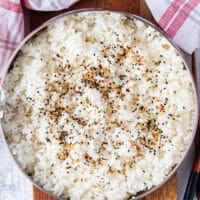
Sushi Rice
Ingredients
- 2 cup short grain rice Japanese rice or any short grain rice
- 3 cups water
- 1 kombu sheet optional
Sushi Rice Seasoning
- 4 tabelspoons rice vinegar
- 2 Tablespoons Sugar
- 1 teaspoon salt
Instructions
-
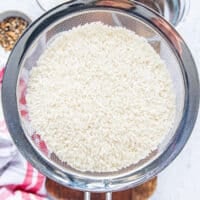
Rinse short grain rice under cool water until the water runs clear. You can do this in a sieve and observe the water. This removes excess surface starch so the grains don’t clump excessively.
-
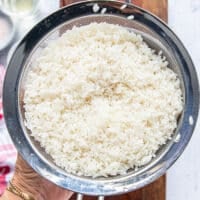
Soak the rinsed rice in a large bowl briefly. This helps the grains absorb water evenly and cook more consistently.
-
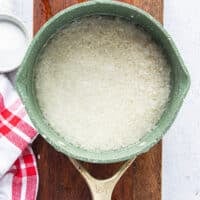
Use a rice cooker or a pot with a tight lid and add the rice with enough cups of cold water. cook until the rice is tender and water fully absorbed on the stove. You can add a piece of kombu here for umamu. Start with high heat until the water boils and then drop the heat to low until the cooking water is absorbed.
-
Stovetop or rice cooker both work. Avoid lifting lid mid way through cooking.
-
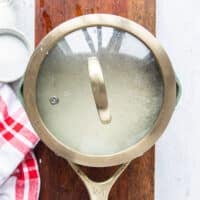
Rest Covered
-
Let steam finish the cooking process.
-
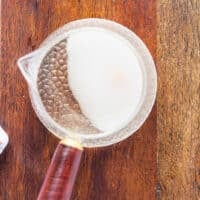
Prepare Seasoning
-
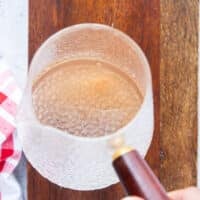
Warm vinegar mixture gently to dissolve sugar and salt in a small saucepan. Do not boil.
-
Combine rice vinegar with sugar and salt while the rice cooks. Heat gently until the sugar dissolves.
-
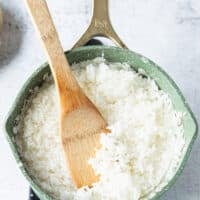
When the rice is cooked, it should look be soft and grains well cooked.
-
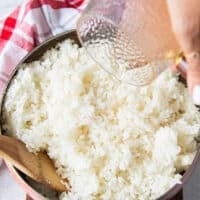
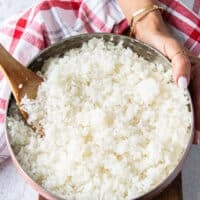
Transfer hot rice to a large shallow mixing bowl and gently fold in the seasoned vinegar mixture. If you have a rice paddle use it, otherwise use a spatula. Don’t smash the grains, rather use a slicing/folding motion to keep them separate while evenly coating them.
-
Traditionally, sushi rice is fanned while mixing to cool faster and develop shine. This is a technique where the fan is turned on gently while folding. Do not refrigerate immediately.
Recipe Video
Recipe Notes
Pro Tips for Sushi Rice
- Rinse the rice until the water runs clear to prevent gummy, pasty rice with oversized clumps.
- Use short grain rice for optimum texture.
- Do not overcook the rice.
- Season while still warm so the flavors penetrate well.
- When adding the seasoning to the rice, make sure to fold it in not mash it in. The vinegar mixture should be distributed gently so grains stay intact and glossy.
- Cool the rice to room temperature before using. If the rice is too hot, it will break the rolls, while if it's too cold, it won;t adhere properly.
- Keep covered with damp towel until ready to use.
How Long Does Sushi Rice Take?
Sushi rice takes about 45–60 minutes from start to finish.
It's broken down as follows.
- Rinse and soak: 10–15 minutes
- Cook: 20 minutes
- Rest: 8-10 minutes
- Season and cool: 10 minutes
- Total time: about 45–60 minutes
Storage & Make Ahead Guide
While you can sushi rice recipe ahead of time, it's always best eaten the same day. Store leftovers at room temperature covered for several hours. If you're storing the rice in the refrigerator, it will harden due to starch retrogradation. In that case you need to reheat gently with damp towel in microwave.
Serving Ideas
- Maki & Uramaki (rolls) or a simple Crab Sushi
- Nigiri sushi (hand formed rice with fish)
- Temaki (hand rolls) or Sushi Burrito
- Poke bowls and chirashi, Sushi Bowl
- Onigiri (rice balls)
- Sushi Bake
- It also makes a great side dish for grilled or glazed proteins and vegetables.
Why Is My Sushi Rice Mushy?
Too much water is added or you overcooked the rice.
Why Is It Too Dry?
Not enough water is added to cook the rice, or otherwise you have used insufficient vinegar mixture.
Why Is It Not Sticky?
You probably used the wrong rice variety such as long-grain rice. Always use short-grain rices.
Why Does It Taste Bland?
If you under season or if the vinegar mixture is not evenly distributed, the rice will taste bland.
Can You Freeze Sushi Rice?
It's not recommended because the texture degrades significantly.
What type of rice is best for sushi rice?
Short grain Japanese rice (Japonica) or Calrose is best because it has higher amylopectin, making it sticky but not mushy when cooked. Medium grain brands may also work well, however long grains like jasmine or basmati don’t have the right stickiness.
Can I use regular rice for sushi?
Using regular long grain rice is not recommended. It doesn’t become sticky enough to hold sushi shapes, so it won't allow you to have a good experience.
Why do you rinse sushi rice?
Rinsing removes excess starch on the surface, prevents clumping and ensures that each grain cooks evenly and separates properly.
Do you soak sushi rice before cooking?
Yes, a short soak helps the rice absorb water evenly and produces a consistent, tender grain.You need to soak it for 6-10 minutes at most.
How do you season sushi rice?
Once cooked, sushi rice is seasoned with a mixture of rice vinegar, sugar, and salt. You can often find the seasoning ready at the grocery stores and it's referred to as "sushi vinegar". This creates the sweet tangy flavor you crave.
Why is sushi rice sticky?
The stickiness comes from its high amylopectin starch content, which makes the grains cling to each other, and that is essential for forming sushi.
What’s the ideal texture of sushi rice?
Perfect sushi rice should be tender, slightly chewy, and sticky enough to hold together, with each grain distinct.
Is sushi rice healthy?
Sushi rice is a good source of carbohydrates and B vitamins, especially when made with brown rice. White sushi rice is low in fat but can be high in carbs and sodium due to seasoning.
Can you make sushi rice without vinegar?
If you skip seasoning the rice with vinegar, it won’t taste like traditional sushi rice, it will be more of a white rice. The vinegar is essential for the authentic flavor and texture you know.
Is sushi rice gluten‑free?
Plain sushi rice is naturally gluten‑free. However, when combined with sauces like soy sauce or teriyaki may not be. Check labels if you need a gluten‑free meal.
Can I make sushi rice in a rice cooker?
Yes. Use standard white rice settings.
Sushi Rice for Parties & Appetizers
Some of the best ways to use sushi rice for parties and appetizers include:
- Sushi cupcake molds or Sushi Cake.
- Sushi bake trays, similar to our Sushi Bake
- Deconstructed sushi shooters
- Mini sushi squares, similar to out Crab Sushi or Sushi Stacks
- Nori snack wraps
- California roll bites, or skewered.